

Many homeowners assume modern architecture means cold, sterile spaces with no warmth or connection to the people living in them. That assumption misses what modern living architecture actually delivers today: functional, minimalist design rooted in mid-20th-century modernism, now evolved to prioritize sustainability, community, and climate-smart living. Los Angeles sits at the center of this shift, producing homes and housing projects that prove good design can be both beautiful and deeply human.
Table of Contents
- Understanding modern living architecture
- Key features: Open plans, daylight, and material honesty
- Sustainability and technology in contemporary designs
- Community-oriented frameworks: Courtyards and neighborliness
- Applying modern living architecture for Los Angeles homes
- Next steps: Modern living architecture solutions from FO Studio
- Frequently asked questions
Key Takeaways
| Point | Details |
|---|---|
| Functional and open layouts | Modern living architecture relies on structural frames and open plans to create flexible, bright spaces. |
| Sustainability integration | Eco-friendly materials and net-positive energy systems are now central to modern designs in Los Angeles. |
| Community-driven design | Courtyard layouts and modular solutions foster neighborliness and safety in LA neighborhoods. |
| Passive design for climate | Passive cooling, daylight strategies, and indoor-outdoor flow adapt perfectly to LA’s weather. |
| Practical action steps | Homeowners and developers can start by choosing open layouts, ecological materials, and LA-specific design resources. |
Understanding modern living architecture
Modern living architecture is not a single style. It is a set of principles that have evolved steadily since the mid-20th century. The movement began with a rejection of ornament and a commitment to function. Architects like Mies van der Rohe and Richard Neutra championed open plans, honest materials, and the integration of natural light. Those ideas still form the foundation of what we practice today.
What separates contemporary modern living from its historical roots is the addition of two major priorities: sustainability and technology. Today's modern home is not just open and light-filled. It is also energy-efficient, ecologically responsible, and designed to support the people who live in and around it.
The core principles of modern living architecture include:
- Functionality first: Every space has a clear purpose. Rooms flow logically from one to the next.
- Minimalism: Clean lines, reduced ornamentation, and a focus on what is essential.
- Open plans: Walls are minimized to create flexible, connected living spaces.
- Natural light: Windows, skylights, and glazed walls bring daylight deep into the home.
- Material honesty: Wood, steel, concrete, and glass are used visibly and without disguise.
- Sustainability: Energy performance, ecological materials, and climate-responsive design are now standard expectations.
"Modern living architecture refers to contemporary architectural practices emphasizing functional, minimalist designs evolved from mid-20th-century modernism, prioritizing open plans, natural light, and material honesty."
With the big picture of modern living architecture in mind, let's dive deeper into its defining features.
Key features: Open plans, daylight, and material honesty
Now that we've outlined the basics, let's see how these features take shape in LA's modern living spaces.
The structural frame is what makes open plans possible. By shifting loads to columns and beams rather than interior walls, architects can create large, flexible floor plates. Standardized structural grids typically range from 5 to 7.5 meters in residential projects, giving designers the freedom to arrange living spaces without the constraints of load-bearing walls.
Passive design is equally important, especially in Los Angeles. Passive strategies like overhangs and ventilation are well-suited to LA's climate, allowing homes to stay comfortable without heavy reliance on mechanical systems. Overhangs block harsh summer sun while admitting lower winter light. Cross-ventilation pulls cool air through the home naturally.
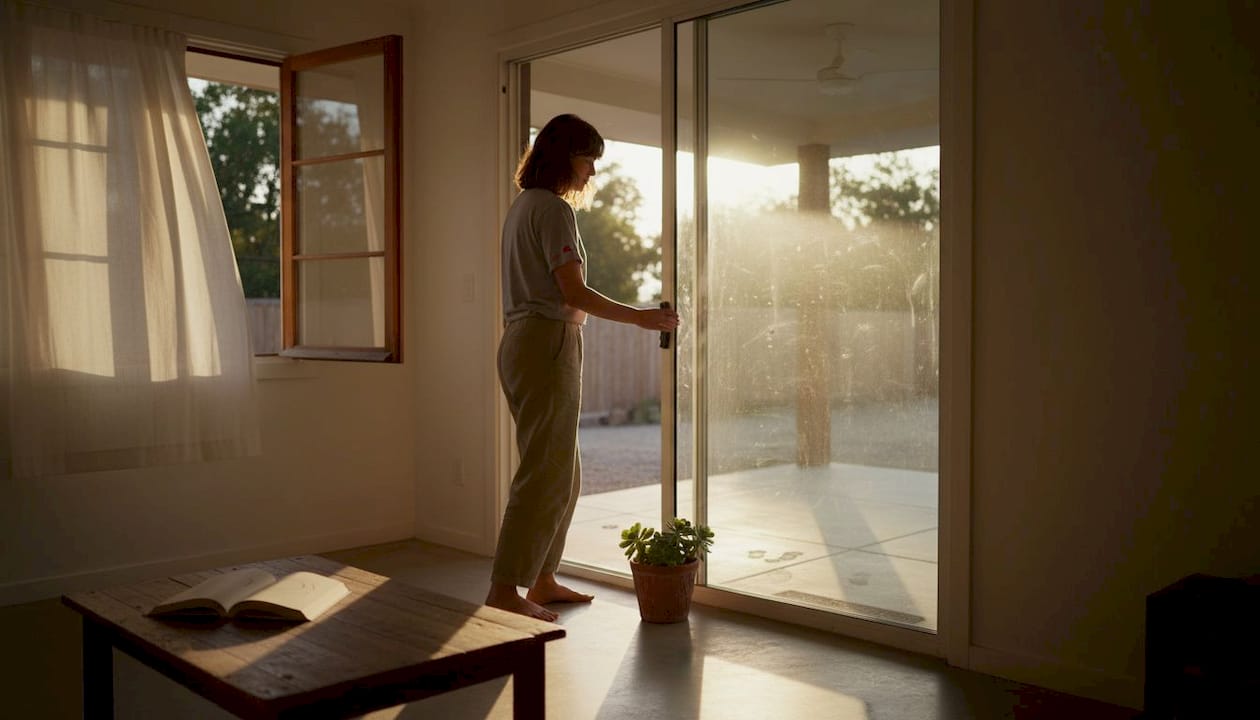
Here is a quick comparison of how traditional and modern approaches handle key design elements:
| Design element | Traditional approach | Modern living approach |
|---|---|---|
| Interior walls | Load-bearing, fixed | Minimized via structural frames |
| Natural light | Small, punched windows | Large glazing, skylights, glass walls |
| Ventilation | Mechanical by default | Passive first, mechanical as backup |
| Materials | Concealed behind finishes | Expressed honestly (concrete, steel, wood) |
| Indoor-outdoor connection | Separate zones | Pavilions, sliding glass, blurred boundaries |
LA homes frequently use pavilion-style layouts and large glass panels to dissolve the boundary between interior and exterior. You can see examples of daylight strategies in projects across the region that use sliding glass walls to open entire living rooms to patios and gardens.
Material honesty is another signature feature. Rather than covering concrete with drywall or hiding steel behind cladding, modern living architecture lets materials speak for themselves. This approach reduces waste, simplifies maintenance, and gives spaces a grounded, authentic character.
Pro Tip: When planning a modern home in LA, prioritize passive strategies in residential construction early in the design process. Decisions about window placement, roof overhangs, and building orientation are far more cost-effective to make at the design stage than to correct later.
Sustainability and technology in contemporary designs
With sustainability in mind, let's take a look at how modern living architecture fosters community in LA.
Sustainable architecture today goes well beyond solar panels and low-flow fixtures. Contemporary modern architecture evolves the original modernist vision by adding net-positive energy performance and deep technology integration, directly addressing the failures of historical modernism, including the notorious leaking flat roofs that plagued mid-century buildings.
Net-positive energy homes generate more energy than they consume over the course of a year. They achieve this through a combination of high-performance insulation, airtight construction, solar energy systems, and smart building controls. These are not experimental concepts. They are increasingly standard in new residential construction across Los Angeles.
Key sustainability and technology features in modern living homes include:
- High-performance insulation: Reduces heating and cooling loads significantly.
- Solar photovoltaic systems: Generate on-site electricity, often feeding surplus back to the grid.
- Smart home systems: Automate lighting, HVAC, and shading for optimized energy use.
- Ecological materials: Reclaimed wood, recycled steel, and low-VOC finishes reduce environmental impact.
- Green roofing: Eco-friendly roofing choices like cool roofs and vegetated systems address the flat-roof performance issues of earlier modernism.
Here is a summary of how sustainability features perform in practice:
| Feature | Primary benefit | LA-specific relevance |
|---|---|---|
| Solar PV systems | Energy cost reduction | High solar yield year-round |
| Cool roofs | Reduced heat gain | Critical in LA's warm climate |
| Smart HVAC controls | Comfort and efficiency | Reduces peak demand charges |
| Ecological materials | Lower embodied carbon | Supports sustainable real estate practices |
| Passive ventilation | Natural cooling | Effective in LA's mild evenings |
"Contemporary architecture evolves modernism by adding sustainability, including net-positive energy, and technology integration, directly contrasting historical modernism's issues like leaking flat roofs."
Technology integration also means smarter construction documentation, faster permitting, and better coordination between design and construction teams. For LA homeowners and developers, this translates to fewer surprises during the build process.
Community-oriented frameworks: Courtyards and neighborliness
Now that we understand the communal aspect, let's recap what makes modern living architecture actionable for LA homeowners and developers.
One of the most powerful and often overlooked aspects of modern living architecture is its capacity to build community. Many people associate modern design with isolation, but the best contemporary projects in Los Angeles do exactly the opposite.
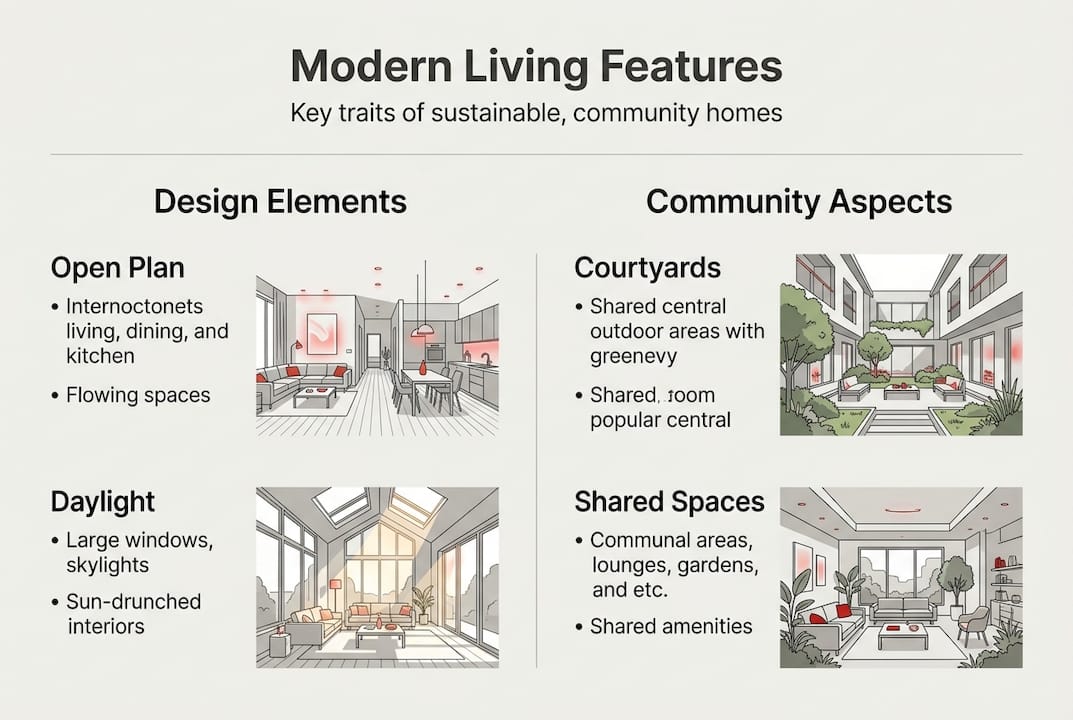
Community-oriented designs use elevated courtyards for safe social interaction, drawing inspiration from historic LA courtyard apartments that fostered neighborliness without the need for fences or barriers. The 2025 AIA California Residential Design Award recipient, Brunson Terrace, is a strong example of this approach in action.
Key strategies for community-oriented modern living include:
- Elevated courtyards: Shared outdoor spaces positioned above street level for safety and visibility.
- Shared amenity zones: Laundry, garden, and seating areas that encourage casual interaction.
- Transparent ground floors: Glazed lobbies and entries that maintain visual connection to the street.
- Staggered massing: Building volumes offset to create pockets of shade, airflow, and gathering space.
- Wellness in community architecture: Biophilic elements like planted walls and natural materials support resident wellbeing.
Modular shipping containers on triangular infill sites create staggered towers for airflow and community courtyards, as demonstrated by the Isla Intersections Supportive Housing Paseo project. This approach shows how adaptive, modular solutions can turn challenging lot shapes into vibrant, community-centered housing.
Pro Tip: When working with an irregular or constrained lot, consider elevated outdoor spaces in construction as a way to create usable community areas without sacrificing ground-floor square footage. This is especially effective for ADU and multi-family projects in dense LA neighborhoods. You can also explore neighbor-friendly layouts that balance privacy with connection from the earliest stages of design.
Applying modern living architecture for Los Angeles homes
Having covered practical application, let's outline the next steps for those ready to build or renovate in LA.
Implementing modern living architecture in Los Angeles requires attention to climate, zoning, and community context. The good news is that LA's mild weather and progressive zoning reforms make it one of the best cities in the country for this type of design. Here is a practical sequence to follow:
- Start with site analysis. Understand your lot's orientation, sun angles, prevailing breezes, and neighboring structures before committing to a layout. This informs every passive design decision that follows.
- Prioritize open layout planning. Work with your architect to identify which walls can be eliminated through structural framing. Open plans feel larger, function better, and support flexible living over time.
- Apply passive strategies for LA's climate. Design overhangs to block summer sun, position windows for cross-ventilation, and use thermal mass materials like concrete to moderate temperature swings.
- Select ecological materials early. Specify reclaimed wood, recycled content finishes, and low-VOC products from the start. Late substitutions are costly and often compromise design intent.
- Integrate smart systems during rough-in. Conduit for smart lighting, automated shading, and EV charging is far cheaper to install during construction than to retrofit later.
- Review LA zoning for ADU and multi-family opportunities. Many LA lots can accommodate an ADU or small multi-family project under current zoning. Explore LA-specific ADU plans to understand what is possible on your property.
- Consult sustainable building solutions resources to stay current on 2026 code requirements and best practices for energy performance and material selection.
Many homeowners assume that modern living architecture requires a large budget or a blank-slate lot. In our experience, the principles apply equally well to renovations, ADU additions, and infill projects. The key is integrating these decisions early, before design choices become expensive to change.
Next steps: Modern living architecture solutions from FO Studio
For those ready to elevate their home or project with modern living architecture, FO Studio offers innovative solutions tailored to Los Angeles neighborhoods and zoning requirements.
At FO+H Architects, we specialize in translating the principles covered in this article into real, buildable projects. Whether you are planning a new home, an ADU addition, or a multi-family infill development, our team brings deep knowledge of LA's climate, zoning landscape, and community design frameworks. Our ADU design store gives you access to pre-designed, permit-ready plans that incorporate passive strategies, open layouts, and ecological materials. If you are looking for a starting point, our gold ADU modern designs offer a strong example of what modern living looks like at the ADU scale. You can also browse ADU house plan ideas to find the right fit for your property and vision.
Frequently asked questions
How does modern living architecture differ from historical modernism?
Modern living architecture builds directly on the original modernist framework but adds sustainability and technology integration, including net-positive energy performance and smart systems, while correcting earlier failures like leaking flat roofs.
What are passive design strategies in modern homes?
Passive design uses building elements like overhangs, window placement, and natural ventilation to regulate temperature and light without mechanical systems. Passive strategies suit LA's climate particularly well, given the region's mild evenings and strong solar access.
How do community courtyards help neighborhoods?
Elevated courtyards promote safety and neighborly interaction by providing shared outdoor spaces that are visible and accessible, drawing on a long tradition of LA courtyard apartment design.
Can modular designs fit odd-shaped lots?
Yes. Modular solutions on triangular infill sites like Isla Intersections demonstrate how staggered container-based towers can create functional courtyards and improve airflow even on the most constrained urban lots.
Are modern living designs sustainable in Los Angeles?
Today's modern living homes routinely include net-positive energy features, ecological materials, and climate-responsive layouts that are well-matched to LA's solar resources and mild climate conditions.