

Designing a home in Los Angeles is rarely straightforward. You're working within some of the most complex zoning codes in the country, navigating wildfire risk zones, managing tight budgets, and trying to create a space that genuinely reflects who you are. Whether you're a homeowner planning a custom build or a property investor evaluating your next project, the decisions you make early in the design process will shape your home's safety, comfort, and long-term value. This article walks you through four practical areas where thoughtful architectural choices make the biggest difference: fire resilience, biophilic wellness design, sustainable ROI, and site-specific spatial planning.
Table of Contents
- Evaluate fire-resilient materials and safety essentials
- Incorporate biophilic design for wellness and comfort
- Balance sustainability with cost and return on investment
- Customize spatial layouts for site challenges and lifestyle needs
- Partner with local experts for your next project
- Frequently asked questions
Key Takeaways
| Point | Details |
|---|---|
| Prioritize fire-resilient design | Selecting protective materials and layouts reduces wildfire risk and preserves property value. |
| Make biophilic style affordable | Incorporate nature with simple elements such as windows and plants for health and comfort. |
| Invest in sustainability | Eco-friendly upgrades increase annual savings and make your home more attractive to buyers. |
| Optimize layouts for your site | Site-specific solutions enhance privacy, maximize light, and improve access for challenging lots. |
| Work with experienced designers | Partnering with local experts streamlines the process and ensures your home meets LA standards. |
Evaluate fire-resilient materials and safety essentials
Fire safety is not optional in Los Angeles. With wildfire risk expanding into more neighborhoods each year, the California Building Code now requires fire-resistant construction in many zones, and local jurisdictions are tightening those standards further. The good news is that fire-resilient design has evolved well beyond basic code compliance. Today's best materials are also visually striking and low-maintenance.
Here are the top exterior materials we recommend for fire-resilient LA homes:
- Aluminum and bronze panels: Non-combustible, durable, and available in a wide range of finishes that suit modern aesthetics
- Cross-laminated timber (CLT) wrapped in mineral wool insulation: This combination meets fire-resilient materials standards for modern construction and is increasingly specified in high-risk zones
- Ventilated rainscreen facades: These create an air gap between the cladding and the wall assembly, which slows heat transfer and reduces ember intrusion risk
- Fiber cement and stucco: Cost-effective options that meet ignition-resistant construction requirements under California law
The Bronze and Black House by SPF Architects is a strong example of how low-maintenance exteriors and CLT wrapped in mineral wool can set a new standard for fire resilience without sacrificing design quality.
Pro Tip: Choose exterior finishes that require minimal annual upkeep. Powder-coated aluminum and pre-weathered bronze panels, for example, hold up well in LA's climate and don't need repainting or resealing every few years.
If you're planning a new build or ADU, reviewing fire-resistant house plans early in the process helps you align material choices with structural requirements before construction documents are finalized.
Incorporate biophilic design for wellness and comfort
Biophilic design refers to the intentional integration of natural elements into the built environment. Think large windows that frame garden views, interior courtyards with plantings, natural wood finishes, and spaces that maximize daylight. Research consistently links these features to lower stress levels, better sleep, and improved focus.
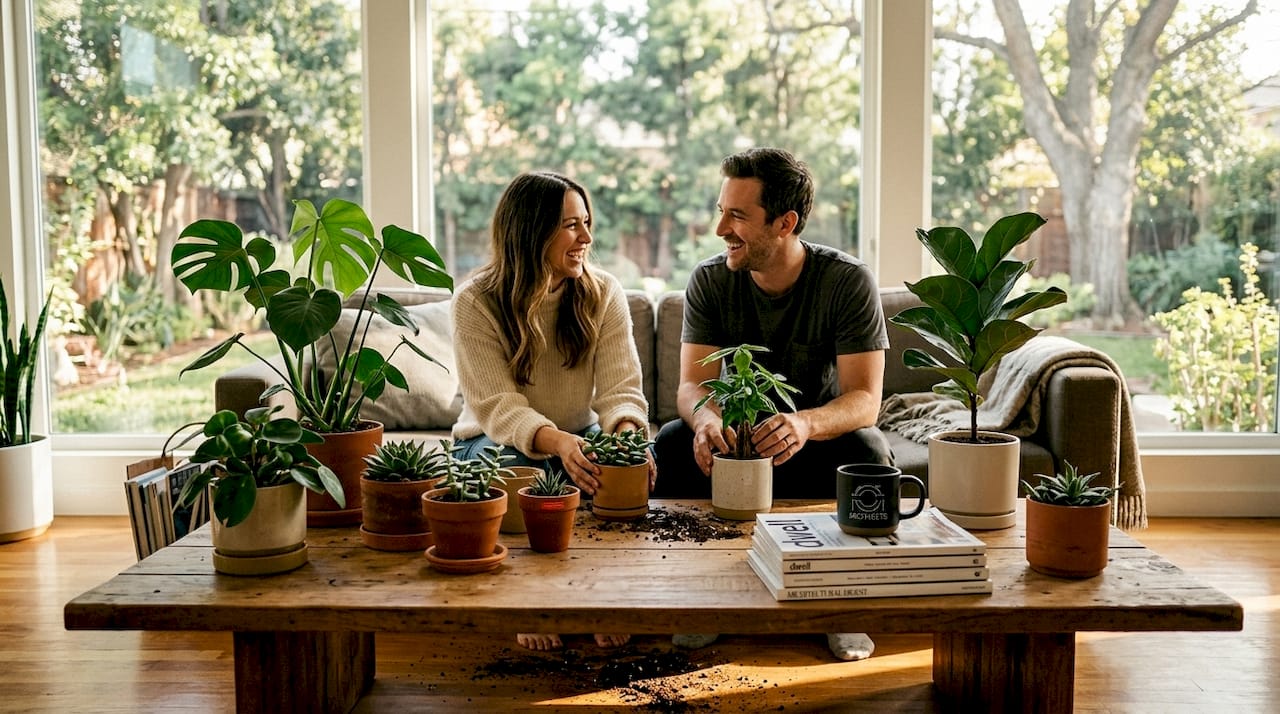
Many homeowners assume biophilic design is expensive. In reality, biophilic design research shows that accessible materials like large windows and houseplants can achieve many of the wellness benefits associated with full-scale biophilic installations, without the high costs or maintenance demands.
Here are practical biophilic features that work well in LA homes:
- Floor-to-ceiling windows or sliding glass walls to maximize natural light and visual connection to outdoor spaces
- Interior or exterior planters integrated into the architecture, not just placed as afterthoughts
- Natural material finishes such as wood ceilings, stone countertops, and rammed earth accent walls
- Cross-ventilation design that brings fresh air through the home without relying solely on mechanical systems
- Skylights and light wells in deeper floor plans where windows alone can't reach
"Accessible materials make wellness affordable for homeowners. You don't need a living wall system or a rooftop garden to benefit from biophilic principles. Strategic window placement and a few well-chosen plants can meaningfully shift how a space feels."
For homeowners interested in combining biophilic principles with energy efficiency, our green ADU designs incorporate both approaches into compact, well-planned floor plans.
Balance sustainability with cost and return on investment
Sustainability is one of the most common topics we discuss with clients, and the financial picture is more encouraging than many people expect. Yes, eco-friendly construction costs more upfront. But the long-term savings and resale advantages are real and measurable.
According to eco-home cost data, eco-homes cost 9-18% more upfront but save $1,800 to $3,200 per year on energy bills, and with 80% of buyers prioritizing sustainability, the resale value boost is significant.
| Sustainability feature | Estimated upfront cost | Annual savings | Resale impact |
|---|---|---|---|
| Solar panel system | $18,000 to $25,000 | $1,200 to $1,800 | High |
| High-performance insulation | $3,000 to $7,000 | $400 to $700 | Moderate |
| Energy-efficient windows | $8,000 to $15,000 | $300 to $600 | Moderate to high |
| Heat pump HVAC system | $10,000 to $18,000 | $500 to $900 | High |
| Cool roof coating | $1,500 to $4,000 | $200 to $400 | Moderate |
Here are the sustainability upgrades we recommend prioritizing based on ROI:
- Solar panels: California's net metering program and federal tax credits make this one of the strongest investments available
- Air sealing and insulation: Often underestimated, but one of the highest-impact upgrades for energy performance
- Energy-efficient windows and glazing: Especially important in LA where solar heat gain is a major driver of cooling costs
- Heat pump water heaters: Lower operating costs than traditional gas water heaters and eligible for rebates through the state's energy programs
Pro Tip: Don't try to do everything at once. Prioritize the upgrades with the fastest payback period first, typically insulation and solar, then layer in additional features as your budget allows.
Our eco-friendly ADU plans are designed with these priorities built in, so you're not retrofitting sustainability after the fact.
Customize spatial layouts for site challenges and lifestyle needs
Los Angeles offers an enormous variety of site conditions. You might be working with a steep hillside lot in Silver Lake, a narrow urban infill parcel in Culver City, or a flat suburban lot in the Valley. Each type requires a different spatial strategy, and getting it right early saves significant time and money during permitting and construction.
Here's a step-by-step approach we use with clients:
- Step 1: Site analysis. Assess slope, sun orientation, prevailing winds, neighboring structures, and fire access requirements before any design decisions are made.
- Step 2: Zoning setback review. Understand your required setbacks from property lines. As noted in the Wandering Courtyard House project, zoning setbacks can become courtyards that provide privacy and natural light rather than wasted space.
- Step 3: Structural strategy. For hillside sites, cantilevering portions of the structure over the slope and incorporating shear walls for lateral stability are standard approaches that also improve fire access around the building perimeter.
- Step 4: Privacy and light optimization. Use window placement, screen walls, and landscaping to control sightlines from neighboring properties while maximizing daylight inside.
| Site type | Key challenge | Recommended strategy |
|---|---|---|
| Hillside lot | Slope stability, fire access | Cantilevering, shear walls, stepped floor plans |
| Narrow urban lot | Limited width, privacy | Vertical massing, interior courtyards, clerestory windows |
| Flat suburban lot | Solar exposure, neighbor proximity | Roof overhangs, strategic window placement, setback courtyards |
| Corner lot | Traffic noise, dual street exposure | Acoustic glazing, landscaped buffers, angled entry design |
For clients working through complex site conditions, our engineering home layouts resources and fire-accessible design ideas provide a strong starting point for the design process.
Partner with local experts for your next project
Applying these principles well requires more than general knowledge. It takes experience with LA's specific building codes, fire zone classifications, zoning regulations, and site conditions. That's where working with a local architecture firm makes a real difference.
At FO+H Architects, we specialize in residential design that addresses all of these factors together. Our fire-resistant ADU plans are built around California's current ignition-resistant construction standards. Our green ADU for sustainable design integrates solar-ready layouts, high-performance insulation, and biophilic features from the ground up. And our full range of house plans with ADU options gives you a flexible starting point whether you're building a primary residence, an income-generating unit, or both. We'd love to help you move from concept to permitted plans with confidence.
Frequently asked questions
What are the most important fire-resistant materials for LA homes?
Top choices include ventilated rainscreen facades, aluminum and bronze panels, and CLT insulated with mineral wool, all of which meet or exceed California's ignition-resistant construction standards.
Does biophilic design add value even if I use affordable materials?
Yes. Accessible biophilic elements like large windows and indoor plants can deliver meaningful wellness benefits without the cost or maintenance demands of full-scale installations.
How do eco-friendly home upgrades impact my resale value and costs?
Eco-homes cost 9-18% more upfront but save $1,800 to $3,200 per year on energy, and with 80% of buyers prioritizing sustainability, the resale premium is well-supported by current market data.
How can I make the most of a hillside site for my new home?
Use cantilevering and shear walls for structural stability and fire access, and adjust zoning setbacks to create private courtyards that bring natural light into the home's interior.