

TL;DR:
- Los Angeles home customization requires compliance with seismic, energy, zoning, and local regulations.
- Thorough planning and early community/context considerations help prevent costly redesigns and delays.
- Using pre-approved plans or semi-custom options accelerates approval and balances personalization with code compliance.
Many Los Angeles homeowners start with a clear vision for their home, only to hit unexpected code requirements, budget surprises, and design trade-offs that slow everything down. Customizing a floor plan in LA is not just about picking a layout you like. It involves seismic safety standards, zoning rules, energy compliance, and neighborhood context that vary block by block. The good news is that with the right process, you can create a space that fits your lifestyle, reflects your community values, and holds its value over time. This guide walks you through every stage, from understanding local requirements to verifying your final plan before construction begins.
Table of Contents
- Understanding Los Angeles floor plan requirements
- Planning your ideal layout: Steps before design
- Customizing the floor plan: Design and execution
- Avoiding common mistakes and verifying your new plan
- Why smart customization beats flash for LA homeowners
- Turn your dream plan into reality with expert design
- Frequently asked questions
Key Takeaways
| Point | Details |
|---|---|
| Know LA regulations | Understand permits, energy rules, and unique local requirements before customizing. |
| Plan with real needs first | Clarify your goals and test layouts before committing to design changes. |
| Choose the right plan path | Compare pre-approved and custom options for the time, cost, and personalization you need. |
| Avoid common pitfalls | Review your plan for compliance, budget, and flexibility to prevent regrets later. |
Understanding Los Angeles floor plan requirements
Before you start changing your space, get to know what makes LA different at the planning stage. Los Angeles has some of the most layered residential building requirements in the country, and understanding them early saves you time, money, and frustration.
Key LA-specific regulations to know:
- Seismic requirements: All structural changes must meet current earthquake safety standards, including foundation anchoring and shear wall placement.
- Title 24 energy compliance: California's Title 24 energy code applies to all new construction and significant remodels, covering insulation, windows, HVAC, and lighting.
- Zoning and setback rules: Your lot's zone determines what you can build, how tall, and how close to property lines. Understanding LA home layout regulations before you design saves costly revisions.
- ADU provisions: Los Angeles has streamlined ADU (Accessory Dwelling Unit) approvals, and pre-approved plans can fast-track your project significantly.
How location changes the process:
| Location type | Additional requirements | Estimated cost impact |
|---|---|---|
| Standard lot | Standard plan check | Baseline |
| Hillside property | Soils/geotech report, slope analysis | Up to 30% extra foundation cost |
| Coastal zone | Coastal Commission review, energy upgrades | Moderate to high |
| Historic district | Historic review, material restrictions | Moderate to high |
Hillside homes may require soils and geotech reports, adding up to 30% to your foundation costs. That is a significant line item many homeowners do not anticipate. Similarly, Title 24 compliance and extra reviews apply in coastal and historic zones, adding both time and expense to the approval process.
"Knowing your property's specific overlay zones before you design is one of the highest-value steps you can take. It prevents redesigns that cost far more than a consultation."
For homeowners considering multi-unit options, reviewing LA multifamily zoning rules early helps you understand what is possible on your lot. When complexity increases, working with a licensed architect familiar with LA's plan check process is not optional. It is the most reliable path to approval.
Planning your ideal layout: Steps before design
Having grasped LA's unique rules, now consider what you truly want and need from your new layout. This stage is where many homeowners rush, and it is where most budget overruns begin.
Step 1: Clarify your needs and goals
Write down how you use each room today and how that might change in five to ten years. Do you work from home? Will aging parents move in? Are you planning to add an ADU for rental income? These questions shape every design decision that follows.
Step 2: Test ideas before you commit
Full-scale walkthroughs let you physically experience a layout before it is built, helping you catch problems that are invisible on paper. Digital tools like 3D modeling software also let you visualize room proportions, natural light, and traffic flow. Both methods reduce expensive mid-construction changes.
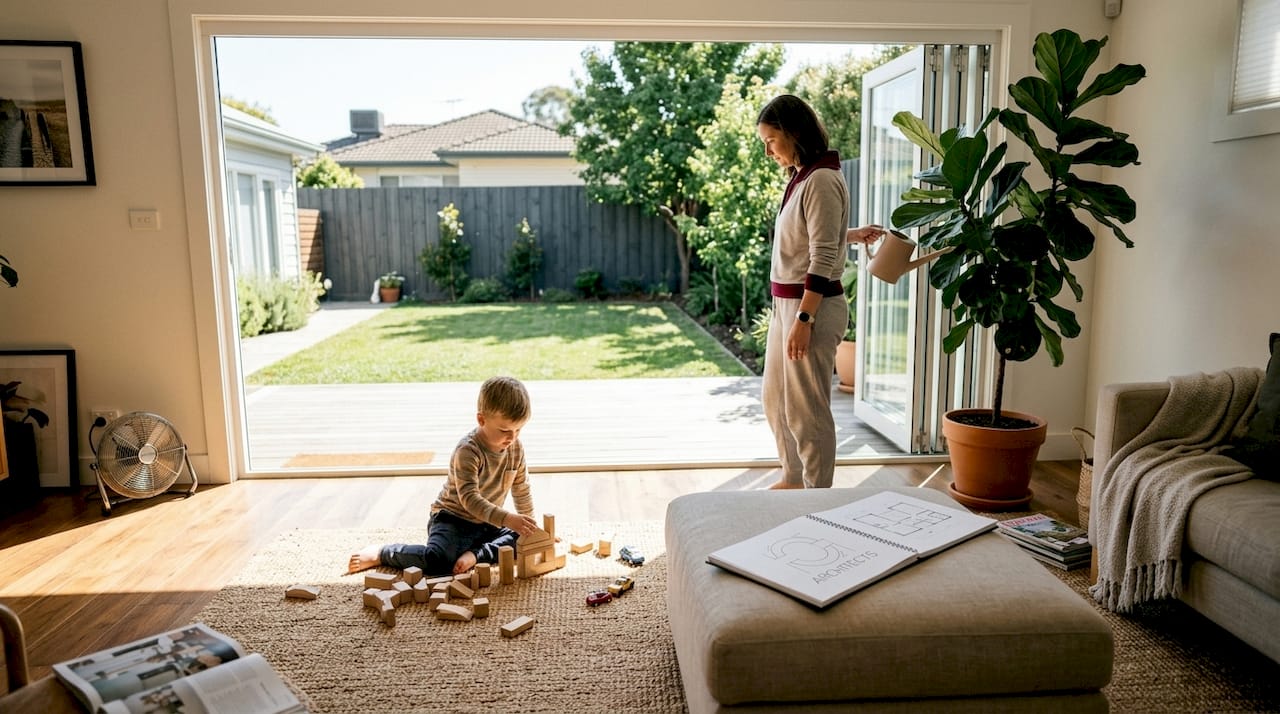
Step 3: Plan for indoor-outdoor connection
LA's climate is one of its greatest assets. Designing for natural ventilation, outdoor living areas, and sunlight access is not just aesthetic. It reduces energy costs and improves daily comfort. Review modern LA home design tips to see how successful projects handle this balance.
Step 4: Consider your community context
Your home exists in a neighborhood. Design choices that ignore the surrounding streetscape, shared walls, or neighbor sightlines can create friction and even trigger objections during the permit process.
Step 5: Set a realistic budget and timeline
Be honest about your financial limits and build in a contingency of at least 15 to 20 percent. 90% of projects exceed budget when the planning stage is skipped or rushed. Pairing your budget with sustainable architecture principles can also reduce long-term operating costs.
Pro Tip: Before your first design meeting, sketch a simple priority list: must-haves, nice-to-haves, and deal-breakers. This one document will save hours of back-and-forth with your architect.
Customizing the floor plan: Design and execution
Once you know what you want, it is time to create and implement your vision. This is where the planning work pays off.
Choosing between custom and pre-approved plans:
| Plan type | Approval speed | Personalization | Cost |
|---|---|---|---|
| Pre-approved (standard) | Fast (60-day review) | Limited | Lower |
| Semi-custom (modified pre-approved) | Moderate | Moderate | Mid-range |
| Fully custom | Longer | Full | Higher |
Pre-approved plans save time and money but offer limited personalization. For many LA homeowners adding an ADU, a semi-custom approach gives you the best of both worlds: faster approvals with room to adapt the layout to your lot and lifestyle.
Step 1: Draft your layout with a licensed architect
Bring your priority list and site measurements. Your architect will translate your goals into a schematic design that accounts for structural requirements, utility locations, and zoning limits.
Step 2: Review for compliance and function
Check that the draft meets seismic, energy, and zoning requirements. Walk through the plan room by room, asking whether each space serves its intended purpose. Explore duplex ADU plans as a reference for how compliant, functional layouts are structured.
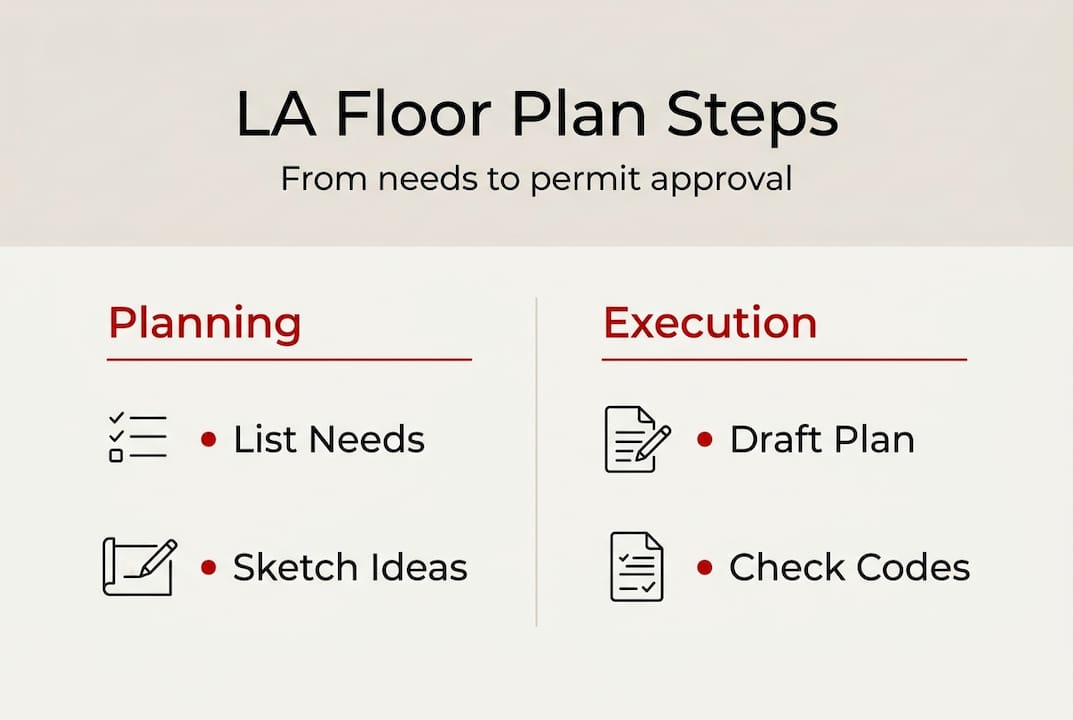
Step 3: Submit for permits and plan check
LA's Department of Building and Safety (LADBS) reviews plans for code compliance. Expect comments and revisions. A well-prepared submittal with complete documentation moves faster through this stage.
Step 4: Execute with LA-specific details in mind
Seismic strapping, energy-efficient windows, and fire-resistant materials are not optional in most LA projects. Build these into your specifications from the start, not as afterthoughts. You can also browse the ADU plan shop for ready-to-adapt options, including the popular Orange ADU design.
Pro Tip: Ask your architect to flag any design choices that could complicate resale. A layout that works perfectly for your current lifestyle may limit your buyer pool in the future.
Avoiding common mistakes and verifying your new plan
Before any construction begins, take time to review and catch issues early. This verification stage is where good projects become great ones.
Common mistakes to avoid:
- Trend-driven changes over functional improvements: A wine cellar or rooftop deck may look great in photos but add cost without adding everyday value for most households.
- Ignoring natural light and ventilation: Many remodels close off windows or block airflow in the name of adding square footage, reducing comfort significantly.
- Skipping structural review: Removing or moving walls without a structural engineer's input can create safety issues and fail inspection.
- Under-budgeting for compliance: Permit fees, soils reports, and energy documentation add up. Budget for them explicitly.
- Designing only for today: LA's housing needs are shifting. Flexible spaces that can serve as a home office, guest room, or caregiver suite add lasting value.
Over-customization can hurt future resale; focusing on functional improvements protects both your comfort and your investment.
Verification checklist before construction:
- Confirm all permits are issued and posted
- Walk the plan one more time at full scale if possible
- Review contractor bids against the permitted scope
- Check that energy and structural documentation matches the approved plans
- Get input from a trusted peer, neighbor, or community member who knows the area
"The best time to catch a layout problem is before the foundation is poured. A one-hour review session can prevent a three-month delay."
For long-term planning, consider how your choices align with community sustainability goals, including water efficiency, solar readiness, and reduced heat island effect. These factors matter increasingly to LA buyers and renters.
Why smart customization beats flash for LA homeowners
Looking at these steps, there is one perspective LA homeowners often overlook: the most regretted projects we see are not the ones that went over budget. They are the ones that prioritized visual impact over livability and community fit.
In our experience working across Los Angeles neighborhoods, the homeowners who are most satisfied years later are those who right-sized their ambitions. They chose layouts that adapt to changing family needs, materials that hold up to LA's climate, and designs that fit their block rather than standing apart from it.
Sustainable, code-friendly designs are genuinely easier to live in. They cost less to operate, attract better tenants if you rent, and sell faster when the time comes. The homeowners who chase trends often find themselves redesigning again within a decade.
Our strongest advice, drawn from real residential design experience, is this: collaborate early, plan thoroughly, and resist the urge to over-personalize. A home that works well for your life today and adapts gracefully to tomorrow is the real goal.
Turn your dream plan into reality with expert design
Ready to put these learnings into practice for your LA home? Here's where to start.
At FO+H Architects, we specialize in residential and ADU design built for Los Angeles's specific codes, climates, and communities. Whether you need a fully custom floor plan or want to adapt a proven design quickly, we can guide you through every stage, from feasibility to final permit.
Explore our ADU plan store for ready-to-adapt options designed with LA compliance in mind, including our efficient one-story ADU plans. Or visit FO+H Architects to learn about our full custom design and permitting services. Let's build something that fits your life and your neighborhood.
Frequently asked questions
What is the fastest way to customize a floor plan for a Los Angeles ADU?
Using a pre-approved plan is the fastest route, as pre-approved ADU plans mandate a 60-day review window in LA, compared to longer timelines for fully custom designs.
Do I need special reports for hillside home floor plan changes in LA?
Yes. Hillside properties add 18 to 30% to foundation costs due to soils and geotechnical report requirements that standard flat-lot projects do not face.
How can I avoid going over budget when customizing my floor plan?
Thorough planning and walkthrough tools significantly reduce costly mid-project changes, since 90% of projects go over budget when the planning stage is skipped entirely.
What's the risk of customizing a floor plan too much for personal style?
Over-customization reduces resale value by narrowing your buyer pool; flexible layouts that suit a range of LA lifestyles protect your long-term investment.