

TL;DR:
- Maximizing small spaces involves deliberate layout, multifunctional furniture, layered lighting, and vertical storage solutions. Proper measurement, floating furniture, and thoughtful zoning can significantly enlarge perceived space without structural changes. Using mirrors, appropriate lighting, and clutter-free surfaces enhances openness and comfort in compact environments.
Maximizing small spaces is defined as the intentional use of layout, furniture, lighting, and storage to increase both the usability and perceived size of a room. Whether you live in a studio apartment in Los Angeles or a compact ADU, the same principles apply: every square foot must serve a purpose. Sources like Savvy Nest Living, IKEA, and Real Simple confirm that the biggest gains come not from buying more, but from arranging and selecting more deliberately. This guide gives you a clear, step-by-step path to transform how your space looks, feels, and functions.
How to maximize small spaces through layout and furniture arrangement
The first step in any small-space redesign is measurement. Before you move a single piece of furniture, record the room's dimensions and map out your circulation paths. Clear circulation paths of 2 to 3 feet between furniture pieces keep movement comfortable and prevent the room from feeling cramped. That measurement discipline also tells you exactly what will fit before you commit to anything.
Once you have your dimensions, resist the instinct to push everything against the walls. Floating furniture away from walls counterintuitively makes small rooms feel larger and more intentionally designed. Pulling a sofa 12 to 18 inches from the wall and centering it on a rug creates a defined seating zone that reads as a deliberate room rather than a storage unit with chairs. This is one of the most consistent findings across professional small-space design guides.
Zoning is the next layer. In a studio or open-plan apartment, you can define separate functional areas without walls by using rugs and furniture groupings. An 8x10 rug anchoring a seating area visually unifies the zone and prevents the fragmented look that makes small rooms feel chaotic. Pair that rug with a sofa and two chairs arranged for conversation at roughly 8 feet apart, and you have a living room that functions independently from your sleeping or dining area.
Follow these steps before purchasing anything new:
- Measure every wall, doorway, and window opening with a tape measure.
- Sketch a floor plan to scale on graph paper or use a free tool like Roomstyler.
- Mark your circulation paths and confirm 2 to 3 feet of clearance.
- Identify your zones: sleeping, living, dining, and working.
- Experiment with furniture arrangements using cardboard cutouts before moving heavy pieces.
Pro Tip: Rearrange what you already own before buying anything new. Most small-space problems are layout problems, not inventory problems. Spend one weekend testing three different arrangements before spending a dollar.
What furniture works best in small living areas?
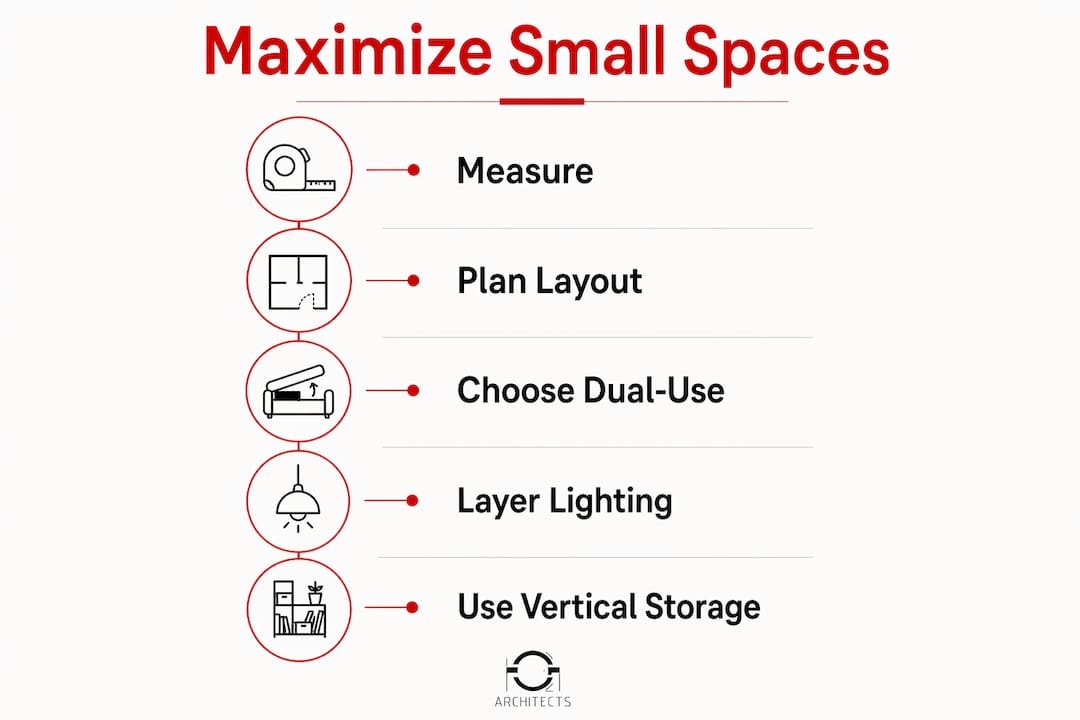
The rule for small-space furniture is simple: every piece must serve at least two purposes to justify its footprint. Dual-purpose pieces like sofa beds, storage ottomans, and fold-down desks deliver utility without clutter. A storage ottoman replaces both a coffee table and a linen closet. A sofa bed eliminates the need for a separate guest room. These are not compromises; they are the correct choices for limited square footage.
Scale matters as much as function. An oversized sectional in a 300-square-foot studio does not feel cozy; it feels suffocating. Equally, a tiny loveseat floating in a larger studio looks lost and makes the room feel unresolved. The goal is furniture that fits the room's proportions while leaving enough open floor to breathe. Consulting space planning resources before purchasing can save you from costly mistakes.
Here are the furniture categories that consistently perform in small apartments:
- Sofa beds and sleeper sofas: Replace a dedicated guest bed without occupying permanent floor space.
- Storage ottomans: Function as a coffee table, extra seating, and hidden storage simultaneously.
- Fold-down or wall-mounted desks: Create a full work surface that disappears when not in use.
- Nesting tables: Provide surface area when needed and stack away when not.
- Benches with storage: Work at the foot of a bed or entry and hold linens, shoes, or seasonal items.
Pro Tip: Start with foundational pieces first: sofa, bed, and dining furniture. Get those right before adding any accessories. Accessories are easy to swap; a wrong-sized sofa is expensive to fix.
How do lighting and mirrors change the feel of a small room?
Lighting is the most underused tool in small-space design. A single overhead fixture flattens a room and eliminates the sense of depth that makes spaces feel larger. The correct approach is three layers of lighting: ambient overhead light, task lighting at floor or table level, and accent lighting to highlight specific areas. Each layer adds visual dimension that a single source cannot provide.
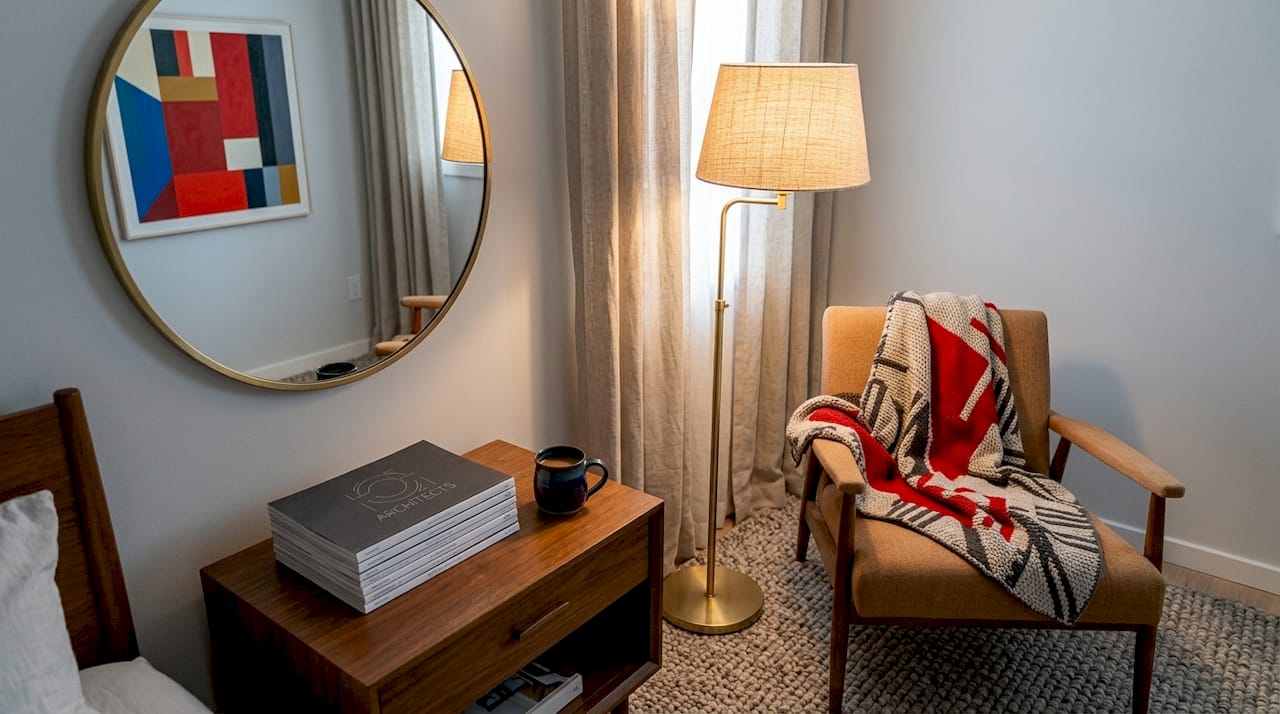
Bulb temperature shapes the mood of each zone. Warm bulbs in the 2700 to 3000K range work best in living rooms and bedrooms, where a cozy atmosphere is the goal. Cooler bulbs suit kitchens and bathrooms, where clarity and contrast matter more. Getting this wrong makes a small space feel either clinical or dim, neither of which helps.
Mirrors amplify everything lighting does. A large mirror opposite a window of 30x40 inches or larger can effectively double the natural light in a room. That reflected daylight makes the space feel open and airy without any structural change. Position the mirror so it captures the window directly, not at an angle, to get the full effect.
Renter-friendly options make this accessible without major installation:
- Plug-in wall sconces: Add wall-level lighting without hardwiring.
- Floor torchieres: Bounce light off the ceiling for soft ambient coverage.
- LED strip lights: Tuck behind shelves or under cabinets for accent lighting.
- Table lamps with dimmers: Control intensity to shift the room's mood from day to evening.
Layered lighting combined with mirrors is more about perception and mood than simple illumination. In small apartments, how a room feels is as important as how it functions.
Pro Tip: Use dimmers wherever possible and place lamps at different heights. A lamp at eye level when seated, one at standing height, and one at ceiling level creates the layered depth that makes a room feel designed rather than assembled.
What are the best vertical storage solutions for small apartments?
Floor space is the scarcest resource in a small home, so the walls are your primary storage opportunity. Wall-mounted systems like IKEA EKET cabinets use vertical space efficiently while keeping the floor clear, which directly increases the sense of openness. A floor-to-ceiling shelving arrangement along one wall can hold the equivalent of two or three freestanding bookcases while occupying zero floor footprint.
Safety and clearance are non-negotiable when going vertical. Vertical storage requires at least 2 inches of clearance from the ceiling and must be anchored into wall studs or with appropriate wall anchors rated for the load. Ignoring these specifications does not just risk damage; it creates a genuine hazard. Always follow the manufacturer's mounting instructions and confirm your wall type before installing anything heavy.
| Storage solution | Best use | Key consideration |
|---|---|---|
| IKEA EKET wall cabinets | Living room, bedroom | Stud anchoring required |
| Floating shelves | Kitchen, bathroom, office | Weight limit per bracket |
| Over-door organizers | Pantry, closet, bathroom | Door clearance check |
| Pegboards | Kitchen, garage, craft room | Wall-mounted, fully customizable |
| Bed frame with drawers | Bedroom | Replaces dresser entirely |
Horizontal surfaces deserve equal attention. Clear horizontal surfaces maintain a spacious, restful atmosphere regardless of how much storage you have behind closed doors. A cluttered countertop or coffee table visually shrinks a room faster than any furniture choice. The rule is simple: if it does not belong in that zone, it does not live on that surface. Effective zoning also means items are stored where they are used, which prevents the drift that leads to clutter. For inspiration on how architects approach this at the building level, micro-housing solutions in Los Angeles offer some of the most refined examples of vertical and spatial efficiency available.
Pro Tip: Before installing any wall storage, use a stud finder and mark your anchoring points. Plan the clearance from ceiling and adjacent walls first. A shelf installed 3 inches too high or too close to a corner becomes unusable and wastes the investment.
Key takeaways
Small spaces become functional and comfortable through intentional layout, scaled furniture, layered lighting, and wall-mounted storage applied together as a system.
| Point | Details |
|---|---|
| Layout before purchasing | Measure, map circulation paths, and test arrangements before buying anything new. |
| Dual-purpose furniture | Every piece should serve at least two functions to justify its floor footprint. |
| Three-layer lighting | Combine ambient, task, and accent lighting with mirrors to expand perceived space. |
| Vertical storage safety | Anchor wall systems into studs with proper clearance to maximize storage without hazards. |
| Clear horizontal surfaces | Keep countertops and tables free of clutter to maintain a spacious, restful feel. |
What working in small spaces has taught me about restraint
Based on my experience reviewing and designing compact residential projects, the single most common mistake people make is treating a small space like a storage problem. They add shelves, bins, and organizers, and the room still feels cramped because the underlying layout and furniture scale were never addressed. The space does not need more storage. It needs fewer items and better placement of the ones that remain.
Floating furniture away from walls is the change I recommend most often, and it is also the one people resist most. The instinct is to hug the perimeter to "save space," but that approach actually destroys it. Centering furniture on a rug and leaving the perimeter open creates breathing room that makes a 400-square-foot apartment feel twice its size. I have seen this work in projects across Los Angeles, from studio conversions to ADU builds, and the effect is consistent.
Layered lighting is the second principle people underinvest in. A single overhead fixture is a functional failure in a small room. Adding a floor lamp, a table lamp, and even LED strips under a shelf costs less than most furniture purchases and delivers a more dramatic improvement than any new sofa would. Pair that with a large mirror opposite your main window, and you have addressed two of the biggest perception problems in small spaces without touching the floor plan.
The deeper lesson is patience. Small-space design rewards iteration. Live with an arrangement for two weeks before deciding it does not work. Try the mirror in two positions before committing. Buy the foundational pieces first and resist filling every corner immediately. The spaces that feel the most considered are almost always the ones where the resident made fewer, more deliberate choices over time.
— Henry
How Fostudiodesign approaches small-space living
Fostudiodesign specializes in residential and ADU design for exactly the kind of constrained, high-value spaces this article addresses. The firm's ADU plans and designs are built around the same principles covered here: efficient layouts, multifunctional spatial organization, and thoughtful design that makes every square foot count. Whether you are planning a new ADU, converting a garage, or rethinking a compact home, Fostudiodesign brings architectural precision to the challenge of small-space living. Browse the ADU store to find floor plans designed specifically for Los Angeles urban lots, where space efficiency is not optional. It is the standard.
FAQ
What is the first step to maximize a small space?
Measure your room and map circulation paths of 2 to 3 feet before moving or buying any furniture. Layout decisions made without accurate measurements almost always result in pieces that block flow or feel oversized.
How do I make a small apartment feel bigger without renovating?
Float furniture away from walls, place a large mirror opposite your main window, and layer three types of lighting: ambient, task, and accent. These three changes address layout, light, and perception without any structural work.
What furniture should I buy first for a small apartment?
Start with foundational pieces: sofa, bed, and dining furniture, prioritizing dual-purpose options like a storage ottoman or sofa bed. Accessories and decorative items should come last, once the functional core is in place.
Is vertical storage safe in rental apartments?
Yes, when installed correctly. Wall-mounted systems like IKEA EKET require anchoring into studs or rated wall anchors, with at least 2 inches of clearance from the ceiling. Always confirm your wall type and follow the manufacturer's load specifications before installation.
How do rugs help in small space design?
A properly scaled rug of at least 8x10 feet anchors a seating zone and visually unifies the area, preventing the fragmented look that makes small rooms feel chaotic. Undersized rugs break zone identity and actually make a room feel smaller.