

TL;DR:
- Residential design influences health, comfort, energy use, and mental wellbeing beyond aesthetics.
- Thoughtful layouts, thermal upgrades, and natural light improve daily life and long-term home value.
- Focusing on function, flexibility, and human-scale proportions creates homes that are practical and meaningful.
Most homeowners in Los Angeles spend months choosing paint colors and countertops, yet overlook the design decisions that actually shape how they feel every day. Residential design is not just about appearances. Home upgrades improve health metrics like indoor temperature, gas use, and mental wellbeing, according to published clinical research. That means the choices you make about layout, materials, and spatial flow have a direct, measurable effect on your comfort, your energy bills, and even your sense of belonging in your neighborhood. This article walks through what great residential design really means for LA homeowners, and how to put those principles to work on your next project.
Table of Contents
- Moving beyond aesthetics: The real power of residential design
- How design shapes lifestyle and community in LA
- Key design principles: Function, flexibility, and beauty
- Putting design insights into action for your next project
- Why the focus on human-centered design in LA is more vital than ever
- Transform your LA home with expert-driven design solutions
- Frequently asked questions
Key Takeaways
| Point | Details |
|---|---|
| Design impacts health | Evidence shows the right upgrades improve comfort, mental health, and reduce energy bills. |
| Community and lifestyle matter | Smart design shapes how you connect with neighbors and fit your lifestyle in Los Angeles. |
| Prioritize function then beauty | Homes that last start with practical layouts, then layer in aesthetics through thoughtful choices. |
| Custom solutions win | Tailoring your project to LA’s climate and lot constraints delivers the biggest long-term rewards. |
Moving beyond aesthetics: The real power of residential design
Many homeowners assume design is primarily a visual exercise. Pick a style, choose finishes, and you're done. Based on our experience working with clients across Los Angeles, that assumption leads to homes that look polished but feel uncomfortable to actually live in.
The data tells a more complete story. Research published in BMJ Open found that thermal upgrades raise indoor temperature, lower gas use, improve mental health scores, and reduce healthcare costs for occupants. These are not minor lifestyle perks. These are clinical outcomes tied directly to how a home is designed and built.
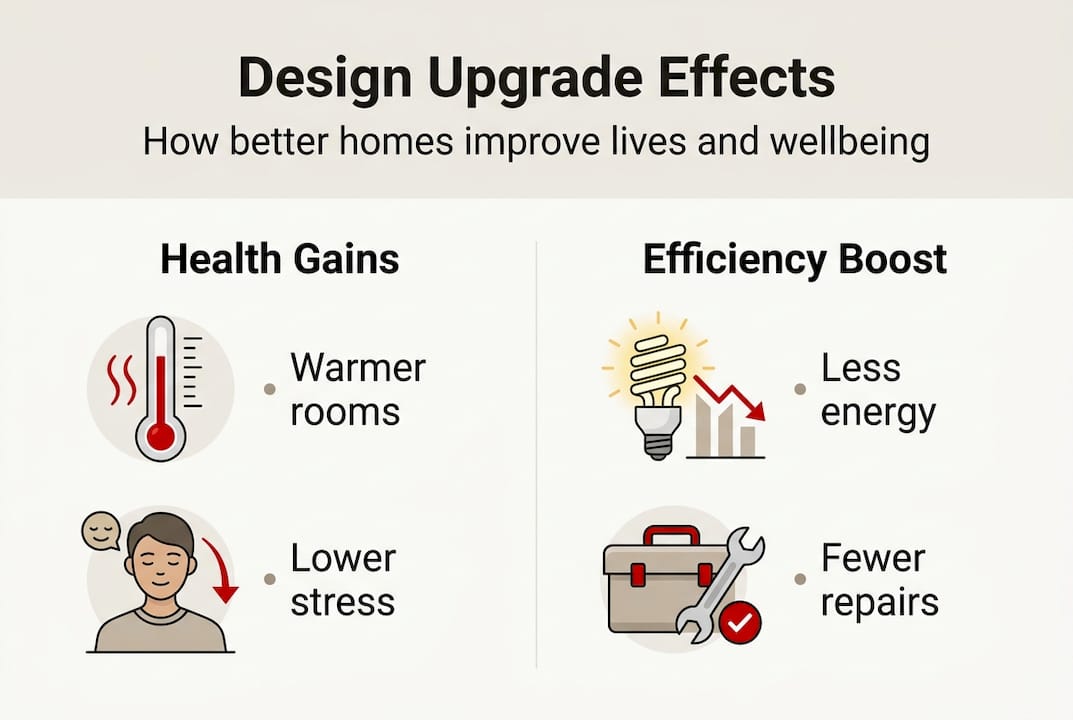
What the research shows: Key outcomes from home design upgrades
| Design factor | Measured outcome |
|---|---|
| Improved insulation and thermal envelope | Higher indoor temperatures, lower gas bills |
| Hazard reduction (trip risks, air quality) | Fewer injuries, better respiratory health |
| Better natural light and ventilation | Improved mood and mental wellbeing scores |
| Efficient spatial layouts | Reduced daily stress, better social interaction |
The numbers matter because they shift the conversation. When you invest in a thoughtful layout or proper climate control, you are not spending money on luxury. You are investing in your health and daily quality of life.
Beyond physical health, design shapes how you feel emotionally in your space. Homes with poor spatial hierarchy (meaning rooms that lack clear purpose or flow) create low-level stress that most people never consciously identify. You just feel like the house doesn't quite work, without knowing why.
Here are the core areas where design decisions create real, measurable impact:
- Thermal comfort: Insulation, window placement, and shading directly affect energy use and physical comfort year-round.
- Air quality: Material choices and ventilation planning reduce indoor pollutants that affect respiratory health.
- Mental wellbeing: Natural light access and noise management lower anxiety and improve focus.
- Social connection: Layout decisions determine whether your home supports gathering or isolates residents.
"Design is not decoration. It is the structure of daily life."
For a broader look at how these principles apply locally, our modern LA architecture tips cover climate-specific strategies worth reviewing before your next project.
How design shapes lifestyle and community in LA
Los Angeles presents a unique set of design challenges and opportunities. The climate is mild but variable. Lots are often small. Neighborhoods range from dense urban blocks to sprawling hillside properties. And the culture places high value on both personal expression and community belonging.
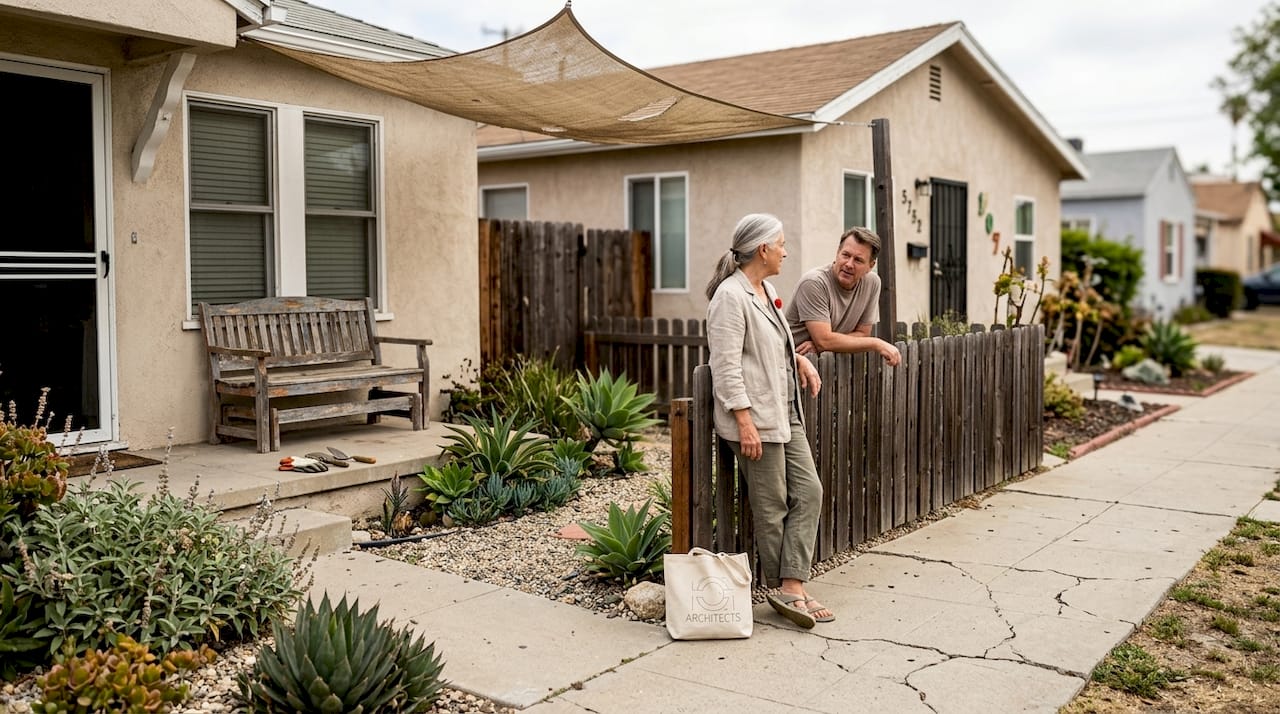
Understanding the impact on wellbeing sets the stage for exploring how these principles bring your lifestyle and neighborhood to life. Flexible, climate-adaptive architecture with a focus on both personal style and small-lot community standards is what LA homeowners should prioritize, according to design professionals working in the region.
Standard residential layout vs. community-friendly LA design
| Feature | Standard layout | Community-focused LA design |
|---|---|---|
| Outdoor space | Private backyard only | Layered zones: private, semi-private, shared |
| Entry sequence | Direct front door access | Transitional space that mediates street and home |
| Indoor-outdoor flow | Minimal connection | Large openings, covered patios, blurred boundaries |
| Flexibility | Fixed room functions | Multi-use rooms that adapt over time |
Here are four practical strategies for lifestyle-focused space planning in Los Angeles:
- Design layered outdoor zones. Create distinct areas for private relaxation, casual neighbor interaction, and street-facing landscaping. This gives you privacy without isolation.
- Plan for indoor-outdoor flow. Large sliding doors, covered patios, and connected kitchen-to-garden layouts let you take advantage of LA's climate while expanding your usable living area.
- Incorporate flexible room functions. A guest room that doubles as a home office, or a garage conversion that serves as a studio, adds long-term value without increasing your footprint.
- Respect neighborhood scale. Massing and setbacks that respond to adjacent homes create a sense of belonging and avoid friction with neighbors or local planning boards.
Pro Tip: Before finalizing your floor plan, spend a full week noting how you actually move through your home at different times of day. Most people discover that their real patterns differ significantly from what they assumed when they first designed the space.
For deeper guidance on spatial planning, our resources on optimizing LA home layouts and innovative LA design ideas offer practical frameworks tailored to Los Angeles conditions.
Key design principles: Function, flexibility, and beauty
Having seen design's effects on lifestyle and health, let's clarify the principles that set truly great LA homes apart. The most livable homes we have worked on share three qualities: they function well for daily routines, they adapt as life changes, and they are beautiful in a way that feels earned rather than applied.
Balancing privacy with community engagement is essential, and function should drive design longevity, with aesthetics layered on through proportions. That last point is worth sitting with. Beauty in architecture is not about decoration added at the end. It comes from getting the proportions, scale, and relationships between spaces right first.
Here are the principles we apply consistently across residential projects:
- Function first. Every room should have a clear primary purpose and enough flexibility to serve a secondary one. Spaces that lack purpose become clutter magnets.
- Proportion and hierarchy. Rooms that feel right are usually sized in relation to each other. A grand entry that leads to a cramped living room creates cognitive dissonance.
- Material honesty. Use materials that perform well in LA's climate and age gracefully. Avoid finishes that look impressive in photos but degrade quickly in heat or sun exposure.
- Adaptability built in. Design for your life in five to ten years, not just today. Wider doorways, accessible bathrooms, and convertible spaces add value without adding cost if planned from the start.
"The homes that hold their value longest are the ones designed for how people actually live, not for how they want to appear."
Pro Tip: When reviewing design options with your architect, ask specifically how each choice affects daily function. If the answer is only about appearance, push for more. The best design decisions serve both.
A common mistake we see is overemphasizing visual impact at the expense of livability. A dramatic double-height ceiling can be stunning, but if it makes the adjacent bedroom noisy or drives up your HVAC costs, it works against you every single day. For more on this balance, our article on sustainable community homes explores how function and sustainability reinforce each other.
Putting design insights into action for your next project
Armed with principles and context, this section shows how to turn design theory into project reality in Los Angeles. The gap between knowing good design principles and actually applying them in a project is where most homeowners lose momentum. Here is how to close that gap.
Before you meet an architect or designer, work through this checklist:
- Write down the three biggest frustrations with your current home.
- List the activities your household does most often and where they happen now.
- Note any health or accessibility needs that your current space does not support.
- Identify which outdoor areas you use and which you avoid, and why.
- Research your local zoning rules, including ADU eligibility and setback requirements.
Once you have that foundation, follow these steps to define your project goals clearly:
- Step 1: Define your functional priorities. Separate needs from wants. A second bathroom may be a need; a wine cellar may be a want. Knowing the difference keeps your project on track.
- Step 2: Document your lifestyle patterns. How many people live in the home? Do you work remotely? Do you host regularly? These patterns should drive layout decisions.
- Step 3: Set your climate goals. In Los Angeles, thermal comfort and hazard reduction show significant improvements in occupant health and efficiency when addressed early in design. Decide upfront how much you want to invest in insulation, shading, and ventilation.
- Step 4: Communicate clearly with your design team. Bring photos, sketches, and written notes. The more specific you are, the more accurately your architect can translate your needs into a design.
Pro Tip: Small upgrades often deliver outsized results. Improving window placement for cross-ventilation, adding a covered outdoor transition space, or reconfiguring a kitchen triangle can transform daily comfort without a full remodel budget.
For practical tools to support this process, our guide on customizing LA floor plans walks through how to adapt standard layouts to your specific site and lifestyle.
Why the focus on human-centered design in LA is more vital than ever
Stepping back from practical application, here is the hard-earned lesson most design guides skip: the residential projects that disappoint their owners almost always prioritized visual trends over lived experience.
In our work across Los Angeles, we see homeowners spend significant budgets on finishes that photograph well but do nothing for thermal comfort, social connection, or daily ease. The resale-gloss mentality drives decisions that look good on listing photos and feel hollow in real life.
The unexpected truth is that small-scale, function-focused changes often deliver the biggest wellbeing and efficiency gains. A layout tweak that improves natural light. A material swap that reduces indoor heat gain. A boundary treatment that invites neighbor interaction without sacrificing privacy. These are not glamorous decisions, but they are the ones that make a home feel genuinely good to live in.
As climate pressures increase and LA's housing density grows, homes that are designed for real human experience, not trend cycles, will hold their value in every sense. If you are planning an ADU or a remodel, understanding how the ADU plan check process works is a practical first step toward a project grounded in function and community fit.
Transform your LA home with expert-driven design solutions
If this article has shifted how you think about your next project, you are already ahead of most homeowners who start with finishes and work backward. The next step is connecting with a team that can translate these principles into a real design for your specific site, budget, and lifestyle.
At FO+H Architects, we specialize in residential and ADU design across Los Angeles, with a focus on spaces that perform as well as they look. Whether you are exploring duplex ADU plans, browsing our ADU plan store for ready-to-permit options, or ready to start a fully custom LA house plan, we have the resources and expertise to support your goals. Reach out to schedule a consultation and find out what a human-centered approach to design can do for your home.
Frequently asked questions
What measurable health benefits can home design changes offer?
Home upgrades impact temperature, energy use, and mental health based on clinical studies, meaning better insulation, safer layouts, and improved ventilation can produce real, documented improvements in how you feel at home.
How does design enhance community connections in Los Angeles homes?
Designs with flexible, climate-adaptive architecture and layered outdoor zones help residents connect with neighbors while maintaining personal privacy, which is especially important on LA's smaller urban lots.
Are beautiful homes less practical or less healthy?
Not when function leads the process. Function should guide design for longevity while beauty is integrated through proportions and material choices, so a well-designed home can be healthy, efficient, flexible, and visually compelling at the same time.
What's the first design step for an LA homeowner planning a remodel?
Start by documenting your actual daily routines and functional frustrations before meeting with an architect, because clear goals at the outset lead to designs that solve real problems rather than just looking good on paper.