

TL;DR:
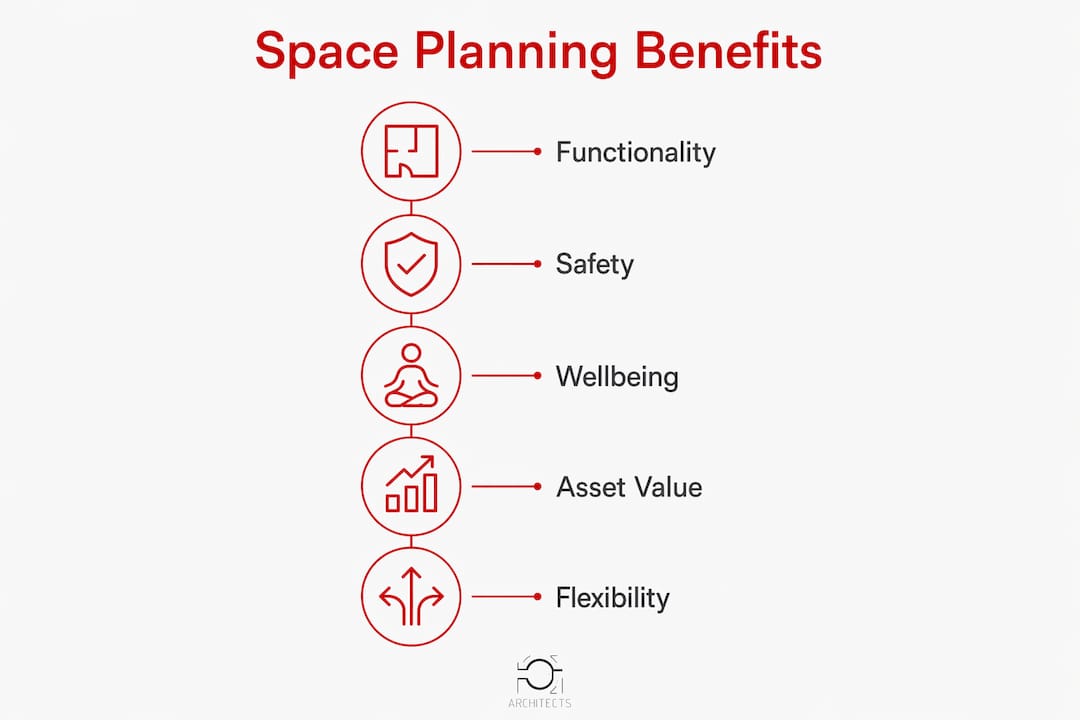
- Effective space planning optimizes layout, safety, and occupant wellbeing, influencing long-term property value.
- Early, research-backed decisions prevent costly redesigns and ensure code compliance while enhancing functionality.
Space planning is the deliberate process of arranging physical environments to maximize functionality, comfort, and efficiency. Why space planning matters becomes clear the moment you compare a poorly arranged office where employees constantly interrupt each other against one where circulation, privacy zones, and natural light are intentionally designed. Research from Springer in 2026 found that combining partitions with controlled views reduces psychological stress by 18.1% and improves cognitive work performance by up to 25.4%. For homeowners, business owners, and real estate developers in Los Angeles and beyond, those numbers represent real dollars, real wellbeing, and real competitive advantage.
Why space planning matters for functionality
Good space planning is not about furniture arrangement. It is a human-systems intervention that shapes how people move, think, and feel inside a building.
The core functionality gains come from three areas:
- Circulation paths: Clear, unobstructed routes reduce physical friction and mental fatigue. A kitchen where the refrigerator, sink, and stove form a tight triangle is faster and less tiring to work in than one where those elements are scattered.
- Privacy zones: Dedicated quiet areas allow focused work or rest. Open zones support collaboration. Mixing both in the same floor plan serves the full range of human activity.
- Natural light and views: Positioning workstations and seating areas near windows is not a luxury. Privacy design research shows that spatial perception improves by 73.4% when occupants have access to views combined with appropriate enclosure.
Many homeowners assume that opening up a floor plan automatically improves a space. The evidence says otherwise. A 2026 post-occupancy evaluation of open-plan office buildings in Saudi Arabia found that open layouts can negatively impact comfort, privacy, and overall performance despite their reputation for promoting collaboration. That finding applies equally to open-plan residential spaces where noise and lack of visual separation create daily friction.
Pro Tip: Balance openness and enclosure by designing at least one acoustically separated zone in every floor plan, whether it is a home office alcove or a focus room in a commercial suite. A single well-placed partition can outperform an entire acoustic ceiling upgrade.

The benefits of space organization extend to every room type. A bedroom where the bed placement blocks natural morning light disrupts sleep cycles. A retail floor where product categories are illogically sequenced increases customer frustration and reduces dwell time. Thoughtful layout decisions at the design stage cost nothing compared to retrofitting them later.
What safety and regulatory requirements shape space planning?
Safety compliance is not optional, and it directly constrains every layout decision you make. The International Building Code (IBC) 2024 governs egress provisions based on occupant load, exit count, and travel distances. These rules apply at both the room level and the story level, which means a floor plan that looks functional on paper can fail code review entirely if exits are misplaced.
The key IBC requirements every planner must know:
- Occupant load calculation: The IBC assigns a load factor per square foot based on use type. A conference room, a retail floor, and a residential bedroom each carry different load factors that determine how many exits are required.
- Exit count: Spaces with an occupant load above 49 generally require at least two exits. Rooms with higher loads require more, and the exits must be positioned to provide redundancy.
- Travel distance: The maximum allowable distance from any occupied point to an exit varies by occupancy type and sprinkler status. Exceeding it requires a layout change, not a variance.
- Exit width: Each exit must accommodate the calculated egress flow. Narrow corridors that look fine visually can fail width calculations under load.
Life-safety egress requirements form a foundational design input, not an afterthought. Discovering an egress violation during permit review forces costly redesigns that could have been avoided with a 30-minute code check at the schematic design stage.
| IBC Requirement | What it governs | Planning implication |
|---|---|---|
| Occupant load | Number of people per use type | Determines exit count and width |
| Travel distance | Max path length to nearest exit | Constrains room depth and corridor layout |
| Exit width | Minimum clear width per exit | Affects door and corridor sizing |
| Exit count | Minimum number of exits per space | Influences partition and wall placement |
Pro Tip: Before finalizing any floor plan, run a basic occupant load calculation using the IBC table for your use type. A building permit guide can help you identify which code thresholds trigger additional review requirements in your jurisdiction.
How does space planning contribute to long-term asset value?
The importance of space planning extends well beyond the day a building opens. JLL's 2026 Design Perspectives report identifies flexible, AI-ready, human-centric design as the primary lever for future-proofing real estate assets. That means the layout decisions made today directly affect a property's ability to attract tenants, command higher rents, and adapt to changing use patterns over the next decade.
Three design principles drive long-term asset resilience:
- Biophilic design: Incorporating greenery, natural materials, and daylight access reduces occupant stress and increases reported satisfaction. JLL's 2026 findings specifically cite greenery and digital detox spaces as features that enhance wellbeing and support talent attraction for commercial tenants.
- Modular and adaptive layouts: Spaces designed with movable partitions, flexible utility connections, and open structural bays can be reconfigured without major construction. A residential ADU designed with a flexible floor plan today can serve as a rental unit, a home office, or an aging-in-place suite tomorrow.
- Accurate occupancy data: JLL's 2026 Global Occupancy Planning Benchmark, covering 84 organizations and 716 million square feet of space, found that improving space data accuracy is the critical step for moving from reactive to predictive occupancy planning. Developers who track actual utilization rates rather than assumed ones consistently make better sizing decisions.
"Design is a strategic lever for future-proofing real estate." — JLL, 2026 Design Perspectives
The impact of space layout on asset value is measurable. Properties with human-centric, adaptable designs command premium rents and experience lower vacancy rates because they serve a broader range of occupant needs over time. For developers in Los Angeles, where land costs are high and regulatory requirements are strict, getting the layout right the first time is a financial necessity.
Open-plan vs. partitioned vs. hybrid: which layout works best?
The three dominant layout types each carry distinct tradeoffs that affect occupant experience in predictable ways.
| Layout type | Key benefits | Key drawbacks |
|---|---|---|
| Open-plan | Promotes collaboration, reduces construction cost, maximizes visual space | Noise, lack of privacy, reduced focus performance |
| Partitioned | Strong acoustic and visual privacy, supports focused work | Can feel isolating, limits spontaneous interaction, higher construction cost |
| Hybrid | Balances collaboration and focus zones, adaptable to varied tasks | Requires careful planning to avoid wasted circulation space |
The 2026 Frontiers post-occupancy evaluation study confirmed that open-plan offices consistently underperform on comfort and privacy metrics despite their popularity. That finding should recalibrate how both residential and commercial designers approach open layouts. The problem is not openness itself. The problem is openness without complementary privacy solutions.
The Springer 2026 study makes the case for hybrid design most clearly. Complementary privacy strategies, such as combining partitions with controlled views, substantially outperform single-feature approaches in improving occupant wellbeing and cognitive performance. A partition alone reduces noise but can feel oppressive. A view alone reduces stress but provides no acoustic separation. Together, they produce measurably better outcomes than either element in isolation.
For residential projects, the hybrid principle translates directly. A great room that combines an open kitchen and living area with a defined reading nook or study alcove gives occupants the social connection of open space and the cognitive relief of enclosure. That combination is not a design preference. It is a performance decision backed by research.
What practical steps optimize space planning for your project?
Effective space planning follows a clear sequence regardless of whether you are designing a single-family home, a commercial office, or a multi-unit development.
- Assess actual usage patterns. Do not plan based on assumptions. For commercial projects, use occupancy sensors or badge data to understand when and how spaces are actually used. For residential projects, map daily routines: morning traffic through the kitchen, evening use of outdoor areas, frequency of remote work.
- Define your flexibility requirements. Decide which spaces need to serve multiple functions over time. A spare bedroom that doubles as a home office needs different electrical, lighting, and acoustic specifications than one that serves a single purpose.
- Run code compliance checks early. Calculate occupant loads and travel distances before finalizing walls and exits. IBC exit requirements influence layout feasibility and require early integration to avoid costly redesigns.
- Clean your space data. JLL's benchmark report found that data governance for space utilization is frequently overlooked but vital for accurate planning. Mis-sized footprints and poor space allocation decisions almost always trace back to dirty or incomplete utilization data.
- Collaborate with a licensed architect or space planner. Code compliance, structural constraints, and human-centric design principles interact in ways that are difficult to resolve without professional expertise. Early collaboration prevents expensive late-stage corrections.
Pro Tip: When reviewing a floor plan, walk through it physically or trace the path with your finger. If you cannot move from the entry to every primary room without passing through another primary room, the circulation plan needs revision. This single check catches the majority of functional layout problems before construction begins.
Exploring flexible floor plan strategies early in your project gives you options that disappear once walls go up. The cost of changing a layout on paper is zero. The cost of changing it in the field is significant.
Key takeaways
Space planning directly determines functionality, safety compliance, occupant wellbeing, and long-term asset value. Every layout decision made at the design stage either solves or creates a problem that will be lived with for decades.
| Point | Details |
|---|---|
| Layout affects cognition | Combining partitions with views reduces stress by 18.1% and improves cognitive performance by 25.4%. |
| Safety codes constrain layout | IBC occupant load and travel distance rules must be calculated before walls are finalized. |
| Open plans need privacy solutions | Open layouts consistently underperform on comfort without complementary acoustic and visual enclosure. |
| Data accuracy drives better planning | Accurate occupancy data moves planning from reactive to predictive, reducing wasted space. |
| Flexibility preserves asset value | Modular, adaptive layouts allow reconfiguration without major construction, protecting long-term ROI. |
Space planning is the decision that shapes everything else
Based on my experience working on residential, ADU, and commercial projects in Los Angeles, the most expensive mistakes I see are not structural failures or material choices. They are layout decisions made without enough information, made too late, or made without consulting the code.
I have seen a beautifully finished commercial suite require a complete interior demolition because the exit configuration failed occupant load review. I have seen a residential addition that cost the homeowner tens of thousands of dollars to reconfigure because the original layout made the primary bedroom inaccessible without passing through the living room. Both situations were entirely preventable.
What the 2026 research from JLL and Springer confirms is something I have observed directly: space planning is not a soft design preference. It is a measurable performance variable. The layouts we choose determine how people feel in a space, how productively they work, how safely they can exit in an emergency, and how much the property is worth in ten years.
The shift I would encourage every homeowner, business owner, and developer to make is this: treat space planning as the first decision, not the last. It is far easier to move a wall on a drawing than to move it after it is built. The research, the code, and the financial outcomes all point in the same direction. Get the layout right before anything else.
— Henry
Start your project with professionally planned spaces
If you are ready to apply these principles to a real project, Fostudiodesign has done the planning work for you.
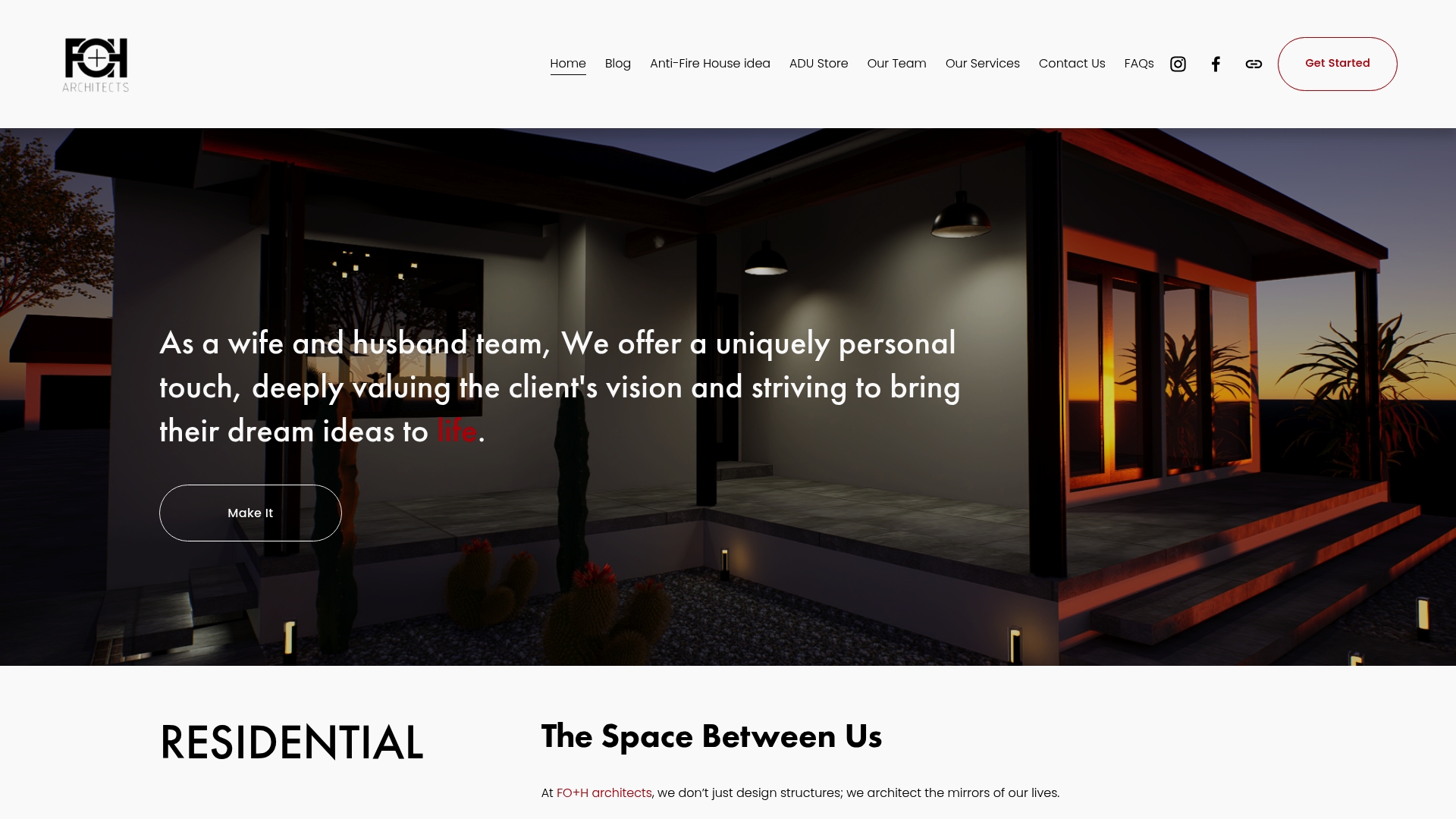
The ADU Store by FO Studio offers a range of professionally designed ADU plans built for Los Angeles conditions, including occupancy compliance, flexible layouts, and optimized circulation. Each plan reflects the human-centric and code-compliant principles covered in this article. Whether you are exploring a Spanish ADU for a traditional neighborhood context or a modern Blue ADU for a contemporary lot, these plans give you a tested starting point that saves time, reduces redesign risk, and delivers a space that actually works.
FAQ
What is space planning in architecture?
Space planning is the process of organizing interior areas to optimize circulation, function, privacy, and safety. It determines where walls, openings, and use zones are placed within a building footprint.
How does space planning improve efficiency?
Thoughtful layout design reduces wasted movement, supports task-specific zones, and minimizes friction between occupants. A 2026 Springer study found that well-designed privacy layouts improve cognitive work performance by up to 25.4%.
Does space planning affect property value?
JLL's 2026 research confirms that flexible, human-centric layouts enhance asset resilience and support higher long-term real estate value by attracting tenants and reducing reconfiguration costs.
What are the most common space planning mistakes?
The most common mistakes are ignoring IBC egress requirements until permit review, designing open layouts without privacy solutions, and planning based on assumed rather than measured occupancy data.
When should space planning happen in a project?
Space planning should happen at the earliest design stage, before structural decisions are made. Early layout work allows code compliance checks, flexibility planning, and circulation optimization at zero construction cost.