

TL;DR:
- Custom home design in Los Angeles is practical and allows homes to reflect personal and cultural needs.
- The process involves goal setting, team selection, design development, permitting, and construction with an emphasis on communication.
- Personalization and sustainability features enhance functionality, energy efficiency, and home value, aligning with individual lifestyles.
Many homeowners in Los Angeles assume custom home design is reserved for celebrities or multi-million-dollar estates. That assumption stops a lot of people from pursuing a home that genuinely fits their life. The truth is, custom design is a practical, accessible process that any committed homeowner can pursue, and in a city as diverse and dynamic as Los Angeles, it may be the most meaningful investment you make. This article walks you through what custom home design actually means, how the process unfolds step by step, and how you can create a home that reflects your values, your routines, and the LA community you belong to.
Table of Contents
- What is custom home design (and why does it matter in Los Angeles)??)
- The custom home design process: From vision to blueprint
- Personalization and sustainability: Making your home reflect your values
- Common pitfalls and expert strategies for successful custom home design
- A critical perspective: Why true custom design means listening first
- Ready to design your LA home? Partner with experts who listen
- Frequently asked questions
Key Takeaways
| Point | Details |
|---|---|
| Custom design = personalization | A custom home is tailored to how you live and reflects your unique needs and values. |
| Step-by-step workflow | Clear stages—vision, expert collaboration, design, approvals—guide you from idea to blueprint. |
| Sustainability is essential | Eco-friendly materials and features are critical for comfortable, future-ready LA living. |
| Avoid common mistakes | Work with experienced professionals, prepare for surprises, and stay involved for the best results. |
What is custom home design (and why does it matter in Los Angeles)?
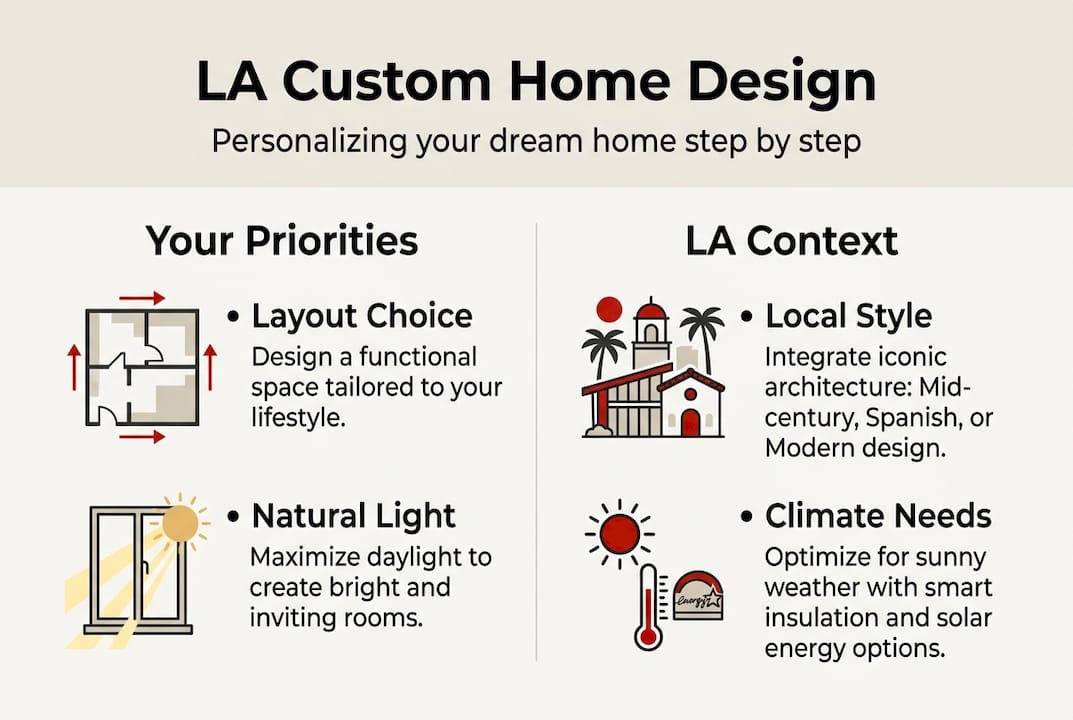
Custom home design is the process of creating a home that is built specifically around your needs, priorities, and environment, rather than selecting from a pre-made floor plan. With a standard plan, you adapt your life to the house. With custom design, the house adapts to you. That distinction matters enormously in Los Angeles, where neighborhoods vary dramatically, lots come in unusual shapes, and the climate creates specific opportunities for outdoor living, natural light, and passive cooling.
The city's cultural diversity also plays a role. A home in Silver Lake may call for a very different design philosophy than one in Inglewood or Pasadena. Custom design allows you to honor your cultural heritage, your family's rhythms, and your neighborhood's character in ways that a generic plan simply cannot.
Custom home design vs. standard plans
| Feature | Custom home design | Standard floor plan |
|---|---|---|
| Layout | Fully tailored to your needs | Fixed and predetermined |
| Sustainability | Integrated from the start | Often added as an afterthought |
| Local fit | Addresses lot shape, climate, codes | Generic, not site-specific |
| Cost control | Budget guided by scope | Limited flexibility |
| Personalization | Unlimited | Minimal |
Top reasons LA homeowners choose custom design
- Maximizing natural light and cross-ventilation in a mild climate
- Designing for indoor-outdoor living and California lifestyle
- Reflecting cultural heritage and household values
- Addressing unique lot conditions, such as hillside terrain or narrow urban lots
- Meeting sustainability and energy efficiency goals
- Planning for multi-generational living or accessory dwelling units (ADUs)
The role of architects in this process is central. Architects bridge the technical requirements of city codes and structural integrity with your personal vision, translating what you value into drawings and specifications that contractors can build. Understanding why home design matters for your day-to-day life helps clarify what you actually need from your space before any design work begins.
Pro Tip: Before your first meeting with an architect, write down everything you wish you could change about your current home. That list, as simple as it sounds, becomes the foundation of a focused, productive design conversation.
The custom home design process: From vision to blueprint
The custom design process can feel overwhelming at first, but it follows a clear sequence. Each phase builds on the last, and knowing the milestones helps you stay confident throughout. The residential design workflow for a custom LA home generally moves through these stages:
- Goal setting and site analysis. Define what you need from your home, including the number of rooms, lifestyle priorities, and budget range. Your architect will also evaluate your lot for orientation, topography, and any zoning constraints.
- Team selection. Choose your architect, interior designer, and contractor early. In Los Angeles, you want professionals familiar with local codes, hillside regulations, and ADU requirements.
- Concept design. Your architect develops initial sketches and space plans based on your goals. This is where the big ideas take shape, and your feedback shapes every decision.
- Design refinement. Detailed drawings, material selections, and cost estimates are developed. You finalize layouts, elevations, and key specifications at this stage.
- City permitting and approvals. Plans are submitted to the Los Angeles Department of Building and Safety. Depending on scope, this can take several weeks to several months.
- Construction documents. Final technical drawings are prepared for the contractor, including structural details, mechanical systems, and Title 24 energy documentation.
- Construction and site oversight. Your architect monitors progress, resolves field issues, and ensures the finished home matches the approved design.
Learning how to customize LA floor plans at each phase helps you avoid costly revisions later. The earlier you communicate priorities, the smoother the process runs.
Typical timeline and key deliverables
| Phase | Timeline | Key deliverable |
|---|---|---|
| Goal setting and site analysis | 2 to 4 weeks | Program and site report |
| Concept design | 4 to 8 weeks | Schematic drawings |
| Design refinement | 6 to 10 weeks | Design development set |
| City permitting | 4 to 16 weeks | Approved permit |
| Construction documents | 4 to 8 weeks | Permit-ready drawing set |
| Construction | 6 to 18 months | Finished home |
One point worth emphasizing: communication between you and your design team is not optional. Decisions made without your input, or yours made without expert guidance, tend to result in expensive changes. Show up to every review meeting prepared with questions.
Personalization and sustainability: Making your home reflect your values
Walking through the process raises the most personal question of all: what makes your custom home truly yours? The answer lives in the details you carry into every design conversation.
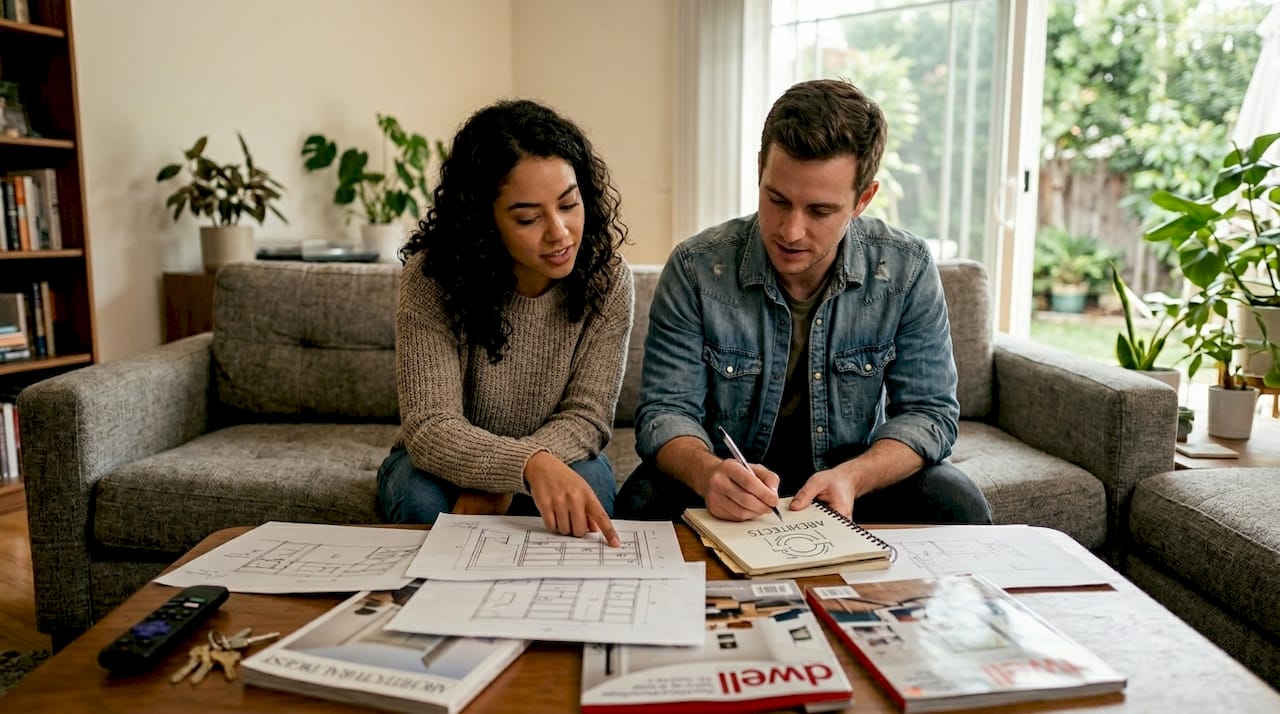
Personalization goes far beyond choosing countertop finishes. It means designing a layout where your kitchen opens to the backyard because your family cooks and entertains outdoors. It means a flexible room that works as a home office now and a bedroom later. It means a reading nook positioned to catch the morning sun, or a mudroom that handles the realities of a busy household with kids and pets.
Popular personalization and sustainability features for LA homeowners
- Open-plan living areas that blur the line between indoor and outdoor spaces
- Solar panel integration with battery storage for energy independence
- Drought-tolerant landscaping that complies with California water restrictions
- High-performance windows and insulation for passive thermal comfort
- Non-toxic, low-VOC (volatile organic compound) finishes and materials
- Flexible bonus spaces designed for remote work, hobbies, or guests
- Skylights and clerestory windows for natural daylighting without heat gain
- Greywater recycling systems for irrigation
The demand for sustainable community homes is growing rapidly across Los Angeles as more homeowners recognize that green features reduce utility costs and increase long-term home value.
"The homes that endure and delight are the ones that capture the unique stories and aspirations of their owners." Reviewing architecture tips for LA homes shows how the most successful projects start with daily life, not design trends.
Pro Tip: Track your daily routines for one week before finalizing your program with your architect. Note where sunlight falls in the morning, which spaces you avoid, and what activities feel cramped. Those observations drive smarter, more personal design decisions than any mood board.
Common pitfalls and expert strategies for successful custom home design
Even well-prepared homeowners run into surprises. Knowing the most common mistakes in advance gives you a real advantage before your project begins.
Mistakes to watch out for
- Underestimating city requirements. Los Angeles has detailed zoning codes, setback rules, and ADU regulations that vary by neighborhood. Ignoring these early leads to expensive redesigns.
- Vague or shifting priorities. If your vision keeps changing after design work has started, costs and timelines escalate quickly. Clarity upfront saves money.
- Unrealistic budgeting. Many homeowners budget for construction but underestimate design fees, permitting costs, and contingency funds. Expect to set aside 10 to 20 percent of your total budget as a contingency reserve.
- Skipping expert input. Trying to cut costs by reducing professional involvement often creates larger problems later, especially with structural anchorage, waterproofing, or mechanical systems.
- Choosing the wrong team. Not all architects or contractors have LA-specific experience. Local expertise in city codes, hillside construction, and sustainability is not optional.
Exploring house plans with ADU options early can also prevent missed opportunities. Adding an ADU to your project while you are already in design and permitting is far more cost-efficient than returning to the process later.
For innovative design ideas that fit current LA lifestyles, working with professionals who stay current on both city regulations and residential design trends is the clearest path forward.
Pro Tip: Stay flexible throughout the process. Expect at least two or three rounds of meaningful revisions before your design is finalized. Those adjustments are not setbacks. They are the process working exactly as it should.
A critical perspective: Why true custom design means listening first
Based on experience working with homeowners across Los Angeles, we have noticed a consistent pattern: the projects that disappoint are almost always the ones that started with an aesthetic goal rather than a life goal. A homeowner falls in love with a design they saw online, and from that point forward, every decision serves that image rather than the household that will actually live there.
The homes that truly succeed, the ones that clients still love five or ten years later, start with listening. Listening to how the family actually spends time. Listening to what makes a space feel calm or energizing. Listening to what the neighborhood values and how the house fits into it.
Los Angeles is not a single context. It is dozens of communities, climates, and cultures layered across a sprawling region. That reality demands a human-centered approach, not a trend-driven one. When you work with designers who ask about your weekends before they ask about your style preferences, you are in the right room.
Our advice: do not start with features. Start with design that fits your life, and let the features follow from there.
Ready to design your LA home? Partner with experts who listen
If this article has clarified what you want from your custom home, the next step is working with a team that brings both creative vision and deep LA expertise to the table. FO+H Architects specializes in translating your personal story into a functionally beautiful, sustainable home, whether that means a full custom residence or a thoughtfully designed ADU.
Visit our ADU Store to explore ready-to-customize ADU plans built for Los Angeles lots and codes. Or browse our full portfolio of house plans with ADU to find the design direction that resonates with your vision. Our team is ready to listen first and design second.
Frequently asked questions
How long does custom home design take in Los Angeles?
Typically, the full design process takes 4 to 8 months from initial concept through approved permits, depending on the complexity of the project and the speed of city review.
What can I personalize in my custom LA home?
You can customize the floor plan, room layout, indoor-outdoor flow, materials, finishes, sustainable systems, and exterior style, and modern residential architecture shows just how far that personalization can go.
Do I need an architect for my custom home in Los Angeles?
In almost all cases, yes. A licensed architect is essential for navigating LA building codes, structural requirements, and complex customizations, as detailed in the essential role of architects in LA home design.
Can sustainability features be added to a custom home?
Absolutely. Solar panels, energy-efficient insulation, drought-tolerant landscaping, and non-toxic materials can all be integrated from the start, and sustainable community homes demonstrate how effectively these features work in the LA climate.