

TL;DR:
- Your home impacts daily routines, social interactions, and overall wellbeing through intentional design choices.
- Biophilic strategies effectively reduce stress and enhance comfort when thoughtfully integrated, not just for aesthetics.
- In Los Angeles, ADUs exemplify flexible, lifestyle-oriented architecture supporting multigenerational living and remote work.
Your home does more than provide shelter. The way it's designed directly influences how you wake up, work, host guests, connect with family, and unwind at the end of the day. Biophilic design strategies (architecture that integrates natural elements) have measurable effects on stress levels and wellbeing. Yet many Los Angeles homeowners still think of architecture as purely aesthetic. This article explains what lifestyle-aligned architecture actually means, how it works in practice, and how you can apply it to your own LA home or renovation project.
Table of Contents
- How architecture influences daily living: The fundamentals
- Nature and wellness in design: Fact versus hype
- ADUs: The LA model for personalized, flexible living
- Personalization and community: Turning design into daily reality
- What most LA homeowners miss about architecture and lifestyle
- Connect with architecture that fits your LA lifestyle
- Frequently asked questions
Key Takeaways
| Point | Details |
|---|---|
| Design shapes lifestyle | Architectural choices can directly enhance your habits, wellbeing, and family or community dynamics. |
| Evidence matters | Not all design trends work equally—ask for features with research-backed benefits for your goals. |
| ADUs enable flexibility | Accessory Dwelling Units offer adaptable spaces that reflect the modern and evolving Los Angeles lifestyle. |
| Personalization is practical | Simple planning steps help tailor your home’s design to your routines and future needs. |
How architecture influences daily living: The fundamentals
Now that you know architecture's potential impact, let's break down exactly how it affects everyday living.
Architecture isn't just about what a building looks like from the street. It sets the physical conditions that shape your daily habits and social interactions. A kitchen positioned near outdoor space encourages cooking together. A home office tucked in a quiet corner reduces distractions and supports focus. These aren't accidents. They're outcomes of intentional design decisions.
Here's why this matters for your daily life:
- Space planning shapes routines. The flow between rooms determines whether mornings feel rushed or calm, whether family members gather naturally or retreat to separate areas.
- Natural light and ventilation affect mood. Homes with well-placed windows and cross-ventilation reduce reliance on artificial systems and support alertness during the day and rest at night.
- Material choices influence comfort. Hard surfaces amplify noise; soft materials absorb it. Thermal mass in walls and floors stabilizes indoor temperatures without running the air conditioning constantly.
- Flexibility planning supports changing needs. A guest room designed to convert to a home office or a teen suite that could one day function as a rental unit means your home stays relevant for years.
"A well-designed home is not static. It adapts to your routines, not the other way around. The most successful projects we work on start with a clear picture of how a family actually lives day to day."
A 2025 Scientific Reports study confirms that biophilic architectural strategies produce measurable physiological relaxation and improved wellbeing perceptions. This tells us that design choices carry real consequences for your health and daily experience, not just your property value.
The key is thinking ahead. Many homeowners focus on what looks good today without considering whether those choices will support them five or ten years from now. Intentional space planning at the design stage is far less expensive than retrofitting a layout that no longer works.
Nature and wellness in design: Fact versus hype
Having covered architecture's broad influence, let's dig into one of the hottest trends: biophilia and wellness design. Let's separate facts from hype.
Biophilic design refers to incorporating natural elements into the built environment. Think living plant walls, natural timber finishes, abundant daylight, water features, and views to outdoor greenery. These elements are genuinely popular in Los Angeles, partly because of the region's climate and partly because wellness has become a significant selling point in residential real estate.
But not every biophilic feature delivers equal results. Research on biophilic office environmentsclean%20version%20FINAL%20with%20tables%20and%20figures%20included.pdf) shows that nature integration can improve task performance perceptions and environmental satisfaction without necessarily shifting all health-related self-report outcomes. In other words, people feel better in the space and report working more effectively, but general wellness scores don't always move uniformly.
This distinction matters when you're making budget decisions. A $15,000 living plant wall might feel luxurious, but a well-designed view corridor to a planted courtyard might deliver similar psychological benefits at a fraction of the cost.
| Design feature | Measurable benefit | Limitations |
|---|---|---|
| Operable windows with garden views | Reduced stress, improved mood | Context-dependent; urban lots may limit views |
| Indoor plants and greenery | Environmental satisfaction, air quality perception | Benefits vary by plant density and maintenance |
| Natural timber finishes | Thermal comfort, visual warmth | Cost and fire rating considerations in LA |
| Daylight-optimized layout | Circadian rhythm support, reduced fatigue | Requires early design integration |
| Water features | Auditory relaxation, aesthetic appeal | Maintenance demands; water use in drought context |
A PMC article on architecture for health and sustainability emphasizes that built-environment interventions should connect to verified evidence and context rather than blanket wellness claims. This is a useful filter: ask your architect to explain what specific outcome a feature is meant to support and what evidence backs that claim.
Pro Tip: When evaluating biophilic features for your home, ask your architect to prioritize passive design strategies first, such as daylighting, natural ventilation, and thermal mass, before adding active or decorative wellness features. Passive strategies typically deliver more consistent benefits with lower long-term costs.
The bottom line is that wellness-aligned design works, but the results depend on which features you choose, how they're integrated, and what outcomes you're actually targeting. Working with an architect who understands the evidence, not just the trends, is the most reliable path to results you can actually feel.
ADUs: The LA model for personalized, flexible living
Evidence and nuance are important, but how do these ideas show up in actual LA neighborhoods? Accessory Dwelling Units (ADUs) are a leading model for lifestyle-aligned architecture in Los Angeles. Let's look at why.
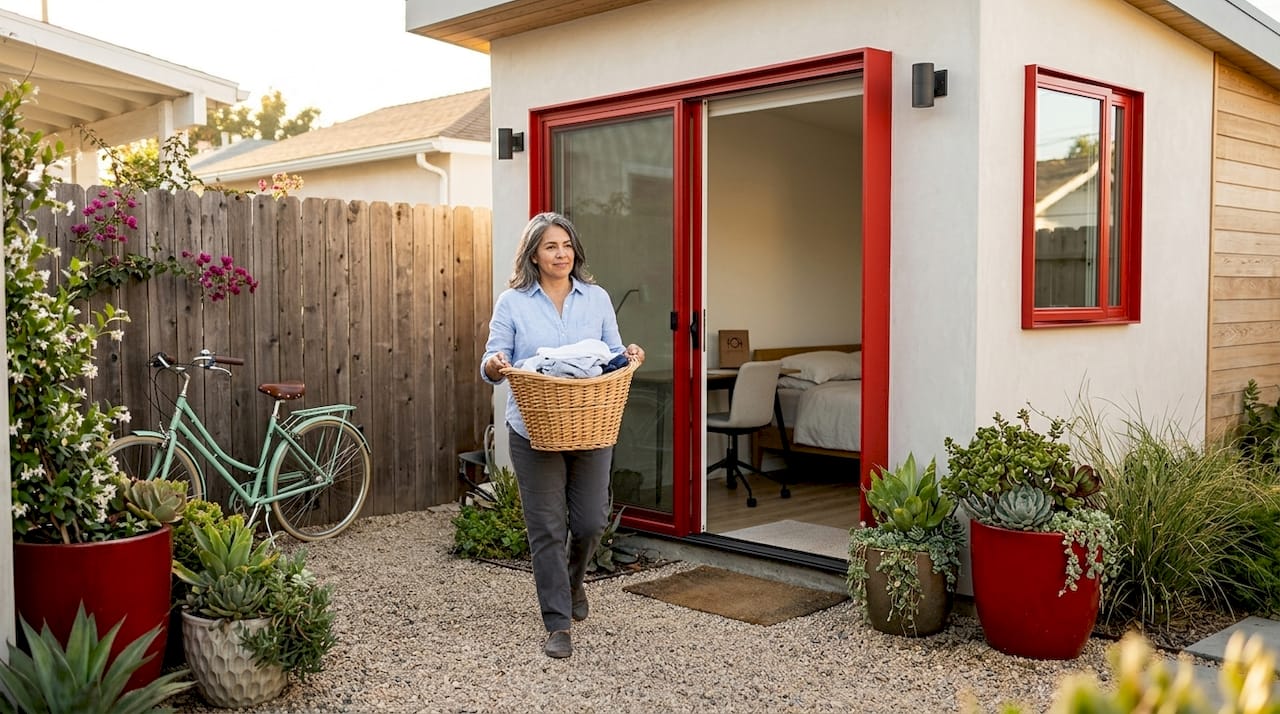
An ADU is a secondary housing unit built on the same lot as a primary residence. It could be a converted garage, a backyard cottage, an attached junior unit, or a purpose-built structure. In Los Angeles, ADUs have become one of the most practical ways for homeowners to create flexible, purpose-specific spaces that adapt to their lives.
According to Kitchen & Bath Business, lifestyle-aligned architecture in Los Angeles often shows up in ADU design as functional, future-proof space that supports family and community routines within compact footprints. This isn't just theory. We see it consistently in the projects we design and build.
Here's what makes ADUs such a strong fit for lifestyle-aligned living:
- Multi-generational flexibility. An ADU can house an aging parent, a college-age child, or a caregiver, all while maintaining privacy for every household member.
- Work-from-home functionality. A detached backyard studio designed as a home office separates professional and personal life in a way that an interior spare bedroom simply cannot.
- Rental income potential. A well-designed ADU can generate consistent rental income that offsets mortgage costs, increasing both financial stability and long-term housing security.
- Sustainable footprint. Smaller structures built to Title 24 energy standards often outperform older, larger homes in energy efficiency. Sustainable material choices compound these gains over time.
- Community-scale impact. ADUs add gentle density to LA neighborhoods without displacing existing residents, aligning with the city's broader housing equity goals.
| Factor | Traditional home addition | ADU approach |
|---|---|---|
| Cost per sq. ft. | Higher due to structural integration | Often lower with prefab or modular options |
| Permitting complexity | Tied to existing structure | Streamlined under LA ADU ordinance |
| Lifestyle flexibility | Fixed use, hard to repurpose | Designed for adaptability from day one |
| Resale value | Adds square footage to main home | Adds a separate income-generating asset |
| Community fit | Enlarges existing footprint | Adds density without changing neighborhood scale |
If you're exploring what's possible for your property, browsing modern ADU inspirations can help you see real-world configurations that balance lifestyle fit with LA-specific constraints. Understanding ADU value in LA goes well beyond resale price. It encompasses the daily quality of life improvements that come from having a well-designed secondary space. And if you're ready to get specific about layouts and materials, learning how to design an ADU for maximum value and usable space is a logical next step.
Pro Tip: Before selecting an ADU configuration, map out your household's likely routines over the next 10 to 15 years. Will you need a guest suite, a rental unit, or a professional workspace? Designing for two or three plausible future uses from the start costs very little extra at the design phase and prevents costly retrofits later.
Personalization and community: Turning design into daily reality
So, what does it take to actually translate lifestyle goals into your home's design? Here's how to turn vision into reality.
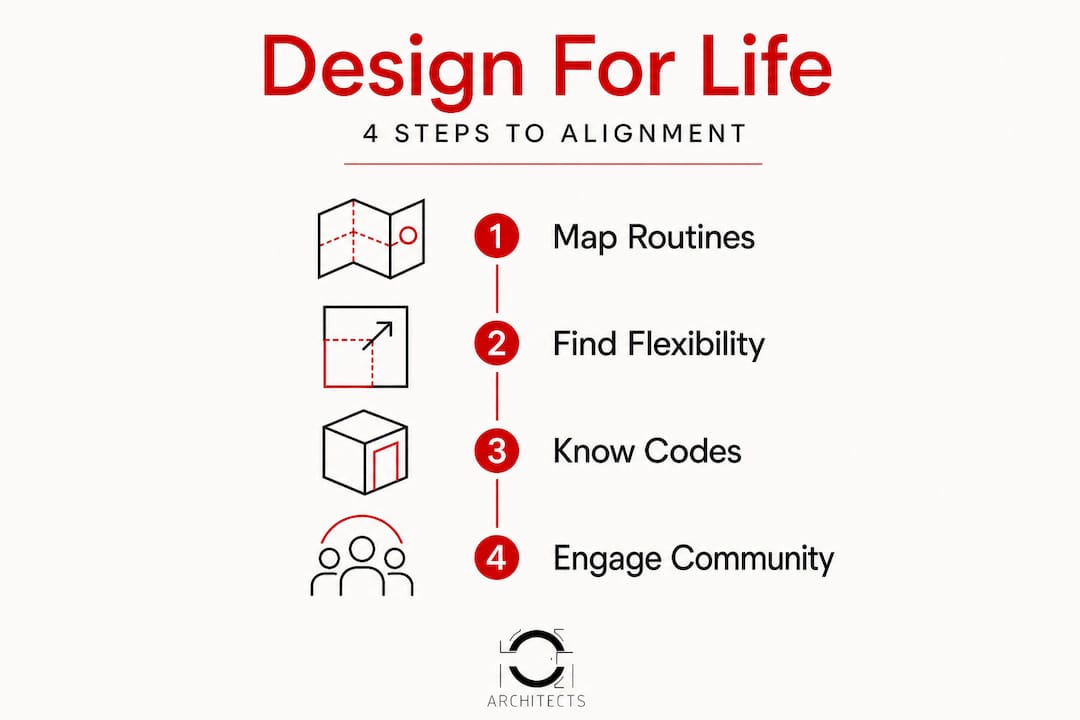
Many homeowners arrive at the design process with a general sense of what they want but without a clear method for communicating it. The result is often a home that looks right but doesn't quite work for daily life. Getting specific about your routines, values, and community connections before the design process begins makes a significant difference.
Step 1: Document your daily routines in detail. Write down how a typical weekday and weekend unfold for everyone in your household. Note what causes friction, what works well, and what you'd change if the space allowed it. This becomes the foundation for every design decision.
Step 2: Define flexibility requirements. Identify which rooms or spaces need to serve multiple functions. A dining area that doubles as a homework space, a garage that converts to a gym or studio, a patio that functions as an outdoor dining room year-round in the LA climate. Flexibility requirements should be specified early so structural and utility decisions support them.
Step 3: Research local codes and permitting requirements. Los Angeles zoning, the ADU ordinance, Title 24 energy standards, and historic district rules all affect what you can build and how. As noted in reporting by Kitchen & Bath Business on AIA San Fernando Valley discussions, sustainable ADU innovation in LA requires navigating permitting, cost, and regulatory frameworks effectively.
Step 4: Engage your neighbors and community. This is often skipped, but it matters. Especially for ADU projects, early conversations with neighbors about access, privacy, and visual impact reduce friction during the permitting process and build goodwill in your community long-term.
Step 5: Ask your architect the right questions. Walking into a design conversation without prepared questions typically leads to decisions being made for you. Come with a list.
Questions worth asking every architect you interview:
- How do you gather information about how our household actually lives day to day?
- Can you show examples of projects where the design adapted to changing family needs over time?
- What specific strategies do you recommend for maximizing natural light and ventilation in our lot's orientation?
- How do you balance lifestyle goals with LA's current energy code and permitting requirements?
- What evidence do you use to support recommendations for wellness or biophilic features?
Using our complete ADU checklist is a practical way to make sure you've covered every dimension of the planning process before breaking ground.
What most LA homeowners miss about architecture and lifestyle
Based on experience working with homeowners across Los Angeles, the most common mistake isn't a bad material choice or a flawed floor plan. It's treating design as a trend exercise rather than an evidence-based process.
The wellness architecture movement has created genuine value in the field. But it has also produced a wave of features that get specified for marketing reasons rather than functional ones. Homeowners see dramatic photos of living walls, spa-like bathrooms, and indoor-outdoor living spaces and assume these features will automatically produce the lifestyle transformation they're looking for.
Research on built-environment interventions consistently calls for connecting design decisions to verified evidence and specific outcomes rather than broad wellness claims. This is not an argument against biophilic design or wellness features. It's an argument for precision. Knowing why a specific feature works and what outcome it supports is what separates a genuinely life-improving design from an expensive renovation that still doesn't feel quite right.
In my experience, the homeowners who end up most satisfied with their projects are the ones who pushed their architects to be specific. They asked for evidence. They questioned default choices. They insisted on understanding the reasoning behind every major recommendation.
Real transformation in residential architecture also requires architects who listen before they design. A practitioner who arrives with a ready-made aesthetic vision before understanding how you live day to day will produce a home that looks good in photos but may not serve your actual routines.
The most reliable path to a lifestyle-aligned home is a disciplined process: document your routines, ask for evidence, design for flexibility, and hold your design team accountable to outcomes you can actually verify. Exploring innovative ADU concept ideas is one way to see what's possible when evidence and creativity work together.
Connect with architecture that fits your LA lifestyle
Ready to put these insights to work in your own home? Here's how FO Studio can help.
At FO+H Architects, we bring together evidence-based design practices and deep knowledge of Los Angeles's regulatory environment to create homes and ADUs that genuinely support how you live. Our process starts with your routines, values, and community context before we ever put pencil to paper.
Whether you're planning a new ADU, a whole-home renovation, or a personalized addition to your existing property, our team can guide you through feasibility assessment, design development, permitting, and construction documentation. We specialize in lifestyle-aligned residential architecture across Los Angeles. Browse our services and portfolio at fostudiodesign.com to see how we translate these principles into real projects for real families. When you're ready to start a conversation, we're here.
Frequently asked questions
What is lifestyle-aligned architecture?
Lifestyle-aligned architecture refers to designing homes and spaces that directly support daily routines, values, and relationships for the residents rather than simply optimizing for aesthetics or resale metrics.
Do biophilic features really improve wellbeing in LA homes?
Research shows that biophilic design strategies can reduce stress and boost environmental satisfaction, but effects vary by contextclean%20version%20FINAL%20with%20tables%20and%20figures%20included.pdf) and measurement approach, so specific feature choices matter more than general adoption of the trend.
How are ADUs used to reflect lifestyle in Los Angeles?
ADUs in LA enable flexible living that accommodates multi-generational families, home-based work, and evolving household routines in compact, custom-designed spaces built to LA standards.
What questions should I ask my architect about lifestyle-focused design?
Discuss your household's daily routines, flexibility requirements for future use, material choices that support thermal and acoustic comfort, and how the proposed design meets LA's current energy code and permitting requirements.