

TL;DR:
- Fire-resilient materials like concrete shells and fire-rated glazing are now standard in LA homes.
- Proper insulation and building orientation can cut cooling loads by up to 40 percent.
- Modern design emphasizes resilience and sustainability, seamlessly integrating with neighborhood character.
Modern residential architecture in Los Angeles has shifted well beyond clean lines and open floor plans. After the 2025 wildfires reshaped entire neighborhoods in Altadena and Pacific Palisades, the conversation around what a home should do has fundamentally changed. Today, building or renovating in LA means designing for resilience, energy efficiency, and a genuine connection to community. This guide walks through the leading trends driving that shift, explains the practical tools available to you right now, and shows how homeowners and developers can make confident, future-focused decisions without sacrificing style or livability.
Table of Contents
- Smart materials and fire-resilient design in LA homes
- Passive comfort: Orientation, insulation, and cooling breakthroughs
- Integrating sustainability and neighborhood identity
- From blueprint to reality: Practical steps for building or renovating
- A fresh perspective: Why LA's modern architecture is about resilience first
- Turn inspiration into reality: ADU plans and modern LA design
- Frequently asked questions
Key Takeaways
| Point | Details |
|---|---|
| Fire resilience is essential | Modern LA homes prioritize fire-resistant materials and passive protection as foundational features. |
| Envelope upgrades cut costs | Investing in advanced insulation and orientation strategies can lower cooling energy use by up to 40 percent. |
| Sustainable, local design | Today’s trends blend eco-friendly solutions with strong neighborhood identity rather than sacrificing character. |
| Expert guidance matters | Partnering with architects familiar with new codes ensures compliance, comfort, and market value. |
Smart materials and fire-resilient design in LA homes
Fire resilience is no longer an optional upgrade in Los Angeles. It is now a baseline expectation, and the materials and methods available to achieve it have advanced considerably. After the 2025 wildfires, architects and engineers accelerated the adoption of solutions that were once considered niche or cost-prohibitive.
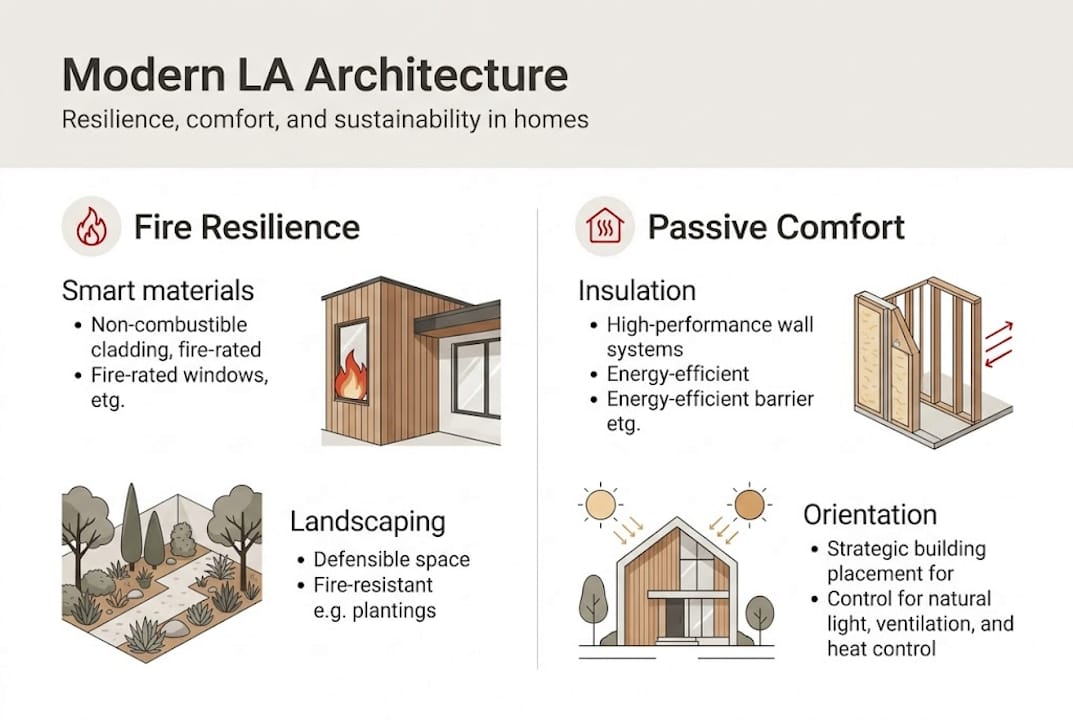
Fire-resilient designs now center on concrete shells, fire-rated glazing, and native landscaping as critical for LA homes, with Passive House standards playing a growing role in both thermal and fire protection. These are not just aesthetic choices. They are performance decisions backed by real-world testing.
Key materials and methods worth understanding include:
- Concrete and masonry shells: Non-combustible exteriors that significantly reduce ignition risk from ember cast
- Fire-rated glazing: Specialized glass that resists radiant heat and prevents flame spread through windows
- Intumescent seals: Products that expand under heat to block gaps around doors and windows
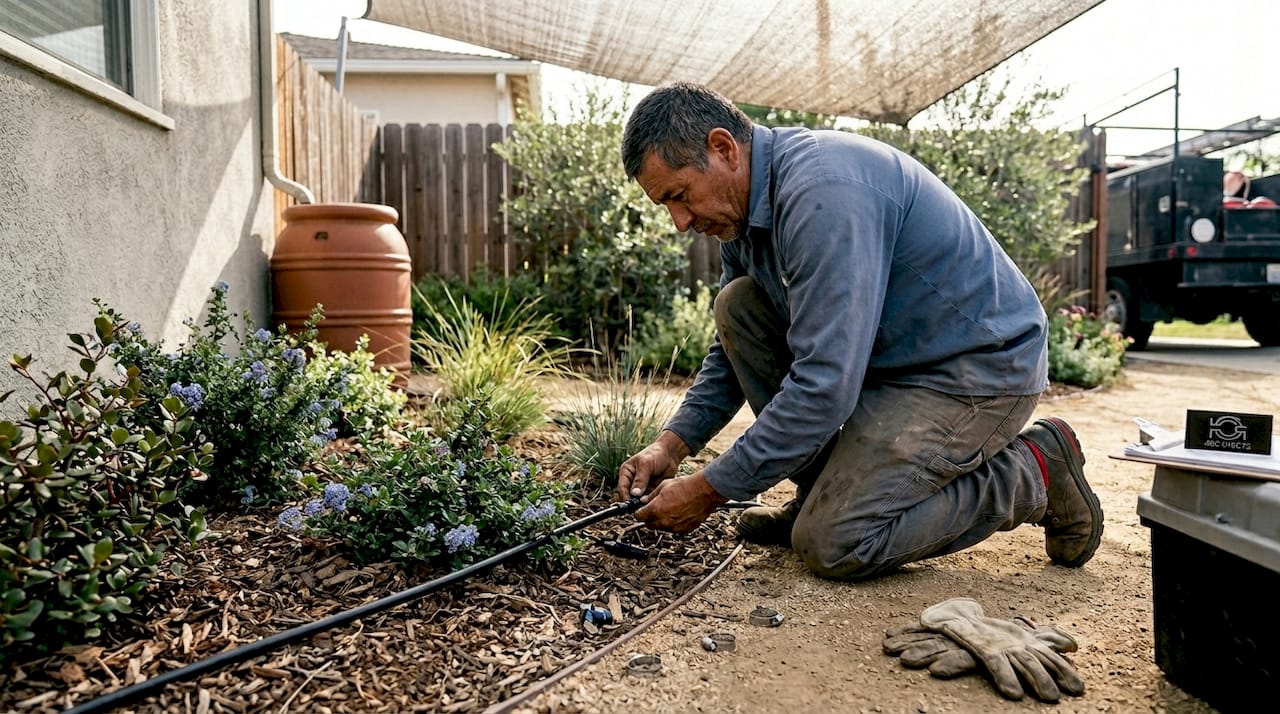
- Native and drought-tolerant landscaping: Reduces fuel load around the structure while supporting local ecosystems
- Passive House envelope standards: Continuous insulation and airtight construction that limit both heat transfer and fire entry points
For new construction, these elements can be integrated from the ground up. For remodels, prioritizing the building envelope, especially exterior cladding and window upgrades, delivers the most immediate protection.
"Passive House design principles, when combined with fire-resilient materials, create homes that are not only safer but more comfortable and energy-efficient year-round."
When evaluating residential architecture tips for your project, look specifically at how fire-resilient strategies align with your local fire hazard severity zone. Architects familiar with the latest Fire Resilience Code can help you navigate which materials qualify for insurance discounts and permit approvals.
Pro Tip: Ask your architect specifically about the California Fire Resilience Code requirements for your zone before finalizing any material selections. The right choices early can reduce both construction costs and long-term insurance premiums.
Building for sustainable community homes also means thinking beyond the individual property. Fire-resilient landscaping and shared green buffers between properties are becoming part of neighborhood-level planning conversations across LA.
Passive comfort: Orientation, insulation, and cooling breakthroughs
Alongside fire resilience, thermal comfort is getting a rigorous scientific update. Many homeowners assume that smart thermostats or high-efficiency HVAC systems are the biggest levers for reducing energy costs. The research tells a different story.
An empirical study on cooling loads in hot climates found that orientation-tailored building envelopes reduce cooling loads by 30 to 40 percent, and that wall and roof insulation outperform nearly every other variable in reducing energy demand. That is a significant finding for LA homeowners and developers.
Here is how to evaluate your home's envelope performance:
- Assess orientation: South and west-facing walls receive the most solar gain. Shading strategies and high-performance glazing on these facades make a measurable difference.
- Audit existing insulation: Many LA homes, especially those built before 1990, have inadequate wall and roof insulation by current standards.
- Check air sealing: Gaps around windows, doors, and penetrations allow hot air infiltration that insulation alone cannot address.
- Review window performance: Low-E coatings and thermally broken frames reduce radiant heat transfer significantly.
- Model before you build: Architects and energy consultants use thermal modeling tools to predict performance before construction begins.
| Envelope strategy | Estimated cooling load reduction |
|---|---|
| Optimized building orientation | 10 to 15% |
| High-performance wall insulation | 15 to 20% |
| Roof insulation upgrade | 10 to 18% |
| Low-E window glazing | 8 to 12% |
| Combined envelope approach | 30 to 40% |
For innovative LA home design in 2026, the combined envelope approach is increasingly the standard, not the exception. Developers building multi-unit projects are seeing the payback period on these upgrades shrink as energy costs rise.
Pro Tip: Before investing in solar panels or smart home systems, allocate budget to insulation and passive design first. The energy savings from a well-sealed, well-insulated envelope reduce the size of the solar system you need, which lowers total project cost.
Understanding the role of LA architects in guiding these decisions is essential. A skilled architect will run thermal models and help you prioritize upgrades based on your specific site conditions, not just general best practices.
Integrating sustainability and neighborhood identity
Once thermal comfort is dialed in, true innovation comes from balancing green performance with a unique sense of place. LA's neighborhoods each carry a distinct architectural character, and the best modern designs honor that while advancing sustainability goals.
Fire Resilience Code compliance and Passive House standards now influence not only fire protection but also sustainable design approaches and the diversity of housing options available across neighborhoods. This means the regulatory environment is actually creating more design flexibility, not less.
Here is how architects are customizing sustainability to fit LA's eclectic neighborhoods:
- Solar integration that respects roofline character: Flush-mounted panels and building-integrated photovoltaics preserve the visual rhythm of historic streetscapes
- Water reuse systems scaled to lot size: Greywater systems and rainwater harvesting can be designed to fit bungalows and larger estates alike
- Low-impact landscaping with local plant palettes: Native species vary by neighborhood microclimate, allowing for designs that feel rooted in place
- Material choices that echo local context: Stucco, wood, and tile can all be sourced in fire-resistant versions that maintain the neighborhood's visual language
- Accessory structures and ADUs designed as complements: New units can reinforce rather than disrupt the existing architectural fabric
| Feature | Standard approach | Integrated sustainable approach |
|---|---|---|
| Landscaping | Conventional turf and irrigation | Native, drought-tolerant, fire-resistant planting |
| Energy systems | Grid-only utility connection | Solar with battery storage and demand management |
| Water management | Standard municipal supply | Greywater reuse and rainwater harvesting |
| Exterior materials | Conventional wood or vinyl | Fire-rated, low-maintenance cladding |
| Lighting | Standard fixtures | LED with daylight sensors and occupancy controls |
For urban sustainable housing projects, the most successful outcomes combine green performance metrics with a genuine understanding of what makes each neighborhood feel like itself. Sustainability should feel like it belongs, not like it was imported from a catalog.
From blueprint to reality: Practical steps for building or renovating
With these big-picture trends clarified, here is how to make them work in your own project, step by step.
- Define your goals early: Identify whether fire resilience, energy performance, sustainability, or all three are your primary drivers. This shapes every decision that follows.
- Research your fire hazard severity zone: LA County's zoning maps determine which materials and systems are required or incentivized in your area.
- Engage an architect with local code expertise: Not all architects are equally familiar with the Fire Resilience Code, Title 24 energy requirements, and the latest Passive House catalog options.
- Request a feasibility and envelope assessment: Before finalizing a design, understand your site's orientation, shading, and insulation baseline.
- Review the Passive House catalog for inspiration: 30 or more Passive House designs developed for Altadena and Pacific Palisades offer tested, actionable models for fire-resilient and sustainable homes.
- Plan for permits and insurance benefits: Fire-resilient and energy-efficient designs often qualify for faster permit processing and lower insurance premiums.
- Build in flexibility for future upgrades: Design electrical panels and roof structures to accommodate future solar and battery storage additions.
"Wall and roof insulation have the greatest impact on reducing cooling loads and energy costs in LA homes, outperforming most other envelope and mechanical upgrades."
For those exploring LA multi-family options, these steps apply equally to larger projects. The envelope and resilience principles scale well, and the permit and insurance benefits become even more significant at the multi-unit level.
If you are adding an ADU, understanding the LA ADU plan check process is a critical early step. Knowing what documentation is required before you begin design saves time and avoids costly revisions.
A fresh perspective: Why LA's modern architecture is about resilience first
Based on our experience working with homeowners and developers across Los Angeles, we have noticed a consistent pattern. Many clients come to us focused on style. They want clean lines, open layouts, and a certain aesthetic. That is completely valid. But the most satisfied clients are the ones who understand that in 2026, style and resilience are not in competition. They are the same thing.
True modern architecture in LA is invisible preparation. It looks clean and considered because it is resource-wise, fire-protected, and calibrated for this specific climate and community. The homes being built post-2025 wildfires that lead with passive, resilient solutions are not just safer. They are the ones that will hold their value, attract better insurance terms, and require less intervention over time.
We also think there is a cultural shift happening. Resilience is becoming the real status symbol in LA residential design, not square footage or imported finishes. Designers and developers who prioritize it are not just ticking compliance boxes. They are genuinely future-proofing for families and the communities around them.
Pro Tip: When interviewing architects for your project, do not lead with style questions. Ask how their design approach will actively protect your home against LA's specific risks, including fire, heat, and seismic activity. The answer will tell you a great deal about their priorities.
For a deeper look at what this means in practice, explore our thinking on modern LA home design and how resilience-first principles translate into real project decisions.
Turn inspiration into reality: ADU plans and modern LA design
Ready to bring these trends home? At FO+H Architects, we have developed a range of plans specifically designed for LA's modern era, combining fire resilience, passive comfort, and neighborhood-sensitive design into ready-to-build solutions.
Browse our ADU design store to explore units built with current LA codes, energy standards, and resilience priorities in mind. If you are looking for a specific starting point, the Gold ADU plan is one of our most popular options, offering a well-proportioned, code-ready unit that reflects the trends covered in this guide. Every plan is customizable to your site, your neighborhood's character, and your long-term goals.
Frequently asked questions
What is the most important feature in modern LA residential architecture for 2026?
Fire resilience, using smart materials and code-compliant design, is now the most critical feature for LA homes. Sustainable fire-resilient designs using concrete shells, native landscaping, and Passive House standards have become the new baseline following the 2025 wildfires.
How much can new insulation and passive strategies reduce energy bills?
Orientation-optimized envelopes and modern insulation can reduce cooling loads by 30 to 40 percent in hot climates, which translates directly into lower energy bills for LA homeowners.
Can sustainable upgrades match the neighborhood look?
Yes. Today's sustainable designs integrate seamlessly with each neighborhood's character using adaptable materials and smart landscaping. Fire Resilience Code compliance and Passive House standards actually expand design diversity rather than limiting it.
How do I find plans for a modern, resilient LA home?
Browse local ADU and home design stores online for ready-to-build, customizable plans developed specifically for LA's climate, codes, and community context.