

TL;DR:
- Modern residential design emphasizes function, open space, and sustainability tailored to LA's climate.
- It offers benefits like energy efficiency, indoor-outdoor living, and adaptability for changing lifestyles.
- Choosing modern design fosters community connection and provides long-term savings compared to traditional homes.
Most people assume home design is primarily about how a space looks. In reality, the choices you make about layout, materials, and orientation shape how you feel, how much you spend on energy, and how connected you feel to your neighbors. For Los Angeles homeowners, this distinction matters more than ever. LA's climate, density, and cultural diversity create a unique set of opportunities that modern residential design is built to address. This guide walks you through the principles, benefits, and practical steps of modern design so you can make informed decisions about your home.
Table of Contents
- Understanding modern residential design principles
- Benefits of modern residential design for LA homeowners
- Modern design vs. traditional: What's the difference?
- Integrating sustainability and community in your home
- How to find your modern home design style
- Why modern design is the future of LA living
- Explore modern home solutions with FO Studio
- Frequently asked questions
Key Takeaways
| Point | Details |
|---|---|
| Emphasizes lifestyle fit | Modern residential design tailors your home to daily routines and future flexibility. |
| Saves energy and costs | Efficient layouts and materials lower monthly bills and long-term maintenance. |
| Fosters community | Compatible layouts and shared spaces help build a stronger local network. |
| Supports personal style | You can customize design features, creating a home that feels truly yours. |
Understanding modern residential design principles
Modern residential design is not a single look. It is a set of principles centered on function, flexibility, and intentional use of space. Unlike traditional styles that prioritize ornamentation and defined room boundaries, modern design strips away excess and focuses on how people actually live.
The roots of modern residential design trace back to mid-century movements, particularly the post-World War II era when architects began questioning the need for decorative excess. In Los Angeles, that legacy is visible in the Case Study Houses of the 1950s and 1960s, many of which still influence how architects approach residential projects today. Current LA trends build on that foundation by incorporating smart technology, passive solar strategies, and materials that respond to the region's seismic and climate conditions.
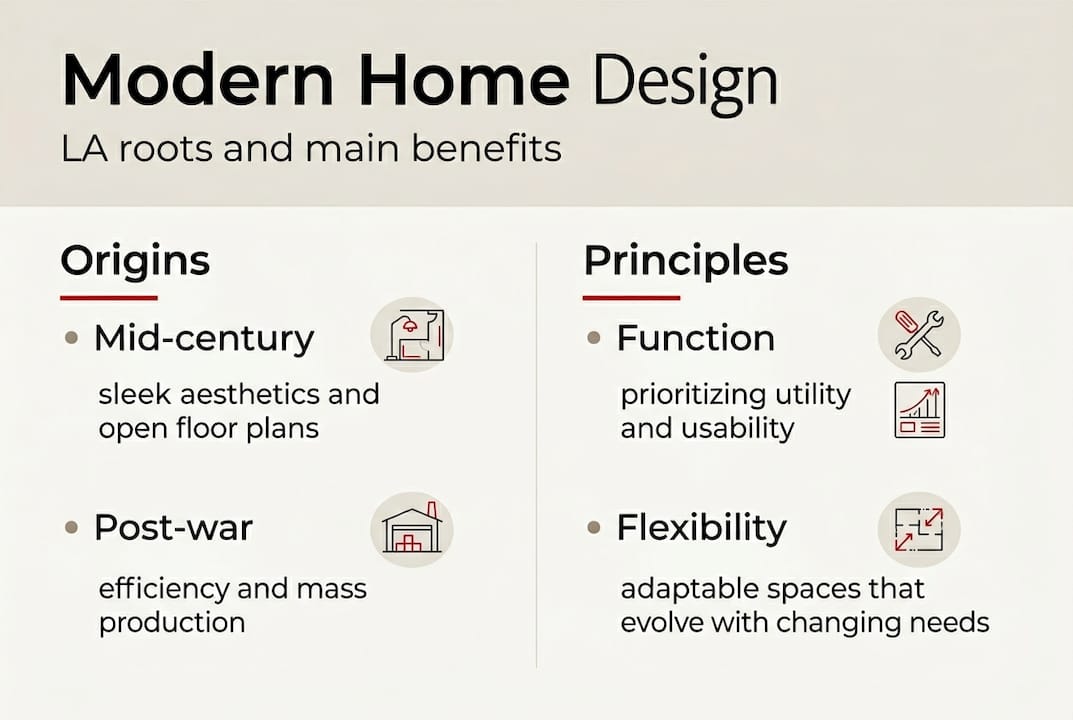
As noted in modern living architecture, "Modern design emphasizes clean lines, open spaces, and adaptability for contemporary lifestyles." That adaptability is what makes it especially relevant for LA homeowners juggling remote work, multigenerational households, and shifting neighborhood dynamics.
The core elements of modern residential design include:
- Open floor plans that allow flexible use of space without rigid room definitions
- Integration with the outdoors through large windows, sliding doors, and seamless transitions to patios or gardens
- Sustainable materials such as reclaimed wood, low-VOC finishes, and thermally efficient glazing
- Natural light optimization using orientation, skylights, and reflective surfaces to reduce artificial lighting needs
- Minimal ornamentation that keeps maintenance low and visual focus on form and function
LA's Mediterranean climate makes many of these principles especially effective. Passive cooling strategies, for instance, work well here because the temperature differential between day and night is significant enough to allow natural ventilation. Exploring urban housing sustainable designs reveals how these strategies are being applied across LA neighborhoods right now.
"Design is not just about what a space looks like. It is about how it works for the people who live in it every day." This principle guides every decision in a well-executed modern residential project.
Understanding these foundations gives you a clearer lens for evaluating design options and communicating your priorities to an architect.
Benefits of modern residential design for LA homeowners
Knowing what defines modern design is one thing. Understanding what it actually delivers for your daily life is another. The benefits are practical, measurable, and directly relevant to life in Los Angeles.
Energy efficiency is one of the most significant advantages. Modern homes use 15-30% less energy than traditional builds. That translates directly to lower utility bills, which matter in a city where electricity costs are consistently above the national average. Passive design strategies, high-performance insulation, and smart home systems all contribute to this reduction.
Indoor-outdoor living is another major benefit. LA's climate is one of the city's greatest assets, and modern design is built to take advantage of it. Large sliding glass doors, covered patios, and connected garden spaces extend your usable square footage without adding to your footprint.
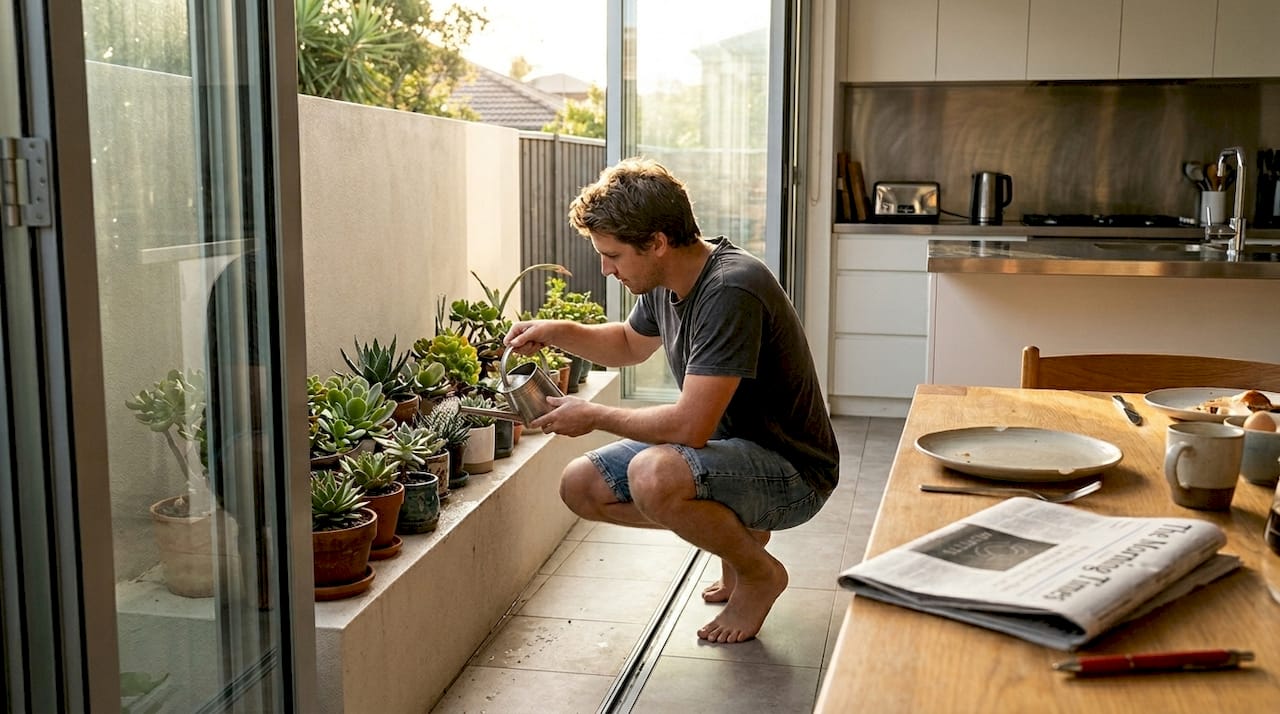
Here is a comparison of key features between modern and traditional residential design:
| Feature | Modern design | Traditional design |
|---|---|---|
| Energy efficiency | High (passive + smart systems) | Moderate to low |
| Space flexibility | Open, adaptable layouts | Fixed, room-defined layouts |
| Maintenance costs | Lower over time | Higher due to ornamentation |
| Indoor-outdoor flow | Seamless integration | Limited connection |
| Customization | High, lifestyle-driven | Lower, style-constrained |
The top benefits LA homeowners consistently report include:
- Reduced monthly energy costs through passive solar and insulation upgrades
- More usable living space through open layouts and outdoor integration
- Greater adaptability for home offices, multigenerational living, or rental units
- Higher resale appeal in a competitive real estate market
- Stronger sense of community through shared spaces and ADU additions
The ADU revolution in LA is a clear example of modern design's adaptability. Accessory dwelling units allow homeowners to add rental income, house family members, or create dedicated workspaces without major structural overhauls.
Pro Tip: When evaluating modern design options, ask your architect specifically how a proposed layout will function five to ten years from now. Designs that accommodate life changes, like a growing family or a shift to remote work, deliver far more long-term value than those optimized only for current needs.
Reviewing modern residential architecture tips can help you identify which features to prioritize based on your specific property and lifestyle.
Modern design vs. traditional: What's the difference?
If you are still weighing your options, a direct comparison helps clarify which direction fits your vision and your life.
Traditional homes typically feature defined rooms with specific purposes, decorative moldings, pitched roofs, and materials like brick or wood siding. They carry a sense of permanence and familiarity. Modern homes, by contrast, prioritize open space, clean surfaces, flat or low-pitched rooflines, and materials like concrete, steel, and large-format glass.
The lifestyle trade-offs are real. Traditional design offers visual warmth and a sense of history, but it can also mean higher maintenance costs as decorative elements age or require repainting. Modern design requires less upkeep in most cases, but it demands intentional furniture and decor choices to avoid feeling sparse.
From a long-term value standpoint, the classic vs modern debate consistently shows that "modern homes deliver greater space flexibility and often lower long-term maintenance compared to traditional structures." In LA's real estate market, where buyers increasingly prioritize energy efficiency and flexible living arrangements, modern design holds a measurable edge.
Key differences to consider:
- Storage: Traditional homes often have more enclosed storage; modern homes favor built-ins and multifunctional furniture
- Natural light: Modern design typically brings in significantly more daylight through larger openings
- Renovation costs: Updating a traditional home to meet current energy standards can be costly; modern homes are often built with future upgrades in mind
- Neighborhood fit: Some LA neighborhoods have architectural guidelines that favor traditional styles, so always check local zoning and HOA rules
The question is not which style is objectively better. It is which style fits how you actually live. If your daily routine involves cooking while keeping an eye on kids in the living room, an open floor plan serves you better than a compartmentalized traditional layout. Understanding why design matters in practical terms helps you move past aesthetics and focus on function.
Integrating sustainability and community in your home
Beyond style, modern design in LA is about living better, both environmentally and socially. The two goals are more connected than most homeowners realize.
Green building in Los Angeles has moved well past solar panels and low-flow fixtures. Today's modern homes incorporate:
- Recycled and low-impact materials such as reclaimed timber, recycled steel, and locally sourced stone
- High-performance building envelopes that minimize heat gain in summer and heat loss in winter
- Native and drought-tolerant landscaping that reduces water use while supporting local ecosystems
- Solar-ready electrical systems designed to accommodate panels and battery storage as technology evolves
- Greywater systems that recycle sink and shower water for irrigation
As documented in urban sustainability in housing, "Modern, community-oriented housing solutions foster stronger neighborhood ties while minimizing environmental impact." This is not just an environmental claim. It reflects a design philosophy where shared courtyards, accessible ADUs, and permeable pathways create conditions for neighbors to actually interact.
Layout decisions have a direct effect on social connection. Homes that orient primary living spaces toward the street or a shared outdoor area naturally encourage casual interaction. Designs that place garages at the front and living spaces at the back do the opposite.
Pro Tip: When working with an architect on a modern home, ask specifically about passive house principles and how they apply to your lot's orientation. Even partial application of these principles can reduce your energy load significantly without adding major cost.
For more ideas on how design supports both environmental and community goals, innovative home design ideas offers concrete examples from current LA projects.
How to find your modern home design style
Ready to take action? The most effective way to get a home you love is to develop clarity about your preferences before you sit down with an architect. Here is a practical process:
Step 1: Audit your daily routines. Walk through a typical weekday and weekend. Where do you spend the most time? What frustrates you about your current space? What do you wish you had more of? These answers reveal your real priorities.
Step 2: Gather visual inspiration. Build a digital mood board using platforms like Pinterest or Houzz. Focus on how spaces feel, not just how they look. Notice patterns in what you save, whether it is natural light, outdoor access, or minimal clutter.
Step 3: Explore LA neighborhoods. Some of the best inspiration is already built. Walk through Silver Lake, Echo Park, or Culver City to see modern residential projects in person. Pay attention to how homes relate to the street, the landscape, and neighboring properties.
Step 4: Define your non-negotiables. Before your first architect meeting, list three to five features you will not compromise on. This gives your design team a clear starting point and prevents scope creep later.
Step 5: Communicate clearly with your architect. Bring your mood board, your routine audit, and your non-negotiables to the first meeting. As personalization is at the heart of successful modern residential projects in Los Angeles, the more specific you are, the better your outcome.
For guidance on how spatial decisions affect everyday life, optimizing home layouts offers practical frameworks you can apply directly to your project.
Why modern design is the future of LA living
Based on our experience working with homeowners across Los Angeles, we have observed something consistent: the clients who are happiest with their homes are not the ones who chose the most stylish design. They are the ones who chose the design that fit their life and their community.
Modern design is often misread as cold or minimal. In practice, it is neither. It is a framework for building spaces that adapt as your life changes. LA is a city defined by change, by shifting demographics, evolving work patterns, and growing environmental pressures. A design philosophy rooted in flexibility and sustainability is not a trend. It is a practical response to the city's reality.
We also see homeowners underestimate the social dimension of design. A well-placed shared courtyard or an accessible ADU does not just add square footage. It creates conditions for the kind of neighbor relationships that make a neighborhood feel like a community. That value is hard to quantify but easy to feel. Exploring LA sustainable community homes shows what that looks like in practice.
Modern design is not for everyone. But for LA homeowners who want a home that works harder, costs less to operate, and connects them to the people around them, it is the most logical choice available.
Explore modern home solutions with FO Studio
If this article has clarified your thinking about modern residential design, your next step is connecting with a team that can turn those ideas into a real plan. FO Studio specializes in modern home and ADU design tailored specifically for Los Angeles properties, from initial feasibility to permitted construction drawings.
Whether you are exploring a custom home project or looking for a ready-to-go solution, the ADU store offers pre-designed options like the Blue ADU for LA homes, built to meet LA's zoning and energy requirements. Visit FO Studio home plans to browse projects, read client stories, and schedule a consultation with our team.
Frequently asked questions
What makes modern residential design energy efficient?
Modern design uses open layouts, high-quality insulation, and smart technology to reduce power and heating costs, with modern homes saving 15-30% energy compared to traditional builds.
How does modern design foster community in LA neighborhoods?
Modern homes often include shared outdoor spaces and street-facing layouts that encourage neighbor interaction, and community-oriented housing solutions have been shown to strengthen neighborhood ties while reducing environmental impact.
Is modern design more expensive than traditional styles?
Some features carry higher upfront costs, but modern homes offer lower long-term maintenance and greater space flexibility, which typically offsets the initial investment over time.
Can modern design fit my family's unique needs?
Yes, modern design is highly adaptable, and as personalization drives successful projects in Los Angeles, a skilled architect can customize layouts for any household size or lifestyle requirement.