

TL;DR:
- Successful LA residential projects require understanding layered zoning, land use rules, and development standards.
- Recent laws enable faster approvals, especially for small-scale projects and ADUs, reducing delays.
- Integrated early planning, cost management, and community considerations are key to project success.
Residential development in Los Angeles demands more than good design instincts. Between layered zoning codes, escalating construction costs, and fast-moving state housing laws, even experienced property owners can find themselves stalled before breaking ground. The good news is that a clear, step-by-step approach grounded in current regulations and community-aware design puts successful projects within reach. This article covers the essential best practices for LA homeowners and developers who want to build smarter, add lasting value, and contribute positively to their neighborhoods.
Table of Contents
- Know your zoning and land use essentials
- Meet development standards for access, parking, and green space
- Leverage new housing laws and streamlined approvals
- Control project costs and optimize value in design
- Prioritize community and opportunity in your project vision
- A reality check on LA development: What actually works
- Connect with experts for your next LA home project
- Frequently asked questions
Key Takeaways
| Point | Details |
|---|---|
| Know your zoning | Understanding LA’s zoning types and lot rules unlocks compliant and creative project options. |
| Leverage new laws | Recent housing acts and streamlined approvals can speed up and simplify your project. |
| Control development costs | Smart design choices and early cost planning help maximize value and minimize surprises. |
| Prioritize community impact | Aligning with local needs and high-opportunity areas leads to better long-term outcomes. |
Know your zoning and land use essentials
Having set the stage, the first step is understanding the core zoning and land use frameworks that apply to your project. Los Angeles uses a layered zoning system, and each zone directly determines what you can build, how much, and where on the lot.
LA zoning categories like R1, R2, R3/R4 define density and setbacks across neighborhoods. Here is a quick comparison:
| Zone | Max units | Typical use | Key constraint |
|---|---|---|---|
| R1 | 1 unit | Single-family | 0.45 FAR, 5 ft side setbacks |
| R2 | 2 units | Duplex/ADU | Higher FAR, varies by lot |
| R3/R4 | Multiple | Apartments | Density bonuses available |
Beyond zone type, three numbers will shape your entire design: Floor Area Ratio (FAR), minimum lot size, and required setbacks. FAR sets how much total floor area you can build relative to your lot. Setbacks define how far structures must sit from property lines. Get these wrong in early planning and you will be redesigning from scratch.
Here are the key steps to apply zoning knowledge effectively:
- Look up your parcel on the LA zoning guide before any design work begins
- Cross-reference zone type with FAR limits and lot coverage rules
- Check for overlay zones (hillside, historic, flood) that add separate constraints
- Review setback rules for all four sides of the lot, not just front and rear
- Confirm whether your lot qualifies for any density bonus programs
For custom home solutions that fit within these parameters, the design process becomes far more efficient when zoning is mapped out in the earliest conversations.
Pro Tip: Pull your parcel's zoning summary from the LA City Planning portal before your first architect meeting. This one step alone prevents the most common cause of costly mid-project redesigns.
Meet development standards for access, parking, and green space
Once you know your zoning, the next focus is meeting the site's physical standards for livability and compliance. Zoning tells you the envelope; development standards fill in the details of how that envelope must function day to day.
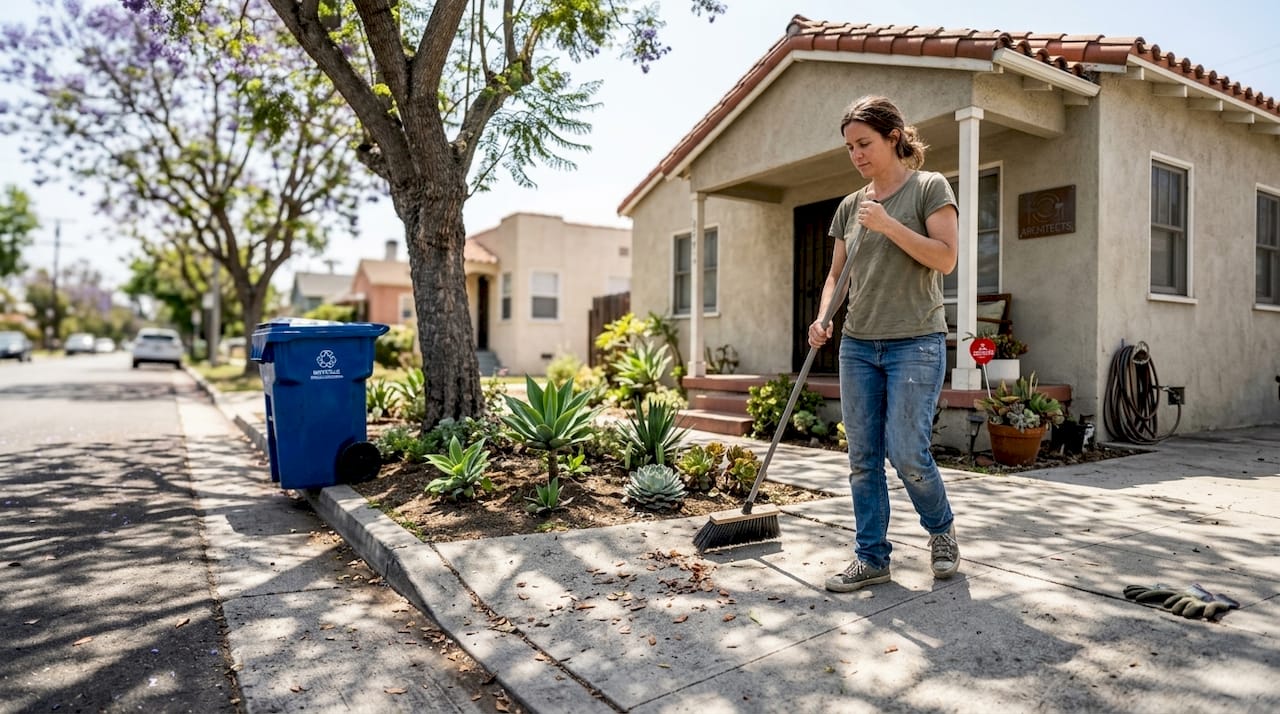
Development standards in the Zoning Code include pedestrian access, bike parking ratios, landscaping, and screening requirements. These apply regardless of project size and must be addressed in your site plan before permit submission.
The table below compares standard requirements across typical LA neighborhood types:
| Requirement | Standard residential | Transit-adjacent | Downtown-adjacent |
|---|---|---|---|
| Auto parking | 2 spaces/unit | Reduced or none | Often none |
| Bike parking | 1 per unit (varies) | Higher ratio | Higher ratio |
| Landscaping | 50% of front yard | Flexible | Flexible |
| Fencing height | 42 in. front, 8 ft. rear | Same | Varies |
Some districts now waive auto parking minimums entirely, especially near transit corridors. This is a meaningful cost saver, since structured parking can add $30,000 to $80,000 per space in Los Angeles. Replacing those spaces with bike storage and pedestrian-friendly entries can actually improve your project's appeal.
For a compliant site plan, make sure you address:
- Clearly defined pedestrian entry paths from the public sidewalk
- Required landscape buffers between the structure and street-facing fences
- Screening for mechanical equipment and trash enclosures
- Bike parking placement that is accessible but not obstructing egress
- Driveway width and turning radius standards where parking is required
Keeping up with modern LA trends in site planning, including reduced hardscape and permeable surfaces, keeps your project both compliant and competitive. Projects that integrate vertical oasis concepts into outdoor spaces are increasingly popular with buyers and renters alike.
Leverage new housing laws and streamlined approvals
Meeting traditional development standards is just the baseline. Recent state and city policy shifts create fresh opportunities for faster, less risky project approvals.
SB684/1123 enables faster, smaller-scale development with ministerial approval, which means no discretionary hearings, no neighborhood objections process, and a much more predictable timeline. This matters enormously in a city where entitlement delays can stretch projects by one to three years.
Here is the step-by-step process for pursuing streamlined approval under these laws:
- Confirm site eligibility: The lot must be in an urban infill location, not in a hazard zone, and not subject to certain environmental constraints.
- Check unit and parcel limits: The law applies to projects with up to 10 parcels or units. Knowing this early shapes your program.
- Assemble a code-compliant design package: Ministerial approval still requires full compliance with development standards, so skipping any step creates risk.
- Submit for concurrent review: Many jurisdictions now allow building and planning review to run simultaneously under these streamlined rules.
- Track agency timelines: Ministerial approvals have defined response windows. Follow up proactively.
This framework is particularly valuable for the ADU revolution happening across LA neighborhoods. Combining ADU projects with these laws can significantly boost density on a single lot. Use an ADU design checklist to make sure your project is submission-ready from the start.
Pro Tip: Ministerial approval removes subjectivity from the process. A code-compliant project gets approved on the merits of the drawings alone, without relying on a planning commissioner's interpretation. This reduces risk and cost substantially.
For homeowners exploring whether adding units makes financial sense, resources on unlocking property value through ADUs lay out the numbers clearly.
Control project costs and optimize value in design
With an understanding of laws and standards, getting the most from your project means taking costs seriously and designing with value in mind from day one.
Construction cost drivers in Los Angeles fall into three main buckets: hard costs (labor and materials), soft costs (design, permits, fees), and land. Multifamily production costs in LA are over twice those in Texas, and closing that gap could drop rents by 15%. That statistic makes clear why cost control is not optional—it is a design discipline in itself.
Key strategies for managing costs without sacrificing quality:
- Value engineer early, not late: Structural and material decisions made in schematic design are far cheaper to revise than those made during construction documents.
- Standardize unit layouts: In multi-unit projects, repeating a plan type reduces design hours, coordination time, and construction complexity.
- Specify durable, low-maintenance finishes: Upfront material costs that reduce long-term maintenance costs add net value over a ten-year hold.
- Right-size the program: Adding square footage adds cost. Every square foot should earn its keep through function or rental income.
- Cluster utilities: Stacking kitchens and bathrooms vertically reduces plumbing runs and mechanical costs significantly.
"The best value engineering happens at the beginning of a project, when there's still room to rethink the fundamentals of the design without losing ground on quality or compliance." — FO+H Architects, based on project experience
For a deeper look at multi-family cost insights specific to LA, including financing structures and unit mix strategies, that resource covers the ground in practical terms. Pairing smart cost controls with modern design tips ensures your project stands out in a competitive rental and resale market.
Prioritize community and opportunity in your project vision
The final layer moves beyond the project itself, connecting decisions to neighborhood and citywide opportunity. The most successful LA residential projects are not just code-compliant—they are contextually thoughtful and socially aware.
High-opportunity areas and thoughtful rezoning are critical to meeting LA's housing challenges. As a developer or homeowner adding units, your project contributes to that larger picture, whether you intend it to or not.
Here are the priorities we recommend building into any project vision:
- Neighborhood fit: Scale, massing, and materials should respect the existing streetscape while contributing something positive.
- Accessibility: Design for a range of residents, including those with mobility considerations, from the start rather than as an afterthought.
- Affordability levers: Even market-rate projects can include design choices (smaller units, efficient layouts) that keep rents within reach for a broader pool of residents.
- Community engagement: Early, informal conversations with adjacent neighbors often surface concerns that are easy to address in design but costly in a hearing room.
- Long-term stewardship: Buildings that are easy to maintain and adapt over time serve communities better and hold value longer.
"Rezoning without a clear AFFH (Affirmatively Furthering Fair Housing) lens risks concentrating new housing in already burdened communities rather than where opportunity is greatest." — Urban planning perspective reflected in current LA housing policy discussions
For developers thinking about equitable urban design, integrating community priorities from the start is both the ethical and the strategically smart path.
A reality check on LA development: What actually works
Based on our experience working on residential, ADU, and multi-family projects across Los Angeles, the gap between projects that succeed and those that stall usually comes down to one thing: silos.
Design, regulatory strategy, and cost management are too often treated as separate workstreams. The architect draws a vision, then the permit consultant flags problems, then the contractor reprices everything. By that point, months have been lost and the original budget no longer holds.
The developers and homeowners we see get the best results are the ones who treat the design process as integrated from day one. Early zoning research, early cost modeling, and early engagement with the permitting process are not extras—they are the actual work.
Copying what worked on a similar project two years ago is also a trap. Laws have changed. Construction costs have shifted. What was a safe approach then may now be leaving significant value on the table.
The best results we see come from projects where the team is genuinely curious about what is possible under current rules, not just what is familiar. Explore successful multi-family models that reflect this integrated approach for a clearer picture of what the results can look like.
Connect with experts for your next LA home project
Ready to turn best practices into real results for your property? At FO+H Architects, we work with LA homeowners and developers to move from early zoning research through permitted, construction-ready designs, whether the goal is a single ADU, a duplex, or a larger residential project.
Our team brings together architectural design, permitting knowledge, and community-aware planning under one roof. Browse our ADU and duplex plans to see ready-to-adapt options that are already calibrated for LA's codes, or explore a specific customizable ADU concept to get a sense of what thoughtful design can deliver. For personalized project guidance, connect with our LA architecture experts and let's talk through your property's potential.
Frequently asked questions
What is the maximum floor area ratio (FAR) for R1 zones in Los Angeles?
The R1 zone allows a maximum residential floor area of 0.45 times the lot size, so a 7,500 sq ft lot can support up to 3,375 sq ft of floor area. Knowing this number before design begins keeps your project from exceeding what the city will approve.
How does LA define parking requirements for residential developments?
Some districts have no mandated auto parking minimums, particularly near transit, but most residential zones require specific ratios for both auto and bike parking based on unit count. Always confirm the requirements for your specific zone and any applicable overlays.
How do the Starter Home Revitalization Act laws help speed up new residential development?
The Act allows ministerial approval for projects with up to 10 parcels or units on eligible sites, removing discretionary review from the process. This makes timelines more predictable and significantly lowers entitlement risk for qualifying projects.
Why are building costs so high for LA multifamily projects?
Multifamily costs in LA are more than twice Texas's rates, driven by a combination of regulatory requirements, labor market conditions, and high land values. Addressing these drivers through smart design and streamlined approvals is the most effective lever available to developers today.