

TL;DR:
- A structured, step-by-step process simplifies LA custom home and ADU projects, ensuring clarity and success.
- Early planning, thorough documentation, and team coordination are essential to avoid delays and costly revisions.
- Engaging neighbors and understanding LA-specific codes turn regulatory challenges into quality design advantages.
Planning a custom home or ADU in Los Angeles can feel like navigating a maze. Between zoning codes, multiple permitting departments, neighborhood requirements, and the sheer number of design decisions, many homeowners freeze before they even start. The good news: a structured, step-by-step process cuts through that complexity. This guide walks you through every stage of the LA custom home design journey, from shaping your initial vision to receiving your building permit, with practical advice tailored to Los Angeles requirements. Whether you're designing your primary residence or adding an ADU to maximize your property, this process gives you clarity and confidence.
Table of Contents
- Define your vision and requirements
- Gather requirements, research codes, and assemble your team
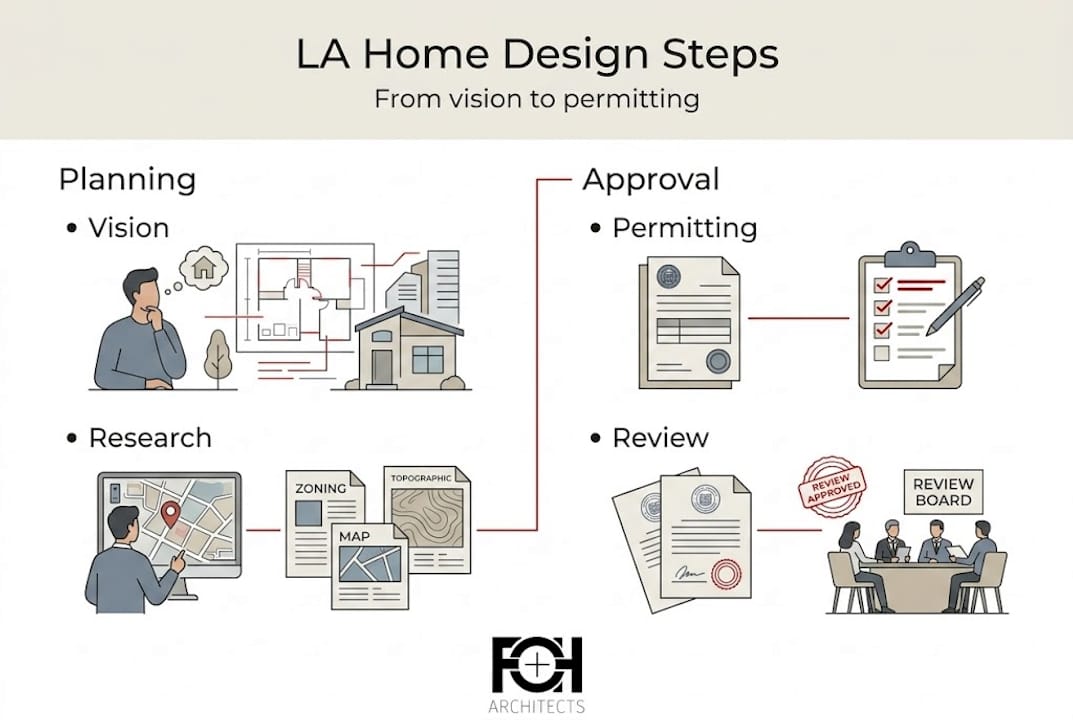
- Step-by-step: the LA custom home design and permitting process
- Troubleshooting, common pitfalls, and success tips
- What most guides miss about LA custom home design
- Ready to build your vision?
- Frequently asked questions
Key Takeaways
| Point | Details |
|---|---|
| Clarify your vision | Defining your lifestyle needs and priorities sets the foundation for a successful Los Angeles custom home. |
| Choose the right team | Qualified professionals simplify codes, zoning, and documentation for a smoother process. |
| Follow each permitting step | Detailed, sequential steps maximize your project’s speed and success in LA’s complex system. |
| Avoid common pitfalls | Double-check plans and stay proactive to prevent most delays or roadblocks. |
| Trust the process | Patience and preparation let you maximize design choices and build your LA dream home right. |
Define your vision and requirements
Now that you see the overall process, let's ground your project in a clear vision. Before any drawings are made or professionals are hired, you need to know what you actually want and why. Many homeowners skip this step and pay for it later in costly redesigns.
Common goals for LA homeowners include:
- Expanding living space to accommodate a growing family
- Adding an ADU for rental income or a multigenerational setup
- Maximizing resale value through updated layouts and innovative LA design ideas
- Creating a home that reflects personal style and cultural identity
- Incorporating green design features like solar-ready roofs or passive cooling
LA-specific constraints shape your options from day one. Lot size, zoning designation (R1, R2, RD, etc.), setback requirements, and height limits all influence what can be built and where. Neighborhood character guidelines in areas like Los Feliz or Silver Lake can add another layer of design considerations. Knowing these constraints early helps you set realistic expectations.
Start by answering these essential questions:
- How many bedrooms and bathrooms do you need now and in five years?
- Will the ADU serve as a rental unit, a home office, or housing for a family member?
- Do you want open-plan living or defined, private rooms?
- What accessibility features matter to your household?
- How important is energy efficiency and sustainability to you?
Community values also shape design choices in ways that are easy to underestimate. In many LA neighborhoods, good design means respecting the street presence, the scale of adjacent homes, and the culture of the block. Bringing your neighbors along, even informally, can prevent objections later in the process. You can also browse modern LA architecture tips to get a sense of what works in different LA contexts.
Pro Tip: Before your first architect meeting, sketch a simple wish list on paper. Include non-negotiables, nice-to-haves, and a rough budget range. This single step makes every professional conversation more productive and keeps the project anchored to what matters most to you.
Gather requirements, research codes, and assemble your team
With a vision in place, it's time to get practical by gathering details and the right team. This stage is where many homeowners lose momentum because the scope feels overwhelming. Break it into parts and it becomes manageable.
You will need the following documents and information before engaging professionals:
- Current site plan or survey of your property
- Title report confirming ownership and any easements
- Photos of the existing structure and lot from all sides
- Utility connection information (gas, water, sewer, electric)
- Any prior permits or unpermitted work records
Permitting in LA involves multiple departments, plan review timelines, and required documentation that varies by project type. Understanding this early helps you pick the right professionals.

Comparison: Who should lead your project?
| Professional | Best for | Pros | Cons |
|---|---|---|---|
| Licensed architect | Complex custom homes, ADUs | Full design + permitting expertise | Higher upfront cost |
| Design-build firm | Streamlined projects | Single point of contact | Less design flexibility |
| Draftsperson | Simple additions | Lower cost | Limited code knowledge |
| DIY | Minor, non-permitted work | Free | High risk for anything permitted |
For most LA custom home and ADU projects, a licensed architect is the most reliable choice. Use this numbered process to vet and select your team:
- Ask for references from recent LA projects similar in scale to yours.
- Verify their license on the California Architects Board website.
- Review their portfolio for design sensibility and project types.
- Confirm they have experience with LA County or City permitting workflows.
- Discuss their fee structure and what is included in each phase.
Plan review timelines in LA County typically place the first review within 10 business days of a complete submittal. Incomplete packages reset that clock, which is why getting your ADU design checklist right from the start matters. Your architect should also be familiar with the residential design workflow specific to LA to avoid common gaps in the submittal package.
Step-by-step: the LA custom home design and permitting process
Once your team and requirements are set, here's how the official process unfolds, step by step.
- Idea and programming: Define scope, budget, and must-haves in a written brief.
- Concept drawings: Your architect produces early diagrams to test layout options.
- Schematic design: Refined floor plans, elevations, and a site plan showing placement.
- Design development: Materials, window sizes, structural system, and mechanical routing are resolved.
- Permit documents: Full construction drawings, Title 24 energy documentation, structural calculations, and all required forms are assembled.
- Submittal: The complete package is submitted to the relevant department (LA City DBS or LA County DPW).
- Plan check: Reviewers assess compliance with zoning, building code, fire, and other requirements.
- Corrections: If changes are needed, your team responds with revised drawings.
- Permit issuance: Once all clearances are secured, the permit is issued and construction can begin.
Typical durations per step in Los Angeles (2026)
| Step | Typical duration |
|---|---|
| Concept through schematic design | 3 to 6 weeks |
| Design development | 4 to 8 weeks |
| Permit documents | 4 to 8 weeks |
| Plan check (first review) | 10 business days |
| Corrections and resubmittal | 2 to 6 weeks |
| Permit issuance after clearances | 1 to 3 weeks |
Important: The plan review, zoning assessment, and permit issuance require a sequence of formal submissions and clearances in LA. No permit is issued until all departmental sign-offs are in place. Plan for this in your schedule.
Pro Tip: Submit complete, accurate plans from the start. Every correction round adds weeks to your timeline and potentially thousands of dollars in professional fees. Your architect should conduct an internal plan check before submittal to catch issues first.
For ADU-specific projects, understanding the ADU plan check process in detail will help you anticipate exactly what reviewers look for. If you are working from an existing footprint, you may also want to explore how to customize LA floor plans to fit your specific lot and family needs.
Troubleshooting, common pitfalls, and success tips
Even with preparation, unexpected issues can arise. Here is how to avoid and solve them.
Many projects stumble at LA permitting due to incomplete packages and missing clearances. The most frequent issues we see:
- Incomplete documentation: Missing structural calculations, energy compliance reports, or soil reports that reviewers require.
- Zoning surprises: Discovering mid-design that a setback, height limit, or use restriction blocks the original plan.
- Coordination lapses: Architect, structural engineer, and Title 24 consultant submitting inconsistent information that contradicts each other on the drawings.
- Unpermitted existing work: Prior construction without permits on the property that must be legalized or removed before a new permit is issued.
- Missing department clearances: Health, fire, public works, or school fees that must be cleared before permit issuance.
Pro Tip: Before finalizing your design, have your architect run a zoning and code compliance review of the proposed plans. A one-hour internal review is far cheaper than a correction round from the city. Also, open direct communication with the plan check department early. Many LA departments allow pre-application meetings that can surface issues before you formally submit.
If the city requests plan changes, respond quickly and completely. Partial responses invite another full correction round. Your architect should address every comment in a written response letter alongside the revised drawings.
Critical: If clearances from other departments (fire, public works, environmental) are not secured before permit issuance, your project will stall completely at the final step, regardless of how strong the design drawings are.
For more context on how smart design choices also protect and unlock ADU property value, it is worth understanding the financial upside alongside the process. You can also browse real project stories on the TALKS W/ FO blog to see how other LA homeowners navigated similar challenges.
What most guides miss about LA custom home design
Having covered what to do and what to avoid, let's step back for a frank, expert perspective.
Most guides frame LA's regulatory complexity as a pure obstacle. Based on our experience, it is actually a hidden advantage for well-prepared homeowners. The detailed review process forces design quality. It surfaces structural issues, energy shortfalls, and zoning inconsistencies that would otherwise become expensive construction problems. The homeowners who struggle are the ones who fight the process. The ones who thrive treat it as a quality-control system working in their favor.
We have also seen that involving neighbors early, even with an informal conversation, opens design options that a formal process would close. Neighbors who feel respected rarely file objections. Those who feel bypassed often do.
The biggest myth in LA home design is fast-tracking. Many clients come to us having been told they can move from concept to permit in eight weeks. For most custom homes, that timeline is unrealistic and leads to rushed drawings, correction rounds, and ultimately a longer overall timeline. A methodical approach grounded in solid design workflow insights consistently outperforms shortcuts, in time, cost, and design quality.
Ready to build your vision?
When you're ready to take the next step from planning to building, we're here to help.
At FO+H architects, we specialize in custom home and ADU home plans designed specifically for Los Angeles lots, lifestyles, and communities. Whether you are starting fresh or exploring a modern ADU design that fits your backyard and budget, our team brings the permitting knowledge, design sensitivity, and community-focused approach your project deserves. If you are ready for a fully custom solution, explore our custom architect services and connect with us directly. We will help you move from wish list to building permit with clarity at every step.
Frequently asked questions
What documents do I need to submit for a custom home in Los Angeles?
You typically need a complete building permit package that includes site plans, surveys, structural calculations, Title 24 energy reports, and all department-required clearance forms.
How long does the plan review process take in Los Angeles?
First plan review in LA County often occurs within 10 business days after a complete submittal, though complex projects or correction rounds can extend the total review timeline significantly.
What are common reasons for delays in LA home design permitting?
Incomplete permits and missing clearances are the most common causes, along with inconsistent information between drawings from different consultants on the same project.
Can I personalize my home design to fit neighborhood character?
Yes. Working with your architect to review local zoning guidelines and engage neighbors early allows you to customize your home in ways that complement the surrounding community and reduce the risk of objections.
Do I need an architect for a custom home or ADU in LA?
While not always legally required for every project type, qualified professionals help you navigate LA's multi-step permitting and zoning processes, reducing costly errors and delays.