

TL;DR:
- Digital tools like BIM and AR/VR enhance precision and reduce costly mistakes in home design.
- Smart systems improve energy efficiency, offering homeowners real savings and greater control.
- Prioritizing building envelope improvements before tech integration ensures better performance and sustainability.
Technology is no longer reserved for high-budget luxury builds or tech-obsessed developers. For homeowners across Los Angeles, smart design tools and integrated systems are becoming practical, accessible parts of the planning process. Advanced tools like BIM and AR/VR now allow precise planning, real-time visualization, and personalized layouts that reduce costly mistakes before a single wall goes up. Whether you're renovating a hillside home, adding an ADU, or building from scratch, understanding how technology fits into your project is one of the most valuable things you can do before breaking ground.
Table of Contents
- How technology is changing the way homes are designed
- Smart systems: Comfort, savings, and sustainability
- Personalization and visualization tools for LA homeowners
- Critical considerations: Limitations, privacy, and ethical risks
- Future trends: Where LA residential design is headed
- Our perspective: Why tech is a tool, not the answer
- Upgrade your LA home with expert-driven design
- Frequently asked questions
Key Takeaways
| Point | Details |
|---|---|
| Design tech enhances planning | Digital tools like BIM and AR/VR help you visualize and customize before building. |
| Smart home systems save energy | Smart upgrades can reduce household energy bills by over 15 percent a year. |
| Personalization is now easy | AI and AR make it simple for you to co-create, preview, and refine your home's layout. |
| Balance tech with fundamentals | Upgrading insulation and layout first ensures technology delivers maximum value in your LA home. |
| Privacy and maintenance matter | Protect your privacy and plan for future costs when adopting new home technologies. |
How technology is changing the way homes are designed
The architectural process looks very different today than it did even ten years ago. Most of that change comes down to digital tools that help architects and homeowners collaborate more precisely and confidently. Understanding what these tools are, and how they benefit you, is a practical starting point.
Building Information Modeling (BIM) is a software-based process that creates a detailed, data-rich 3D model of your home. Unlike a basic blueprint, BIM captures structural systems, plumbing, electrical, and mechanical components all in one coordinated model. This means conflicts between systems are caught on screen, not during construction. For an LA homeowner, that translates to fewer change orders and a more predictable budget.
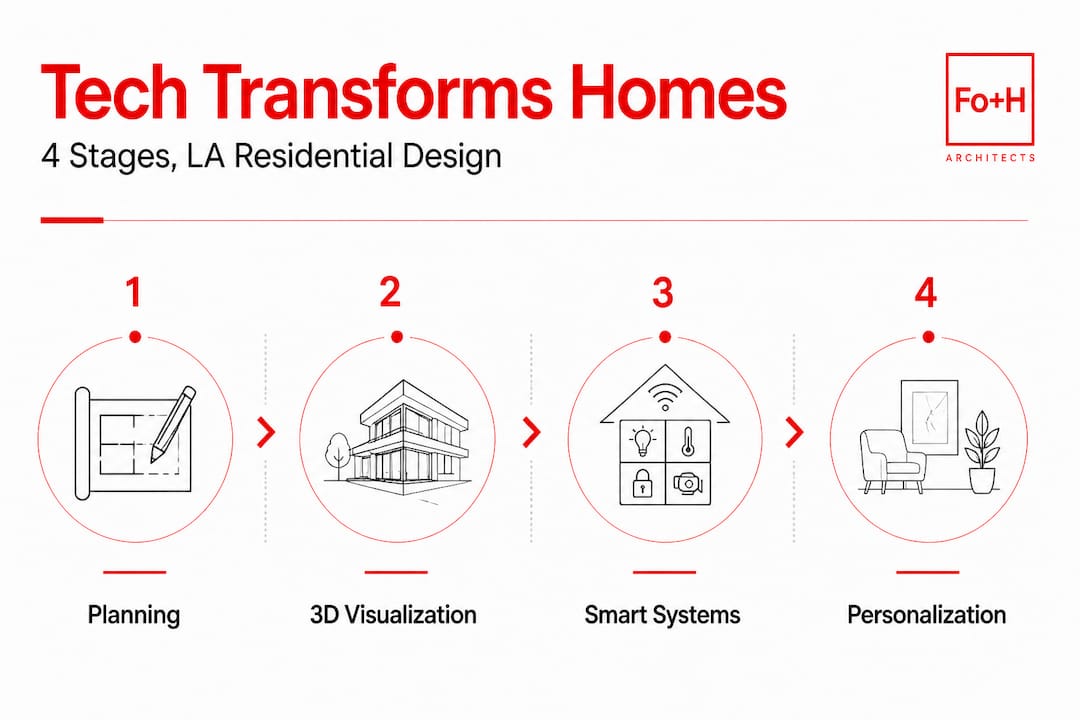
3D modeling and AI-optimized layouts take the guesswork out of space planning. AI tools can analyze your lot dimensions, lifestyle preferences, and local zoning codes to suggest layout configurations you might not have considered. This is especially useful for infill lots, hillside parcels, and multi-unit properties in dense LA neighborhoods.
Understanding why design matters for your daily life is directly connected to how well these tools are used early in a project.
Here's a quick comparison of traditional vs. technology-driven design methods:
| Feature | Traditional design | Technology-driven design |
|---|---|---|
| Error detection | During construction | During digital modeling |
| Cost accuracy | Estimated | Data-backed projections |
| Homeowner visualization | 2D drawings | AR/VR walkthroughs |
| Revision speed | Weeks | Days or hours |
| Personalization | Limited | Real-time adjustments |
Key benefits homeowners experience when tech tools are integrated from the start:
- Fewer surprises during construction
- Clearer communication with your architect and contractor
- Better alignment between your vision and the finished space
- Reduced waste and more sustainable material use
- Confidence in decisions about finishes, layouts, and systems
Understanding the residential design workflow helps you know exactly when to introduce these tools for maximum benefit.
Pro Tip: When you first sit down with your architect, ask specifically how BIM and 3D modeling will be used in your project. Request that smart system infrastructure, such as conduit runs for network cables and device mounting locations, be included in the model early. This avoids costly retrofitting later.
Smart systems: Comfort, savings, and sustainability
With a better understanding of design tools, let's explore how these technologies appear in daily living and make homes smarter and more sustainable. Smart home systems aren't just convenient. They are measurable performers when it comes to energy efficiency and long-term cost savings.
Research from IJSRA confirms that smart systems deliver roughly a 16.7% reduction in home energy use, which amounts to about $267 per household per year. Heat pumps, when properly sized and installed, achieve a Seasonal Coefficient of Performance (SCOP) of 3.72 for air-source models and up to 4.80 for ground-source models. These numbers reflect real-world energy output per unit of energy consumed, meaning well-designed systems return multiple times their energy input in heating or cooling.
For LA's mild climate, this matters. You don't need aggressive heating systems, but smart thermostats and energy-monitoring platforms can optimize the smaller loads that still drive your monthly utility bills.
Key smart systems to consider for your LA home:
- Smart thermostats: Programs heating and cooling around your schedule, not a fixed timer
- Automated shades and lighting: Respond to daylight and occupancy to minimize electricity use
- Energy monitoring dashboards: Give real-time visibility into which systems consume the most power
- Smart security and access control: Cameras, locks, and sensors with mobile integration
- EV charging management: Particularly relevant for LA homeowners with electric vehicles
- Leak detection systems: Sensors that alert you before minor plumbing issues become expensive problems
One helpful resource for integrating smart home systems into a cohesive interior experience shows how devices, aesthetics, and daily habits can align without visible clutter.
You can explore current smart home trends in LA to understand what other homeowners in your area are already doing.
Here's a comparison of homes with and without smart systems:
| Category | Standard home | Smart-enabled home |
|---|---|---|
| Annual energy cost | Higher by ~16.7% | Reduced through automation |
| HVAC efficiency | Fixed schedules | Adaptive, occupancy-based |
| Security monitoring | Passive or manual | Real-time mobile alerts |
| Homeowner control | On-site only | Remote and voice-activated |
To install effective smart systems in the right sequence, follow this numbered checklist:
- Assess your home's insulation and air sealing first. Technology works poorly in a leaky building envelope.
- Confirm your electrical panel can support added loads from EV chargers and smart appliances.
- Choose a smart home protocol (like Matter or Z-Wave) and stick with it for compatibility.
- Install smart thermostats and energy monitors before adding secondary devices.
- Set up a dedicated local network for smart devices to reduce latency and improve security.
- Test and calibrate each system before moving on to the next layer of automation.
A common mistake is oversizing equipment. An HVAC unit that's too large for a space will short cycle, reducing both comfort and efficiency. About 17% of heat pump installations underperform manufacturer standards due to poor system matching or inadequate insulation. Sizing your systems correctly from day one protects your investment.
Personalization and visualization tools for LA homeowners
Beyond automation and savings, technology gives you exciting ways to actively shape your home's look and feel before any physical work begins. This is where the homeowner experience becomes truly collaborative.
AR (Augmented Reality) and VR (Virtual Reality) tools allow you to walk through a digital version of your future home. You can test different floor plans, change tile finishes with a tap, and experience how natural light will move through a room at different times of day. For LA homes, particularly those with complex hillside lots, ocean-view orientations, or modern open floor plans, this kind of pre-build visualization is invaluable.
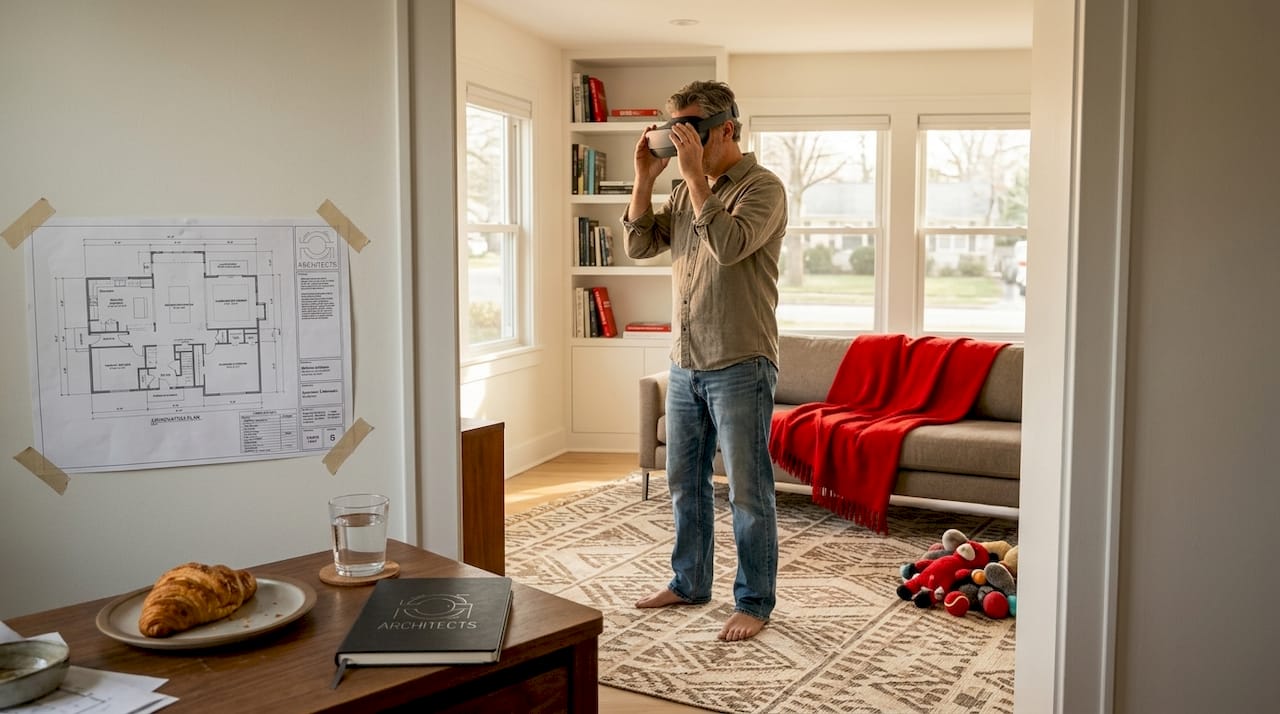
BIM and AR/VR tools allow both architects and clients to make decisions together in real time, reducing the back-and-forth that typically extends timelines and budgets.
Features that improve homeowner engagement through visualization:
- Try-before-you-build: Explore multiple layout configurations before committing to structural decisions
- Instant material swaps: Change cabinet finishes, countertops, or flooring colors in a 3D environment
- Virtual walk-throughs: Experience ceiling heights, room proportions, and window views before construction
- Lighting simulations: See how artificial and natural light affects the mood of each space
- Furniture placement testing: Confirm that your existing furniture fits or identify what to replace
"The earlier you bring technology into the design conversation, the more control you maintain over the final result. Visualization tools don't just help clients see the design. They help them own it." This reflects what we consistently see in projects where clients engage with digital models early.
For LA homes with unique architectural settings, from Craftsman bungalows in Pasadena to modern slabs in the Hollywood Hills, these tools let your architect test design solutions that respect the existing character while integrating modern performance features.
Review modern architecture tips for LA homes to see how visualization fits into a broader design strategy. You can also explore custom residential solutions tailored specifically to the LA context.
Pro Tip: Ask your architect if their workflow supports the Matter protocol for smart devices. Matter is an industry-wide standard that ensures devices from different brands work together reliably. Building this compatibility into your system now means fewer headaches when you upgrade devices in five years.
Critical considerations: Limitations, privacy, and ethical risks
While tech offers tremendous potential, it's important to look at the trade-offs and risks. Not every homeowner needs the same level of integration, and rushing into automation without a solid building foundation can produce disappointing results.
Fabric First vs. Technology First is a genuine debate in sustainable home design. The Fabric First approach argues that you should seal and insulate your home properly before layering on smart systems or heat pumps. The logic is straightforward: if your home leaks conditioned air, no thermostat algorithm will compensate for that inefficiency. Prioritizing insulation before technology consistently delivers better outcomes, especially for older LA housing stock.
Common pitfalls to watch for:
- Oversized or mismatched equipment: Leads to short cycling, humidity problems, and premature wear
- Overreliance on automation: Systems that break or go offline can leave homeowners without basic controls
- Vendor lock-in: Choosing proprietary systems that won't integrate with future devices
- Poor wireless coverage: Smart devices fail when your network doesn't reach certain rooms
- Neglected maintenance: Smart systems require regular firmware updates and annual service checks
On privacy, the risks are real and specific:
- Security cameras and video doorbells transmit data to cloud servers, creating exposure if those servers are breached
- Voice assistants record ambient audio, which raises concerns about data retention
- Smart locks and access logs create a digital record of when people enter and leave your home
- Rental units with smart devices raise additional privacy concerns for tenants
"Annual service contracts for complex smart home systems in LA can range from $1,500 to over $5,000 depending on system size and vendor. Factor this into your long-term budget, not just your installation cost."
Steps you can take to protect yourself:
- Request local data processing options where video and audio are stored on your home server, not the cloud
- Use smart devices that are certified for privacy-by-design standards
- Establish clear data policies if you rent out part of your property as an ADU or short-term rental
- Work with a firm experienced in optimizing LA home layouts to reduce unnecessary complexity in your smart system design
Future trends: Where LA residential design is headed
Understanding risks leads naturally to the innovations on the horizon for the LA market. Several trends are already shaping what residential projects will look like in the next five to ten years.
Emerging developments that LA homeowners should know about:
- Modular and 3D-printed homes: Factory-built modules and printed structures are gaining ground as affordable, fast alternatives for ADUs and infill housing. Regulatory support for modular construction is increasing, though permitting pathways vary by jurisdiction.
- Privacy-by-design in new builds: Developers and architects are embedding privacy protections into the design of smart systems from the start, rather than adding them as an afterthought. This is becoming essential for rental and shared housing where multiple occupants have different privacy needs.
- Smart rental units: ADUs and multi-family properties with integrated smart systems are attracting higher rents and lower vacancy rates in competitive LA neighborhoods.
- AI-assisted code compliance: Software tools that cross-reference your design against Title 24 energy codes and local zoning requirements in real time, reducing permitting delays.
- Passive House integration with smart systems: Combining airtight building envelopes with smart ventilation and monitoring to achieve near-zero energy consumption.
LA is uniquely positioned to lead in these areas. The mild climate reduces the extreme performance demands that challenge colder markets, and the city's density creates strong demand for creative infill solutions like ADUs. Homeowners who invest in these technologies now are not just improving their current experience. They are increasing the long-term value and adaptability of their properties.
Our perspective: Why tech is a tool, not the answer
You've explored the tools and the future. Now here's our honest take, based on years of working with LA homeowners on residential and ADU projects.
Technology is powerful. But it does not fix a poorly planned layout, an under-insulated wall, or a building envelope that leaks conditioned air. We have seen projects where homeowners invested heavily in smart systems before addressing basic envelope improvements, and the results were disappointing. The technology performed exactly as designed. The building just didn't cooperate.
The smartest approach we've seen consistently is Fabric First. Fix the envelope. Improve insulation, address thermal bridging, and seal gaps before adding layers of automation. Then your smart systems perform the way manufacturers actually intend.
In LA specifically, the mild climate changes the calculation on some systems. Heat Recovery Ventilators (HRVs), which are valuable in colder climates, deliver less measurable benefit here because you rarely need to recover heat from exhaust air. LA-based integration specialists who work in luxury residential understand this and calibrate recommendations accordingly. Always ask your technology integrator whether a system is appropriate for your specific climate zone, not just what's popular in the market.
Our practical advice: verify real-world performance data, not manufacturer marketing claims. Ask for case studies from homes in similar LA climates and building types. And always build your design workflow around your lifestyle first. Technology should serve the design, not define it.
Upgrade your LA home with expert-driven design
If this article has helped you see how design technology and smart systems can work together in your LA home, the next step is a conversation with an architect who understands both sides of the equation.
At FO+H Architects, we bring this thinking into every project, from single-family renovations to full ADU builds. If you're ready to explore your options, our ADU Store offers pre-designed plans that incorporate modern systems thinking. The Blue ADU is a strong starting point for homeowners looking for a clean, efficient design. For fully personalized solutions, visit our main site at FO+H Architects and start a conversation with our team today.
Frequently asked questions
What is the first step to add smart tech to my LA home?
Start with early collaboration with an architect to ensure systems like lighting and networking are integrated seamlessly from the design phase forward, rather than retrofitted after construction.
How much can I reduce my energy bill with smart home systems?
Research shows smart systems reduce energy use by roughly 16.7%, saving the average household about $267 per year on utility costs.
Are there privacy risks with smart home technology?
Yes, smart technology can introduce risks like data breaches and surveillance overreach, but selecting local processing options and privacy-certified devices significantly reduces your exposure.
Should I focus on tech upgrades or better insulation first?
Experts recommend the Fabric First approach, meaning you should improve insulation and air sealing before adding smart systems to ensure technology performs at its full potential.
What's the future of residential technology in LA?
Expect growth in modular and 3D-printed homes alongside privacy-by-design smart systems and smarter ADU rentals becoming increasingly standard across Los Angeles neighborhoods.