

TL;DR:
- Inclusive design encompasses broader user needs beyond legal compliance, integrating cultural and functional diversity.
- Applying Universal Design principles early ensures spaces are accessible, flexible, and aesthetically appealing.
- Thoughtful involvement of actual users improves space functionality and deepens community and cultural identity.
Many people assume inclusive design means adding a wheelchair ramp to the front door and calling it done. That assumption leaves out a significant portion of what good architecture actually achieves. Inclusive design shapes how families of all ages move through a home, how neurodivergent residents experience a space, and how cultural identity gets woven into the built environment. In Los Angeles, a city defined by its diversity, this matters more than almost anywhere else. This guide breaks down what inclusive design really means, how Universal Design principles apply to real projects, and how you can use these ideas to create spaces that genuinely serve everyone who lives in them.
Table of Contents
- What is inclusive design in architecture?
- Universal Design principles: The foundation of true inclusivity
- Addressing edge cases: Neuro-inclusivity, aging-in-place, and beyond
- Balancing inclusivity, aesthetics, and economics in Los Angeles
- The uncomfortable truth: What most LA design guides miss
- Bring inclusive design to your next project
- Frequently asked questions
Key Takeaways
| Point | Details |
|---|---|
| Inclusive design means more | It goes beyond ADA to serve diverse users, from kids to elders to neurodiverse residents. |
| Start with Universal Design | Applying universal principles early enables flexibility, safety, and future-proof value. |
| Edge cases matter | Successful projects consider neuro-inclusivity, aging-in-place, and temporary disabilities with creative solutions. |
| Aesthetics and community | Inclusivity can enhance, not diminish, design appeal and community strength when done right. |
| Early integration saves cost | Planning for inclusivity early in your LA project prevents expensive retrofits and adds value. |
What is inclusive design in architecture?
Inclusive design is not a code section or a checklist. It is a philosophy that shapes every decision from site selection to door hardware. Inclusive design prioritizes spaces usable by the widest range of people and goes beyond ADA compliance. Where ADA sets a legal floor, inclusive design aims for a much higher standard.
The confusion between the two is understandable. ADA compliance is measurable, enforceable, and specific. Inclusive design is broader and more nuanced. It asks architects and homeowners to think about who might use a space across an entire lifetime, not just who uses it today.
Core principles include people-focused processes, diversity acknowledgment, choice, flexibility, and intuitive use. These principles push designers to ask questions like: Can a grandmother with limited grip strength open this door independently? Can a child with sensory sensitivities feel calm in this living room? Can a multigenerational household from a culture that values communal cooking actually use this kitchen?
Here is a quick comparison to clarify the distinction:
| Feature | ADA compliance | Inclusive design |
|---|---|---|
| Legal requirement | Yes | No (but strongly recommended) |
| Scope | Disability access | All ages, abilities, cultures |
| Timing | Often retrofitted | Integrated from day one |
| Aesthetic priority | Low | High |
| User involvement | Not required | Central to process |
In Los Angeles specifically, inclusive design addresses the needs of multigenerational households, aging residents who want to stay in their homes, and communities with distinct cultural practices around space and gathering. A neuro-inclusive design overview shows how this extends even further, accounting for how people with autism, ADHD, or anxiety experience built environments.
For homeowners exploring modern LA residential architecture tips, understanding this distinction is the first step toward making smarter, longer-lasting design decisions.
"The best inclusive spaces are not designed for a hypothetical average user. They are designed with real people who reflect the full range of human experience." This is the mindset that separates thoughtful architecture from code-compliant construction.
Universal Design principles: The foundation of true inclusivity
With the key concepts framed, it is essential to understand the Universal Design principles that make inclusive spaces possible. Universal Design (UD) is the practical system behind inclusive architecture. It gives designers a structured way to evaluate whether a space truly works for everyone.
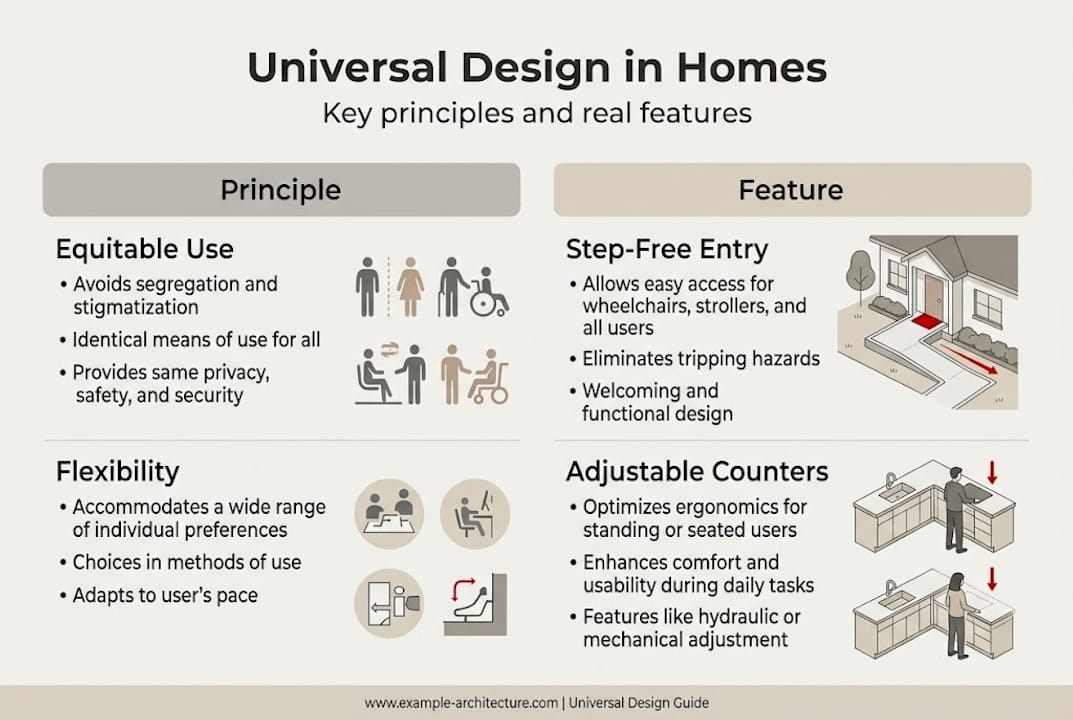
The seven UD principles applied via step-free access, adjustable fixtures, and sensory-aware materials translate directly into architectural features you can see and touch. Here is how they map to real applications:
| UD Principle | What it means | Real-world feature |
|---|---|---|
| Equitable use | Usable by all people | Step-free entry, wide doorways |
| Flexibility in use | Accommodates preferences | Adjustable kitchen counters |
| Simple and intuitive | Easy to understand | Clear signage, logical layouts |
| Perceptible information | Communicates effectively | Tactile cues, high-contrast colors |
| Tolerance for error | Minimizes hazards | Rounded corners, non-slip floors |
| Low physical effort | Efficient and comfortable | Lever door handles, rocker switches |
| Size and space for approach | Adequate space for all | 36-inch clear floor paths |
These features are not just for people with disabilities. Adjustable counters help children cook alongside adults. Lever handles benefit anyone carrying groceries. Tactile cues assist visitors who are unfamiliar with a space.
For innovative ADU design in LA, integrating UD early is especially valuable. ADUs often serve aging parents, adult children, or renters with different needs than the primary household. Getting these details right at the design stage costs far less than retrofitting later.
Here is a step-by-step approach to integrating UD into your project:
- Identify all potential users before design begins, including future occupants and visitors.
- Map daily routines to understand how people will actually move through the space.
- Apply UD principles to each room and transition zone during schematic design.
- Review with actual users or occupational therapists before finalizing plans.
- Document inclusive features in your permit drawings to streamline approvals.
Pro Tip: Integrating UD features during the planning phase typically adds 1 to 3 percent to project costs, while retrofitting the same features after construction can cost 10 to 20 times more. The math strongly favors early action.
Understanding why design matters goes hand in hand with this approach. Spaces that work well for everyone tend to work exceptionally well for anyone, which is the real goal.
The LLDC Inclusive Design Standards offer a detailed reference for how these principles get applied at a city scale, which is useful context for LA developers working on larger infill or multi-family projects.
Addressing edge cases: Neuro-inclusivity, aging-in-place, and beyond
Inclusivity is not one-size-fits-all. Let's look closer at nuanced needs and how forward-thinking design adapts to them.
Two groups that often get overlooked in standard accessibility conversations are neurodivergent residents and aging adults who want to remain in their homes. Both groups have specific, practical needs that good architecture can address without compromising aesthetics.
Neuro-inclusive design features such as sensory zoning, color-coded wayfinding, and quiet rooms are gaining traction in residential and commercial projects alike. For someone with autism or sensory processing differences, an open-plan living area with hard surfaces and bright overhead lighting can be genuinely distressing. Small, intentional changes make a significant difference.

For aging-in-place, the goal is to allow residents to stay in their homes safely as their physical needs change over time. This is especially relevant in Los Angeles, where many homeowners are choosing to add ADUs specifically to house aging parents nearby.
Here are practical features that address both neurodiversity and aging needs:
- Dappled or layered lighting instead of harsh overhead fixtures to reduce sensory overload
- Stimming-friendly furniture with varied textures and defined zones for movement
- Contrasting materials on floor transitions to signal changes in surface and prevent falls
- Quiet rooms or alcoves that offer retreat from busy household activity
- Grab bars integrated into tile design so they read as decorative rather than clinical
- Wider hallways (42 inches minimum) to accommodate walkers, wheelchairs, and side-by-side movement
- Zero-threshold showers that work for wheelchair users and aging residents equally
For homeowners focused on optimizing LA home layouts, these features do not need to look institutional. When specified thoughtfully, they blend into the overall design and often improve the experience for every resident, not just those with specific needs.
Pro Tip: Before finalizing your floor plan, walk through it with someone who has a mobility aid, a stroller, or a sensory sensitivity. Their feedback will surface issues that even experienced architects sometimes miss on paper.
Balancing inclusivity, aesthetics, and economics in Los Angeles
The challenge grows when community expectations and economics enter the picture. These are real-world tradeoffs worth confronting directly.
Inclusive features can face criticism for creating bland aesthetics or high costs, especially in Los Angeles. The so-called "boring box" criticism is not entirely unfair. When developers treat inclusivity as a compliance exercise rather than a design opportunity, the results can feel generic and uninspired.
Los Angeles has its own specific context here. Street accessibility progress for disabled people stalled for decades, with the city's sidewalk repaving program facing oversight issues since 1992. That gap between policy intent and real outcomes is a reminder that inclusive design cannot be left to regulation alone. Architects, developers, and homeowners all play a role.
Here is a comparison of how minimalist and inclusive approaches can differ and where they can converge:
| Design approach | Minimalist only | Inclusive and aesthetic |
|---|---|---|
| Entry | Single step, narrow door | Level entry, 36-inch door with design detail |
| Kitchen | Fixed-height counters | Adjustable counters with varied materials |
| Lighting | Recessed only | Layered: ambient, task, accent |
| Outdoor space | Decorative only | Accessible paths with planted borders |
| Community input | Minimal | Central to design process |
Strategies to counter the boring box criticism include:
- Use material variety (wood, tile, textured plaster) to add visual interest within accessible layouts
- Incorporate local cultural references in facade details and interior finishes
- Design outdoor transitions as landscape features rather than ramps
- Engage community stakeholders early so the building reflects actual neighborhood identity
- Reference projects like Thatcher Yard, where sensitive infill enhanced rather than diluted community character
For sustainable urban housing in LA and multi-family housing options, the economics often favor inclusivity when you account for broader market appeal and reduced retrofit costs. An ADU transformation in LA that incorporates these features from the start attracts a wider range of tenants and holds its value longer.
The uncomfortable truth: What most LA design guides miss
Based on our experience working across Los Angeles, the biggest gap in inclusive design is not technical knowledge. It is intention. Most guides focus on what features to include. Very few address how to think about who you are designing for and why.
Checklist architecture produces checklist results. When a homeowner or developer treats inclusive features as boxes to tick rather than problems to solve, the spaces feel exactly that way to the people who use them. Residents notice. They feel the difference between a space designed with them in mind and one designed around minimum requirements.
What actually works is involving real users from the earliest stages of design. Not consultants describing user needs, but actual people who will live in or regularly use the space. Their input consistently surfaces details that drawings alone never capture.
LA's architectural identity is vibrant, layered, and culturally specific. Inclusive design does not flatten that identity. When done well, it deepens it. Exploring innovative LA home ideas shows how creativity and inclusivity reinforce each other rather than compete. The goal is not compliance. It is belonging.
Bring inclusive design to your next project
At FO+H Architects, we design ADUs and residential spaces in Los Angeles that put inclusive principles to work from day one, not as an afterthought. Our projects balance accessibility, aesthetics, and community value in ways that hold up over time.
Whether you are planning a new ADU, a multi-family development, or a residential renovation, we can help you make it work for everyone who will use it. Browse our ADU floor plans to see how inclusive features integrate naturally into thoughtful design. Our Blue ADU plans and Gold ADU designs both reflect our commitment to spaces that are functional, beautiful, and genuinely inclusive. Reach out to start a conversation about your project.
Frequently asked questions
What is the difference between inclusive design and ADA compliance?
Inclusive design considers a wider range of human diversity, including age, family structure, and culture, while ADA compliance focuses on minimum legal standards for disability access. Inclusive design is a proactive philosophy; ADA is a legal baseline.
Why should LA homeowners consider inclusive design from the start?
Planning inclusive features early avoids expensive retrofits and boosts community value and long-term well-being for all residents. Retrofitting the same features after construction typically costs far more than integrating them during design.
How can inclusive design boost home and property value?
Homes designed for all ages and abilities appeal to more buyers and future-proof your investment. The LLDC Inclusive Design Standards demonstrate how universal benefits, sometimes called the curb-cut effect, amplify value across entire communities.
Can inclusive features look stylish and modern?
Yes. Balancing inclusivity and attractive design is achievable with early planning and genuine community input, and it consistently produces better results than treating accessibility as a late-stage add-on.