

TL;DR:
- Most LA residential projects face costly risks from regulatory complexities that a feasibility study can identify early. Skipping this critical step often leads to expensive redesigns, utility upgrades, or project abandonment, which could have been avoided with proper analysis. Conducting a thorough feasibility study costs less than the potential surprises and ensures informed decisions, protecting your investment and project timeline.
Many homeowners and property investors in Los Angeles assume that a strong concept and a desirable lot are enough to launch a successful residential project. That assumption is expensive. The truth is that LA's layered regulatory environment, diverse terrain, and active development market create hidden risks that can derail even well-funded projects before the first permit is pulled. A residential feasibility study is the structured analysis that separates well-informed decisions from costly gambles. This guide explains what the study includes, why it matters specifically in Los Angeles, and exactly how to use its findings to protect your investment and improve your project outcome.
Table of Contents
- What is a residential feasibility study?
- Key elements of a residential feasibility study in Los Angeles
- Why feasibility studies are vital for LA projects
- How to get the most out of your feasibility study
- Why cutting corners on feasibility is the costliest LA mistake
- Make your LA project feasible with FO Studio
- Frequently asked questions
Key Takeaways
| Point | Details |
|---|---|
| Comprehensive risk check | A feasibility study uncovers potential problems before major money is at risk. |
| LA factors matter most | Special rules, codes, and hillsides make local expertise crucial for Los Angeles projects. |
| Prevent costly mistakes | Skipping a study can mean unexpected costs and delays or even total project failure. |
| Actionable next steps | Use a feasibility study to design smarter, budget with confidence, and avoid regrets on your next project. |
What is a residential feasibility study?
Before you spend serious money on design, permits, or construction, you need to understand what you are actually working with. A residential feasibility study is a comprehensive analysis to determine if a proposed residential development project is viable, covering market demand, site suitability, financial projections, regulatory compliance, technical feasibility, and risks. Think of it as your due-diligence checkpoint before committing to a path that could cost hundreds of thousands of dollars.
The study typically examines six core areas:
- Market demand: Is there buyer or renter demand for what you want to build?
- Site suitability: What does the lot allow, and what does its physical condition reveal?
- Financial projections: What will it cost to build, and what return can you realistically expect?
- Regulatory compliance: What zoning, building codes, and local ordinances apply?
- Technical feasibility: Are there soil, utility, or structural constraints that affect the build?
- Risk assessment: What could go wrong, and what is your exposure?
In Los Angeles, each of these categories carries local complexity that goes far beyond a standard analysis. Zoning rules vary by neighborhood plan, hillside ordinances restrict grading and height, and Historic Preservation Overlay Zones (HPOZs) can prohibit design changes that would otherwise seem routine. A feasibility study surfaces all of these constraints early, during the planning phase, so you can make informed decisions about scope and budget before you are locked into a direction.
A common and costly misstep we see is when owners spend $40,000 to $60,000 on architectural drawings before discovering their site cannot support the intended structure. A feasibility study costing a fraction of that amount would have caught the problem on day one.
Following the residential planning steps that account for LA's specific environment ensures you do not fall into this trap.
Key elements of a residential feasibility study in Los Angeles
Now that you know the study's overall purpose, here is what actually goes into a feasibility study, especially in the uniquely challenging LA market.
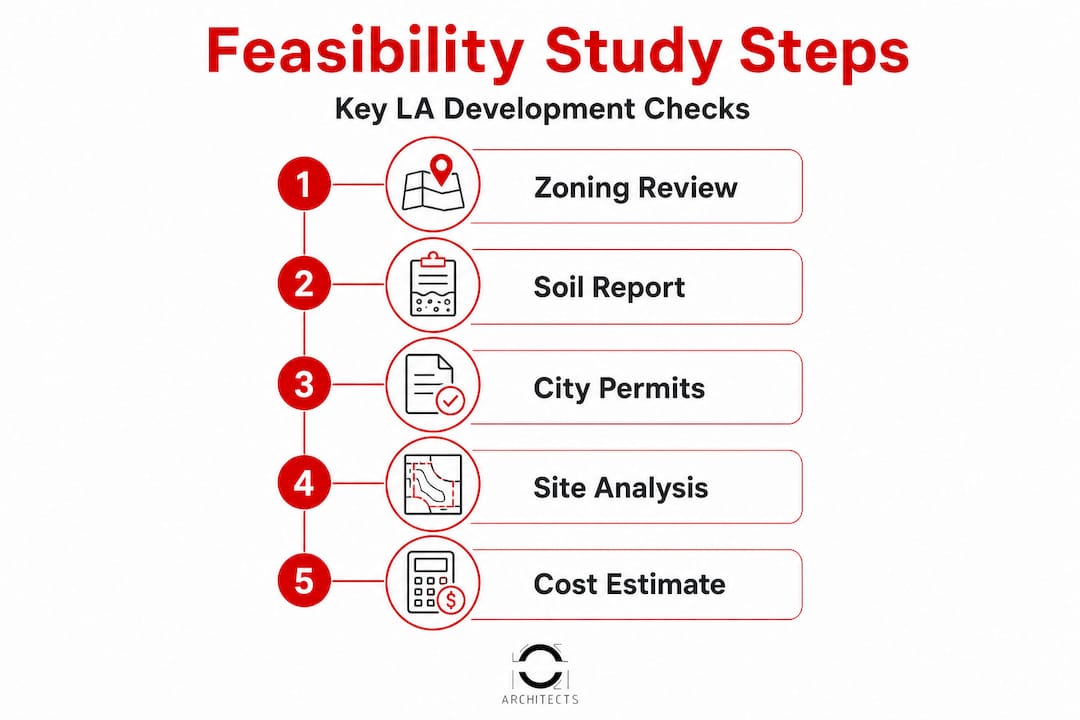
A strong feasibility study in Los Angeles is built around five core elements, each shaped by local conditions:
- Zoning and land use review: Confirm what the parcel is zoned for, what density is permitted, and whether any overlays or specific plan requirements apply. This includes checking setbacks, height limits, floor area ratios (FAR), and parking minimums.
- Geotechnical and utility assessment: Evaluate soil stability, slope, fire hazard severity zone designation, and access to water, sewer, gas, and electrical infrastructure. On hillside lots, this step can make or break the entire project.
- Market and financial analysis: Model construction costs, development timelines, projected rental or resale revenue, and net return. In LA, affordability regulations like Measure JJJ must be factored into for-sale projects to avoid costly compliance surprises.
- Regulatory and entitlement review: Identify required permits, environmental review triggers (such as CEQA, the California Environmental Quality Act), neighborhood council input, and any discretionary approvals needed.
- Risk identification and mitigation: Flag the issues most likely to cause delays or overruns, and outline strategies to address each one.
The table below compares a standard feasibility process to the LA-specific layer of complexity that makes local expertise so valuable:
| Feasibility element | Standard process | LA-specific nuance |
|---|---|---|
| Zoning check | Review city zoning map | Confirm neighborhood plan, HPOZ, Tier III TOC, or Specific Plan |
| Soil and site analysis | Basic geotechnical review | Hillside grading ordinance, landslide zone, fire hazard zone |
| Financial modeling | Cost and revenue estimates | Factor in Measure JJJ affordability gaps analysis for for-sale projects |
| Regulatory compliance | Building code review | LADBS (LA Department of Building and Safety) process, discretionary review |
| Utility access | Check utility availability | Verify capacity for hillside lots; assess utility upgrade costs |
Reviewing LA development best practices alongside your feasibility findings will help you see how each element connects to the broader project strategy. If you are considering a custom build, understanding how custom architecture for LA intersects with site constraints is equally important.
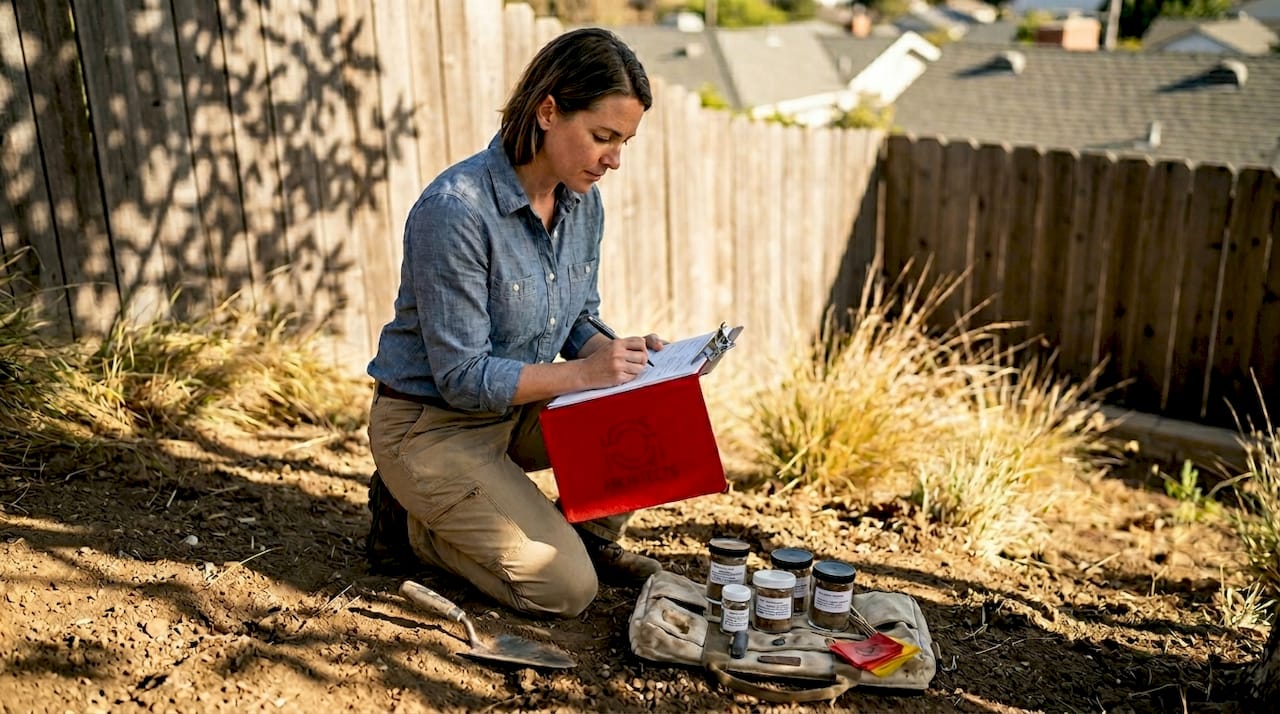
One element that surprises many first-time developers is the geotechnical step. In the flatlands, a basic soil report might be straightforward. But on a hillside lot in Silver Lake, Bel Air, or Altadena, the soil composition, slope stability, and drainage conditions can require retaining walls, deep foundations, or complete redesigns. Getting this analysis early protects your budget and your timeline.
Why feasibility studies are vital for LA projects
Having outlined the elements, here is why these steps are especially urgent for LA area homeowners and investors.
Los Angeles is one of the most regulated residential development environments in the country. Regulatory surprises and technical hurdles consistently rank as the largest budget-killers in local projects. A feasibility study done correctly and early transforms those unknowns into manageable, planned-for items. Without one, you are essentially making a six or seven figure commitment while navigating in the dark.
The risks of skipping a feasibility study in LA are concrete and well documented:
- Zoning violations: Building something the parcel does not legally support triggers stop-work orders and costly redesigns.
- Soil failures: Undiscovered soil instability on hillside lots leads to structural failures or mandated project halts mid-construction.
- Utility complexity: Insufficient utility capacity on older residential streets can require expensive infrastructure upgrades that inflate budgets by 15% to 30%.
- Cost creep: Undefined scope at the start of a project almost always results in change orders and escalating contractor fees.
- Contractor misalignment: Hiring a contractor before the feasibility study is complete means your contractor is bidding on incomplete information, leading to disputes and delays.
- Project abandonment: Some projects are abandoned after significant investment when a blocking issue is discovered too late to recover economically.
All primary sources emphasize risk mitigation before investment as the central purpose of a feasibility study. This is not a bureaucratic formality. It is where your project's success or failure is decided.
Pro Tip: Complete your feasibility study before engaging a general contractor. Contractors price bids based on available information. The more complete your feasibility findings, the more accurate the bids you will receive, and the less you will pay in change orders later. Share the study with your architect before you approach contractors to ensure everyone is aligned on scope and site conditions.
For ADU projects specifically, feasibility directly affects value. A well-sited, properly permitted ADU in Los Angeles can generate $2,000 to $4,500 per month in rental income. But only if the site can support it. Strategies for designing value-focused ADUs always start with confirming site viability.
How to get the most out of your feasibility study
With the stakes and advantages in clear focus, here is how to turn the study's findings into real-world benefits for your LA project.
Receiving a feasibility report is the starting point, not the finish line. The value of the study depends entirely on how you use its findings. Many homeowners treat the report as a pass-or-fail verdict. That misses the point. A residential feasibility study is a comprehensive analysis covering market demand, site suitability, financial projections, regulatory compliance, technical feasibility, and risks, all of which offer actionable intelligence you can apply to improve your project's structure before committing fully.
Here is a practical checklist for maximizing the return on your feasibility investment:
- Review financial projections with a fresh lens. If the numbers show a tight return, use the findings to renegotiate the land price, adjust the unit mix, or reconsider the program before proceeding.
- Share the full study with your architect at the first meeting. Your design team should begin with full knowledge of site constraints, not discover them mid-schematic. This saves revision time and design fees.
- Use zoning findings to explore entitlement opportunities. Many LA parcels have unused density potential. Feasibility findings might reveal that a by-right ADU or a TOC (Transit Oriented Communities) density bonus is available and worth pursuing.
- Address geotechnical and utility findings in your budget immediately. Add contingency line items for each identified risk. Do not wait to see if the problem materializes. Plan for it now.
- Set a realistic timeline based on regulatory findings. If your project requires discretionary review or CEQA clearance, your timeline extends significantly. Knowing this early prevents cash-flow problems down the road.
- Get a second opinion on the findings. If your feasibility study was prepared by a third-party consultant, ask your architect or a trusted advisor to review the conclusions before you act on them.
A well-organized residential design workflow incorporates feasibility findings at every stage, from schematic design through construction documentation. This prevents costly design pivots late in the process.
Pro Tip: If your feasibility study identifies a risk but does not quantify the cost, push for a cost estimate from a structural engineer or civil consultant before moving forward. Vague risk flags are only half the story. You need a dollar figure to make informed decisions.
For investors focused on long-term returns, resources on maximizing ADU value show how feasibility findings directly inform income projections for rental units on your LA property.
Why cutting corners on feasibility is the costliest LA mistake
Based on years of working on residential and ADU projects across Los Angeles, I can tell you that the feasibility step is where most project failures are planted. The mistake rarely looks obvious at the time. It tends to feel like efficiency: skipping a $5,000 to $15,000 study to save time and get moving faster. But that decision can produce $50,000 or more in avoidable costs once the project is underway.
The three most common and costly shortcuts we see in LA projects are these: skipping geotechnical analysis on hillside sites, ignoring the implications of Measure JJJ for for-sale projects, and underestimating utility complexity on older residential parcels. Each of these has a predictable outcome. Hillside projects without proper soil analysis routinely require redesigned foundations that cost two to three times more than a standard slab. Projects subject to Measure JJJ affordability requirements that were not modeled upfront often find that the required affordable units make the project financially unworkable. And utility upgrades on older streets in neighborhoods like East Hollywood or Boyle Heights can add $30,000 to $80,000 to a project budget with no warning.
What I consistently recommend is this: always get a second set of eyes on your feasibility findings before making a final go or no-go decision. This is not about distrust of any one consultant. It is about the complexity of the LA market. A second review by an architect or planning consultant who knows local conditions, like the team at FO Studio, can catch assumptions that were made too optimistically or risks that were not fully quantified.
The homeowners and investors who succeed consistently in LA residential development treat feasibility as an investment, not an expense. The planning process for LA homeowners reinforces this mindset at every step.
Make your LA project feasible with FO Studio
With clarity on why feasibility comes first, here is how FO Studio can help you tackle your next Los Angeles project with less risk and more confidence.
At FO Studio, we bring feasibility thinking into every project from day one. Whether you are exploring an ADU, a duplex conversion, or a custom residential build, we help you understand what your site can support before you commit to a design direction or a budget.
Our ready-to-use ADU plans are developed with LA's regulatory environment in mind, giving you a strong starting point that accounts for common zoning and site conditions. If you are looking at a detached ADU with a focused, efficient footprint, our Blue ADU design is a well-tested option that balances livability with permitting practicality. And if your project requires a full feasibility review and a tailored design strategy, our team is ready to consult with you directly to map out your path forward.
Frequently asked questions
How long does a residential feasibility study take in Los Angeles?
A typical residential feasibility study in LA takes 2 to 6 weeks, depending on property complexity, site conditions, and the depth of regulatory research required.
Can I skip a feasibility study for a minor remodel?
Even small remodels can reveal unforeseen challenges in LA, and a scaled feasibility assessment is often recommended to avoid budget surprises; feasibility studies prevent sunk costs and project abandonment even at smaller scales.
How much does a residential feasibility study typically cost?
Most residential feasibility studies in LA range from $3,000 to $15,000, with cost varying based on lot size, location, and overall site complexity.
Are there extra feasibility concerns for hillside properties?
Yes, LA hillside projects require advanced geotechnical and utility checks to avoid significant cost overruns; prioritizing these checks early on hillside sites is one of the most impactful steps an owner can take.