

TL;DR:
- Smart home design involves integrating IoT and automation into architectural plans from the start.
- Proper infrastructure, protocols, and sensor placement ensure resilience, compliance, and long-term performance.
- Early design decisions lead to significant savings, enhanced reliability, and better sustainability in LA homes.
Smart home design is often misunderstood as a collection of gadgets you add after moving in. In reality, it is the intentional integration of internet-connected devices, IoT sensors, AI-driven automation, and structured infrastructure into the architectural plan itself. For Los Angeles homeowners and property developers, this distinction is critical. Getting it right from the start means lower utility bills, stronger code compliance, and a home that genuinely responds to how you live. This guide walks you through what smart home design actually means, how the technology works, and what to watch out for when planning your next project.
Table of Contents
- What is smart home design?
- Core technologies and how they work
- Best practices for integration in new LA homes
- Key risks and mistakes in smart home design
- Smart home design: What most guides miss (our take))
- Start your smart home journey with FO Studio
- Frequently asked questions
Key Takeaways
| Point | Details |
|---|---|
| Integrate early | Include smart infrastructure during the planning and construction phase for maximum cost savings and efficiency. |
| Use open standards | Choose open protocols like Matter or Z-Wave to ensure future expansion and prevent vendor lock-in. |
| Prioritize resilience | Plan for local control and wired backup to maintain safety and function during outages. |
| Increase sustainability | Smart automation can significantly cut energy use, emissions, and utility bills in LA homes. |
What is smart home design?
With that foundation, let's clarify what smart home design truly entails. Many homeowners assume it means buying a smart speaker or a Wi-Fi thermostat. That is a common and costly misconception.
True smart home design means IoT devices and infrastructure are planned into the architectural drawings before a single wall goes up. It is a deliberate process that determines where sensors live, how devices communicate, and what triggers automated responses throughout the home.
At its core, smart home design relies on three building blocks:
- Centralized hubs: A hub coordinates all devices, translating commands between different systems and ensuring they work together without conflict.
- Automation protocols: These are the communication languages devices use, such as Zigbee, Z-Wave, or the newer Matter standard. Choosing the right protocol early determines how flexible and future-proof your system will be.
- Adaptive AI behaviors: Modern systems learn your patterns. They adjust lighting, temperature, and security responses based on time of day, occupancy, and even local weather data.
The difference between a smart home and a gadget-filled house is seamless, automated experience. A well-designed system turns off lights when a room is empty, pre-cools your home before you arrive, and locks doors automatically at night. No app required. This is what separates thoughtful architectural integration from a collection of disconnected devices.
For LA homeowners tracking modern residential architecture trends, smart design is increasingly standard in new construction, not a premium add-on.
Pro Tip: Always include wiring routes, low-voltage panel locations, and device placement in your blueprints. Retrofitting these elements after construction typically costs two to three times more and rarely achieves the same performance.
Core technologies and how they work
Now that you know what smart home design means, see how its technology backbone supports truly functional homes.
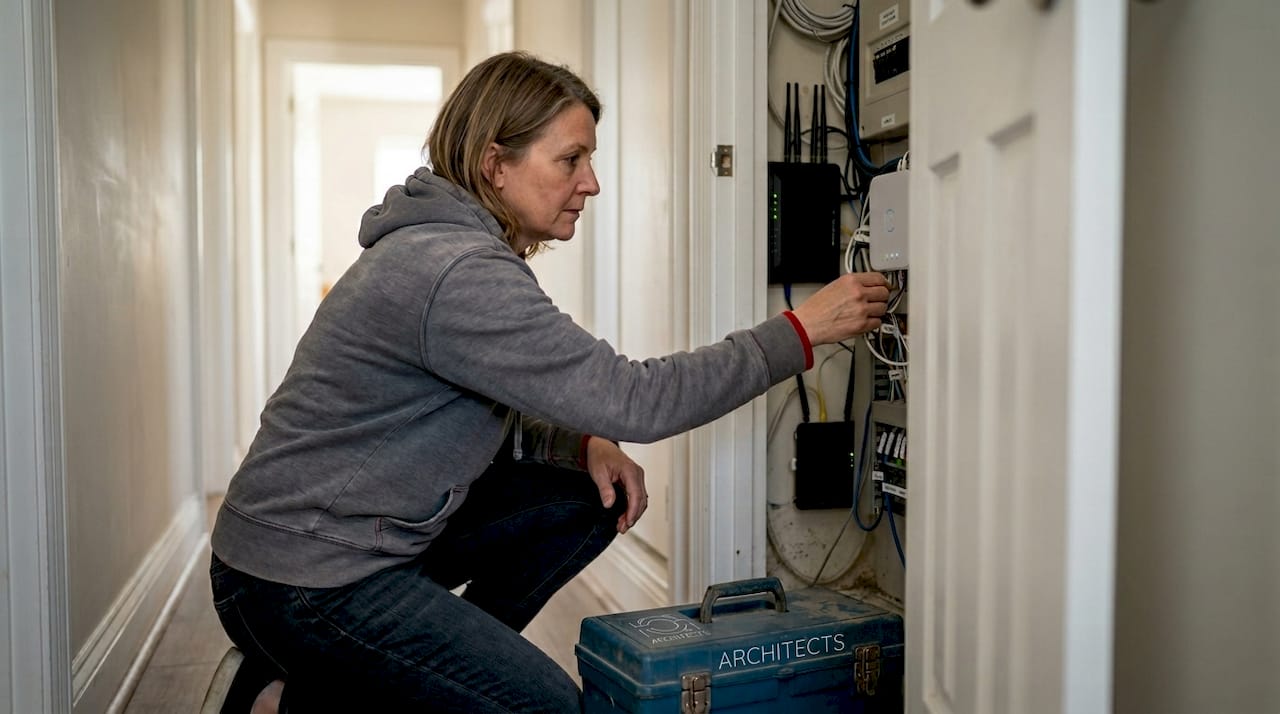
The foundation of any smart home is its physical infrastructure. Cat6A ethernet cabling, low-voltage panels, and conduit pathways are the backbone that makes everything else possible. Wireless-only systems are convenient to install but vulnerable to interference and outages.
Here is how a typical smart home system is built, step by step:
- Protocol selection: Choose a communication standard (Matter, Zigbee, Z-Wave) that fits your device ecosystem and long-term upgrade plans.
- Structured wiring: Run Cat6A ethernet and low-voltage cabling to key locations: entry points, living areas, mechanical rooms, and outdoor zones.
- Hub and panel installation: Install the central hub and low-voltage distribution panel in an accessible location, typically a utility closet.
- Sensor and device placement: Position occupancy sensors, thermostats, cameras, and smoke detectors according to both manufacturer specs and local code requirements.
- Commissioning: Program automation rules, test device communication, and verify that all systems respond correctly under real conditions.
For LA homes specifically, energy code compliance under Title 24 requires occupancy sensors in specific rooms and lighting controls that meet minimum efficiency standards. Smart systems, when designed correctly, satisfy these requirements while adding real convenience.
The central hub coordinates devices via protocols like Zigbee, Z-Wave, or Matter, and sensor placement directly affects both compliance and resilience during grid or internet disruptions.
| Technology layer | Function | LA-specific benefit |
|---|---|---|
| Cat6A wiring | Reliable data backbone | Resilience during Wi-Fi outages |
| Low-voltage panel | Centralized device power and control | Cleaner installs, easier upgrades |
| Occupancy sensors | Automate lighting and HVAC | Title 24 compliance |
| Local hub | On-site processing and control | Functions without internet |
| Wildfire sensors | Smoke, air quality, ember detection | Critical for high-risk LA zones |
For architecture tips specific to LA homes, integrating these layers during design is far more effective than adding them later. And if you are exploring innovative home design ideas for 2026, smart infrastructure is consistently among the highest-value investments you can make.
Best practices for integration in new LA homes
Understanding the tech is critical, but applying these best practices ensures you get the full value.
The single most important decision you can make is integrating smart systems during the blueprint phase. Early architectural integration saves 40 to 60 percent compared to retrofit projects and ensures Title 24 compliance from day one. It also positions your home to qualify for utility rebates offered through programs like SoCalEdison and LADWP.
Here is what that looks like in practice:
- Sensor placement for occupancy control: Position motion and occupancy sensors in hallways, living rooms, and bedrooms to enable automatic lighting and HVAC adjustments. This is both a convenience feature and a Title 24 requirement.
- Wildfire and water safety sensors: LA's fire-prone zones make early smoke, ember, and air quality sensor placement essential. Water leak sensors near plumbing fixtures can prevent thousands of dollars in damage.
- Structured wiring and low-voltage panels: A low-voltage panel is a dedicated electrical enclosure that manages data, audio, video, and security cabling. Think of it as the nervous system of your smart home. Planning its location during design avoids costly wall openings later.
- Utility and rebate alignment: Certain automation features, like smart thermostats and occupancy-based lighting, qualify for rebates when documented during the permitting phase.
LA single-family homes with high-efficiency automation save over $1,000 per year on utility costs, making the upfront investment in smart infrastructure financially sound over a standard ownership period.
For homeowners looking to optimize their LA home layouts for both lifestyle and community fit, smart design adds a layer of adaptability that standard construction simply cannot match.
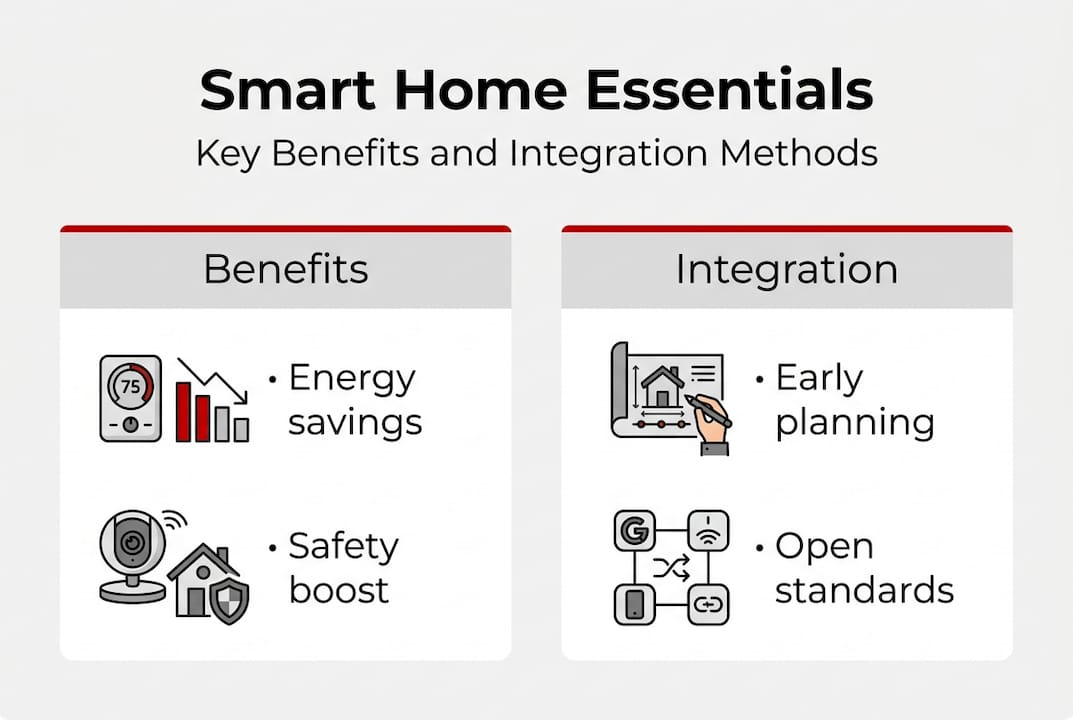
Pro Tip: Specify open standards like Matter or Z-Wave in your construction documents. This prevents vendor lock-in and ensures you can upgrade individual devices without replacing your entire system years down the road.
Key risks and mistakes in smart home design
Even with the right plan, missing these nuances leaves homes vulnerable.
The most common mistake we see is over-relying on cloud-based systems. When the internet goes down or a manufacturer's server experiences an outage, cloud-dependent homes lose core functions. Cloud outages, protocol lock-in, Wi-Fi unreliability, and privacy threats are recurring risks, and LA homes should emphasize local fallbacks and edge processing to stay functional during disruptions.
| Feature | Cloud-dependent system | Local/edge system |
|---|---|---|
| Internet required | Yes | No |
| Privacy exposure | High (data sent offsite) | Low (data stays local) |
| Outage resilience | Poor | Strong |
| Monthly cost | Often subscription-based | One-time hardware cost |
| Response speed | Slower (round-trip to server) | Faster (on-device processing) |
For modern sustainable homes in LA, local control is not just a preference. It is a practical necessity given the region's wildfire risk and occasional grid instability.
Here are the most common mistakes to avoid:
- Feature overload: Specifying too many systems that do not communicate well leads to frustration, not convenience.
- Poorly placed sensors: A motion sensor in the wrong location creates false triggers or misses occupancy entirely, undermining both automation and compliance.
- Ignoring resilience planning: Homes without local fallback controls are vulnerable during outages that disable non-local systems.
- Skipping wired infrastructure for critical systems: Security cameras and alarm systems should never rely solely on Wi-Fi. Wired connections ensure they stay online when wireless networks fail.
- Locking into proprietary ecosystems: Choosing a single-brand system may seem simpler now but limits your options significantly as technology evolves.
"The most resilient smart homes are not the ones with the most features. They are the ones designed to keep working when everything else fails." This principle should guide every design decision, especially in high-risk regions like Los Angeles.
Smart home design: What most guides miss (our take)
Let's step back and share what our experience in smart home integration has actually revealed.
Most articles focus on which devices to buy or which app to use. That misses the point entirely. The homes that deliver lasting value are not the ones with the most gadgets. They are the ones designed around behavior.
When a home responds to presence, time of day, and context without requiring any input from the occupant, that is when automation becomes genuinely useful. Quiet, adaptive systems save more energy and create more comfort than any manually controlled setup.
In our work across LA residential and ADU projects, the clients who benefit most are those who invested in thoughtful architectural design first and technology second. The infrastructure decisions made during design, where sensors go, which protocols are specified, how wiring is routed, determine 80 percent of the system's long-term performance.
Edge cases matter too. A wildfire evacuation, a power outage, a privacy breach. These scenarios reveal whether a smart home was truly designed or just assembled. For LA properties, architectural-first smart design is not optional. It is the standard we hold ourselves to.
Start your smart home journey with FO Studio
Ready to take the next step? Here's how FO Studio can help.
At FO+H Architects, we integrate smart home infrastructure from the earliest stages of design, not as an afterthought. Every project we develop considers wiring, sensor placement, protocol selection, and Title 24 compliance before construction begins.
Whether you are planning a new single-family home or exploring ADU home plans designed for modern, tech-ready living, we bring both architectural expertise and practical smart home knowledge to every project. Browse our modern LA home designs to see how smart-ready layouts are built into the plans from day one. When you are ready to talk through your project, connect with our team for a personalized consultation.
Frequently asked questions
What's the difference between smart home design and smart gadgets?
Integration during planning and construction makes a real smart home, while gadgets are simply devices added after the fact without coordinated infrastructure or automation logic.
How much can LA residents save with smart home automation?
High-efficiency automation can save LA single-family homes over $1,000 per year on utility bills, depending on system design and usage patterns.
Are smart home systems reliable during power or internet outages?
Only designs with local control and wired infrastructure remain functional during outages. Cloud-only setups lose core functions the moment internet connectivity is interrupted.
What protocols should I prioritize for future-proofing?
Open standards like Matter and Z-Wave are the best choice. They avoid vendor lock-in and ensure future readiness as new devices and systems enter the market.
What role does smart home design have in sustainability?
Automated systems can cut energy use and CO2e by double digits in LA homes, with some studies showing up to 25 percent energy reduction and 43 percent lower carbon emissions.