

TL;DR:
- Effective Los Angeles residential design requires a systematic approach that prioritizes site response, envelope performance, and climate adaptation to ensure long-term value and comfort.
- A performance-based, integrated design process focusing on daylighting, natural ventilation, and energy modeling significantly reduces costs and enhances resilience in LA's diverse climate zones.
Getting residential design right in Los Angeles requires more than good taste. You're working within a demanding climate, a layered regulatory environment, and a market where buyers increasingly expect performance alongside aesthetics. Whether you're renovating an existing home or building from the ground up, the principles you prioritize early will determine comfort, cost, and long-term value. This article walks you through an evidence-based, systemized approach to LA residential design so you can make decisions that hold up over time and deliver real results for your lifestyle and investment.
Table of Contents
- Core criteria for successful LA residential design
- Daylighting and climate-responsive design
- Envelope, mechanical systems, and performance compliance
- Adapting to trends and community value
- Balancing trade-offs: optimizing for LA's unique context
- Why performance-led design beats generic best practices in LA
- Get expert help bringing LA's top design principles to life
- Frequently asked questions
Key Takeaways
| Point | Details |
|---|---|
| Start with site and climate | Orientation and climate response drive comfort, performance, and value for LA homes. |
| Prioritize daylighting and ventilation | Effective daylight and air flows achieve energy savings and healthier indoor environments. |
| Model and verify for compliance | Energy modeling ensures flexibility and accuracy in compliance—avoid guesswork. |
| Adapt to buyer trends | Stay current with demand for flexible spaces and sustainability using survey data like HDTS. |
| Balance performance and features | Choose LA-specific solutions that optimize both comfort and long-term investment. |
Core criteria for successful LA residential design
With the stakes set, let's break down the essential criteria every LA project should consider first.
Successful residential design in Los Angeles doesn't happen by accident. It happens when you treat the building as an integrated system rather than a collection of independent choices. According to the design-as-a-system approach, the most effective residential designs start with site and climate response first, then move to envelope and mechanical efficiency, and finally address operations and long-term resilience. Skipping steps or reversing that order leads to costly corrections later.
Here is a seven-point checklist we use on every LA residential project:
- Site and climate response — Assess solar orientation, prevailing winds, shading sources, and microclimate before finalizing any floor plan.
- Daylighting and solar control — Design window placement and shading devices to maximize natural light while limiting unwanted heat gain.
- Ventilation and envelope performance — Specify insulation levels, window quality, and air sealing targets early in schematic design.
- Mechanical systems — Right-size HVAC and mechanical ventilation based on the modeled loads from your envelope design, not default assumptions.
- Water and landscape efficiency — Align your irrigation and landscape strategy with California's water restrictions and Title 24 requirements.
- Performance verification — Use energy modeling and third-party testing to confirm the design meets targets before permit submission.
- Buyer-value alignment — Cross-reference your design decisions against current market preferences so functional choices also support resale value.
This checklist applies whether you're working on a primary residence, an ADU, or a multi-family project. For a deeper look at how these principles apply to specific building types, our modern LA architecture tips and LA residential best practices resources offer project-specific guidance.
"Effective building design treats each system as interdependent. Optimizing one element in isolation almost always creates unintended consequences elsewhere." — U.S. Department of Energy, Buildings Program
Pro Tip: Don't shortcut the checklist. Omitting climate response or envelope performance early creates cascading problems through the mechanical and systems design that are expensive to correct during construction.
Daylighting and climate-responsive design
Now that the criteria are set, let's dig into the most impactful climate and site strategies.
Daylighting is one of the most powerful and cost-effective tools available in LA residential design. When done well, it reduces your reliance on artificial lighting, stabilizes indoor temperatures, and improves the overall quality of the living space. But daylighting isn't simply about adding more windows. It requires strategic placement, sizing, and shading to perform correctly in LA's varied climate zones.
The award-recognized Cole Valley Residence demonstrates precisely this principle: daylighting, natural ventilation, and solar control through shading and overhangs are treated as central features, not afterthoughts, especially in hot-arid or mixed climates like those across LA County.
Practical strategies include:
- South-facing clerestory windows to capture consistent winter light without excessive summer heat gain
- Overhangs and exterior shading fins sized to block the high summer sun while admitting lower winter angles
- Operable windows and large sliders positioned for cross-ventilation, drawing cool air through the home at night
- Stack effect design using high and low window openings to allow warm air to rise and exit naturally
- Interior light shelves to bounce daylight deeper into rooms while reducing glare at the window itself
Natural ventilation strategies work hand in hand with daylighting. Cross-ventilation, where air enters on one side of the building and exits on the opposite side, can significantly reduce HVAC runtime during LA's mild shoulder seasons. This matters for operating costs and indoor air quality.
| Design strategy | Estimated cooling load reduction | Added construction cost |
|---|---|---|
| Optimized window placement only | 10 to 15% | Low |
| Overhangs and exterior shading | 15 to 20% | Low to moderate |
| Cross-ventilation layout | 12 to 18% | None to low |
| Combined daylighting and shading system | Up to 23% | Moderate |
Research on residential window strategies in similar climates shows that optimized window geometry can cut cooling demand by more than 20 percent. That's a meaningful reduction in both utility costs and mechanical system sizing. For a broader view of how these strategies are shaping the local market, see our look at LA architecture trends.
Envelope, mechanical systems, and performance compliance
With climate and daylight basics mastered, the logical next step is the building shell and mechanical backbone.
The building envelope, meaning the walls, roof, windows, and floors that separate the conditioned interior from the outside, is the single most important factor in long-term performance. A well-designed envelope reduces the workload on your mechanical systems, keeps indoor temperatures stable, and lowers the lifetime energy cost of the home. Many homeowners treat insulation and window selection as budget line items to trim. In our experience, that's one of the most common and costly mistakes on LA projects.
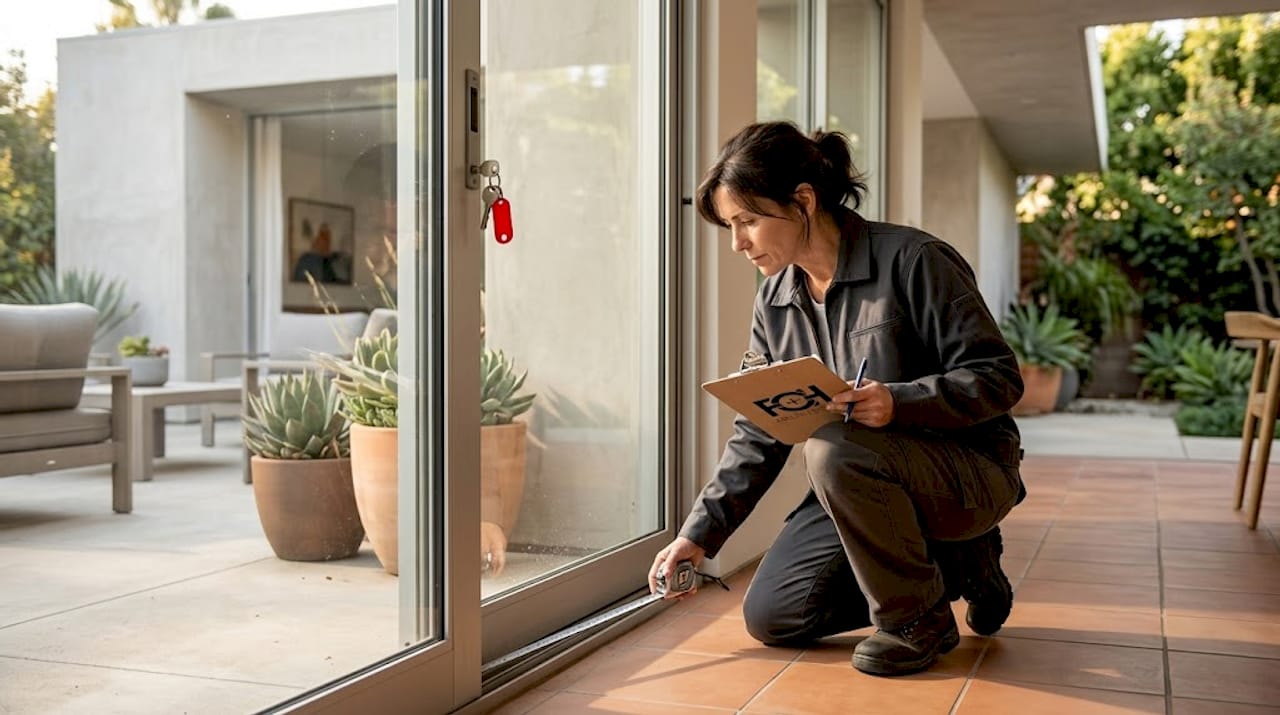
High-performance residential design in the current LA market typically includes envelope tightness, high-performance glazing, efficient HVAC, full electrification, solar with battery backup, and water management as a coordinated package rather than separate upgrades. This framing matters because each element supports the others. A tight envelope lets you right-size a smaller HVAC unit. Smaller HVAC loads make solar offset more achievable. Solar plus battery makes electrification more resilient.
Here are the key steps for achieving energy code compliance through performance modeling:
- Run an early energy model during schematic design to establish a performance baseline and identify the highest-impact design decisions.
- Evaluate trade-offs between envelope upgrades and mechanical system sizing to find the most cost-effective compliance path.
- Select systems and specifications that meet or exceed the modeled targets, then document them for Title 24 submission.
- Verify performance with third-party testing such as blower door air leakage tests and duct leakage inspections after construction.
The 2025 Energy Code Compliance Manual recognizes performance compliance as a preferred path because of its flexibility, allowing design teams to trade off between envelope and mechanical improvements rather than meeting prescriptive requirements line by line.
| Feature | Standard construction | High-performance envelope |
|---|---|---|
| Wall insulation R-value | R-13 batt | R-21+ continuous + batt |
| Window U-factor | 0.35 to 0.40 | 0.22 to 0.28 |
| Air leakage (ACH50) | 5 to 7 | 1.5 to 3 |
| HVAC sizing | Default rule of thumb | Modeled Manual J load |
| Estimated energy savings over standard | Baseline | 25 to 40% |
Pro Tip: Consider solar and battery backup during the earliest design phases, even if you're not installing them immediately. Pre-wiring and conduit placement cost almost nothing upfront and can save thousands during a future installation.
For real-world applications of these principles to Los Angeles projects, see our coverage of urban LA home design and innovative LA home ideas.
Adapting to trends and community value
Beyond the nuts and bolts of the building, staying attuned to trends and broader value can elevate the design.
Even the most technically optimized home underperforms as an investment if it doesn't align with what buyers and residents actually want. This is where design trends enter the equation, not as a replacement for performance logic, but as a lens for prioritizing features and layouts that resonate in today's market.
The AIA Home Design Trends Survey aggregates project data from hundreds of residential architecture firms each quarter, giving investors and homeowners a reliable, data-driven view of what buyers are prioritizing. It's one of the best tools available for understanding how preferences are shifting across the market.
Currently, the features seeing the strongest demand growth include:
- Flexible, multi-use spaces that can serve as home offices, guest rooms, or hobby areas depending on need
- Strong indoor-outdoor connection through large operable doors, covered patios, and landscaped transition zones
- Smart home technology integration including automated lighting, climate control, and security systems
- Energy-visible features such as solar panels, battery storage, and EV charging that signal sustainability
- Outdoor kitchens and expanded entertaining areas that extend usable living space to the yard
Community-level value is also increasingly tied to sustainable design choices. Neighbors, neighborhood associations, and prospective buyers all respond positively to homes that look good and perform well. That combination of curb appeal and demonstrated sustainability creates long-term value that generic design simply doesn't achieve.
"Tracking buyer preferences isn't about chasing trends. It's about understanding which features your future buyer will pay a premium for and designing those in from the start."
Pro Tip: Use trend data to inform features and layouts, but anchor every single decision in code compliance and climate performance. A feature that's popular but doesn't perform in your specific microclimate will cost more to own than it adds in value.
For more on what's resonating in the current market, our resources on modern LA home trends and technology and design trends offer detailed breakdowns by feature type and project category.
Balancing trade-offs: optimizing for LA's unique context
With new demands and community ideals in play, a smart design always weighs options against LA's unique realities.
Los Angeles is not a single climate. The coastal areas of Santa Monica and Venice experience cool, marine-influenced summers. The San Fernando Valley runs significantly hotter. The hillside neighborhoods introduce complex shading, topography, and wind conditions that standard design rules simply don't account for. What works perfectly in one zip code can actively underperform in another.
Research on window and envelope design in hot-arid residential buildings confirms that optimal solutions depend on climate zone and building orientation, not universal rules. A large west-facing window that floods a living room with afternoon light in a coastal neighborhood can become a significant cooling liability in a valley location with 95-degree summers.
Key site-specific considerations to evaluate on every project:
- True solar orientation accounting for lot shape, street angle, and surrounding buildings or trees
- Local wind patterns that support or limit natural ventilation strategies
- Topographic shading from hills, ridges, or adjacent structures that affect solar access differently by season
- Neighborhood codes and HOA requirements that may restrict certain shading devices, finishes, or roof forms
- Finish material selection based on local solar reflectance needs and wildfire risk requirements
| Design scenario | Daylight outcome | Cooling demand outcome |
|---|---|---|
| Large south-facing windows with overhangs | High daylight, controlled heat | Moderate cooling demand |
| Large west-facing windows, no shading | High daylight, uncontrolled heat | High cooling demand |
| Small, optimized windows with shading | Adequate daylight | Low cooling demand |
| Clerestories plus cross-ventilation | Diffuse daylight, good airflow | Low to moderate cooling demand |
Geometric adjustments to window sizing, placement, and shading can cut cooling demand by up to 23% in LA-like climate settings. That's a significant number that demonstrates why site-specific modeling always outperforms generic rules. For guidance on applying these principles to your specific floor plan, our resource on how to optimize LA home layouts walks through common scenarios.
Why performance-led design beats generic best practices in LA
We've reviewed the checklist. Now here's an experienced take on what actually matters in the LA context.
In our practice, we see a consistent pattern: homeowners and investors arrive with a list of features they've collected from general design content, popular media, or well-meaning neighbors. That list often includes broad concepts like "open floor plan," "natural materials," or "biophilic design." These aren't bad ideas. But they're incomplete without a performance foundation specific to LA's climate and codes.
Generic best-practice lists mislead LA projects in two important ways. First, they prioritize aesthetics over outcomes. A beautiful, light-filled room that overheats in July isn't a success. Second, they treat design principles as interchangeable across climates. A strategy that works in a temperate Pacific Northwest city can actively harm performance in LA's hotter inland zones.
The 2025 Energy Code Compliance Manual reflects a clear shift in California's regulatory culture toward quantified performance targets rather than prescriptive checklists. That shift mirrors what we see in the market: buyers, appraisers, and lenders increasingly recognize homes with documented energy performance as more valuable and lower risk.
Real success in LA residential design is measurable. Lower monthly utility bills. Higher resale premiums for energy-efficient features. Greater resilience during grid stress events, which are becoming more frequent. These outcomes don't come from an inspiration board. They come from modeling, climate-specific specification, and verified performance.
Our guidance on architecture tips for LA reflects this performance-first philosophy across every project type we work on.
Get expert help bringing LA's top design principles to life
If you're ready to move from principles to an actual project, FO+H Architects specializes in exactly this kind of integrated, performance-led residential design across Los Angeles. We help homeowners and investors implement the full system: site analysis, daylighting strategy, envelope performance, energy modeling, and trend-informed layout decisions that align with your goals and the local market.
Whether you're exploring a new build, a remodel, or an ADU addition, we offer both ready-made and fully custom design paths. Browse our pre-vetted ADU plans for a fast, code-compliant starting point, or take a closer look at options like the Blue ADU concept for an example of how we approach performance and livability together. Reach out to our team to discuss your site, your goals, and how we can build a design process that delivers real, measurable results.
Frequently asked questions
What is the most important residential design principle in Los Angeles?
Site and climate response is the most critical starting point, as the design-as-a-system approach confirms that all other decisions, including envelope, mechanical, and systems choices, depend on getting this foundation right first.
How does energy modeling impact residential design in LA?
Energy modeling gives design teams the flexibility to find the most cost-effective path to code compliance, and the 2025 Energy Code Compliance Manual identifies performance compliance through modeling as a preferred approach precisely because it allows trade-offs between envelope and mechanical improvements.
Should I follow national or generic residential design rules for my LA project?
No. Research on hot-arid residential buildings confirms that optimal design solutions depend on local climate and orientation, making site-specific, performance-based decisions far more reliable than universal rules.
How is buyer demand for LA homes tracked for design decisions?
The AIA Home Design Trends Survey collects quarterly data from hundreds of residential architecture firms, making it the most reliable tool for understanding how homeowner and buyer preferences are shifting across the market.
What is a "high-performance envelope" in LA home design?
A high-performance envelope refers to the combination of super-insulated walls, high-grade glazing, and airtight construction that significantly reduces energy use while maintaining stable indoor comfort throughout the year.